
 Преглед в реален мащаб
 Изпрати
 Сподели
 Детайли
 Ръководство

 Изтегляне
 Подобни артикули
 Рентгенова снимка
 Слайдшоу
 Въпроси и отговори
 Статистика
Анунциация

- 340.0 x 455.0 cm


 Прочети повече
Жикле / Художествен принт
Giclée печат или принт върху платно с музейно качество, бързо производство и гъвкави опции за завършен вид. ( Купете ръчно рисувана картина Превключване към дигитално изображение)




P118B €10

P118H €10

P118W €10

P438Z €10

P508JH €12

P508YH €12

P805H €10

P805Z €10

P919BZ €10

P919G €10

P919XJ €10

P959ZH €10

P968JZ €12

W106C €8

W218G €10

W218JH €8

W218Y €10

W307PJ €10

W316G €10

W316PJ €8

W316Y €10

W398PJ €8

W4111J €10

W500HY €15

W500JH €15

W692G €12

W849H €8

W940BG €15

W953PJ €8




Изберете от нашите предварително зададени размери, които съответстват на оригиналните пропорции на произведението.

Въведете необходимата ширина и височина, за да паснат на вашата рамка или стена. Принтовете могат само да се изрязват, но никога не могат да бъдат по-големи от оригиналната картина, така че при размер с различен формат част от изображението ще бъде загубена. Преди да започнем печат, ще ви изпратим дигитален мок업 за одобрение. Изображението, показано на тази страница, не показва реалното изрязване — само мок업ът го показва.
Доставка по целия свят () в рамките на 2 седмици вместо стандартните 4/5 седмици. (7 Ноември)

Безплатна експресна доставка по целия свят

Висококачествено ленено платно

Пълно застраховане на доставката

Гаранция за възстановяване на митнически такси

Гаранция за пълно съответствие на цветовете

Политика за връщане в рамките на 100 дни (само при дефекти)

100% Гаранция за връщане на сумата

Оферта за отстъпка при поръчка на повече бройки
 Опцията със стъкло е налична само за размери под 110 см

Анунциация
Жикле / Художествен принт
Размер на репродукцията
-


Обща цена
€ 72
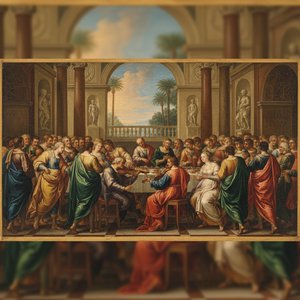
Паоло Веронезе и Анunciaцията: Символика на Светлината и Надеждата в Венецианския Ренесанс
Анunciaцията на Паоло Веронезе е произведение на изкуството, което предава дълбоко религиозно послание и съчетава майсторска техника с впечатляваща композиция. Нарисувана през 1558 г., тази огромна картина е една от най-значимите творби на веронския художник и се смята за върхът на венецианския ренесанс.
- Тема: Светото Благовещение – посещението на ангел Габриел при Дева Мария и съобщението за рождението на Исус Христос.
- Стил: Веронезе използва характерния си стил, който се отличава с ярки цветове, драматична композиция и прецизни детайли. Той е повлиян от титяновите техники и класическите идеали на античната скулптура.
- Техника: Картината е изпълнена в техника на маслени бои върху голям канос, което позволява постигане на невероятна дълбочина и реалистичност на цветовете и текстурите. Веронезе използва сложни методи за смесване на цветове и създаване на светлинни ефекти, които придават живостност на изображението.
Историческият контекст е определящ за разбирането на значението на Анunciaцията. Венецианският ренесанс е период на възраждане на класическите идеали и култура, което се отразява във всички области на изкуството – архитектурата, скулптурата и живописът. Веронезе е сред най-големите представители на този стил и неговата творба е свидетелство за високия художествен стандарт на времето.
Символиката на картината е богата и многопластова. Ангел Габриел символизира небесния разум и Божественото послание, докато Дева Мария представлява чистотата и благодатта. Светлината играе ключова роля в изображението – тя идва от горната част на картината и осветява лицата на героите, създавайки атмосфера на надежда и вечна красота.
Емоционален ефектът от Анunciaцията е силно въздействащ. Картината предизвиква чувство на благоговение и смирение пред Божествената сила. Веронезе успява да предаде дълбоко човешко състояние – радост от предстоящото рождение на Исус Христос и вяра в Божията милост. Това произведение е истински шедьовър, който продължава да пленява зрителите и днес.
Въпроси и отговори
Кой е създал "Анунциация" и в какъв стил е изработено?
Паоло Веронезе създава „Анунциация“ в рамките на движението Baroque Splendor.
Каква сюжетна линия и атмосфера съчетава „Анунциация“ на Паоло Веронезе?
„Анунциация“ на Паоло Веронезе изобразява annunciation scene, religious iconography, venetian art style, architectural detail, angel gabriel visit, renaissance influence, classical composition в Елегантен настроение. Сюжетът и атмосферата заедно описват произведението.
За коя стая се препоръчва „Анунциация“ на Паоло Веронезе?
Препоръчителното пространство за „Анунциация“ на Паоло Веронезе е Дневна стая. Тази препоръка, разбира се, може да бъде адаптирана към вашия интериор.
Биография на художника
A Venetian Visionary: The Life and Art of Paolo Veronese
Paolo Caliari, universally known as Paolo Veronese, emerged from the vibrant artistic currents of 16th-century Venice as a master of color, composition, and breathtaking spectacle. Born in Verona in 1528, his early life was deeply intertwined with the visual richness of his surroundings – the classical architecture, sculpted forms, and burgeoning humanist ideals that defined the region. His initial training under Antonio Badile and Giovanni Francesco Caroto provided him with a solid foundation in traditional techniques, but it was his relocation to Venice in the 1550s that truly ignited his artistic genius. The city itself became his constant muse, its bustling marketplaces, magnificent palazzi, and shimmering waterways profoundly shaping the scale and dramatic intensity of his work. Veronese swiftly absorbed the influences of established Venetian masters like Titian, whose mastery of color exerted a powerful impact on his palette; however, he forged a distinctive style characterized by an unparalleled sense of theatricality and grandeur – a truly unique vision.The Painter of Feasts and Grand Narratives
Veronese’s enduring legacy rests primarily upon his monumental paintings, particularly those depicting lavish feasts and biblical scenes reimagined as dazzling displays of Venetian life. The *Wedding at Cana*, completed in 1563 for the Benedictine monastery of San Giorgio Maggiore, stands as a prime example of his exceptional skill. This colossal canvas transcends mere illustration; it’s a vibrant panorama of 16th-century society, teeming with elegantly dressed figures, musicians, and architectural details rendered with astonishing precision. The painting isn't simply about *what* happened at Cana but rather *how* it would have appeared if it had unfolded in Venice during Veronese’s time – a remarkable feat of historical reconstruction. Similarly, *The Feast in the House of Levi*, originally titled *The Last Supper*, provoked considerable controversy with the Inquisition due to its inclusion of contemporary figures and an atmosphere that seemed almost irreverent. Veronese defended his artistic choices, asserting that painters possessed the same creative liberty as poets and jesters – a bold declaration reflecting his belief in art’s capacity to interpret and reimagine sacred narratives. These works weren't merely religious depictions; they were celebrations of life, wealth, and the splendor of Venice itself. He prioritized capturing the joy and abundance of existence over strict adherence to theological dogma.Influences and Artistic Development
While Titian’s influence on Veronese’s coloristic approach is undeniable, his artistic development was shaped by a complex interplay of diverse influences. The architectural precision evident in his compositions draws heavily from the classical traditions prevalent in Verona during his formative years, particularly the work of architects like Michele Sanmicheli. He also absorbed elements from Central Italian masters such as Raphael and Parmigianino, reflected in the graceful lines and harmonious arrangements within his paintings. However, Veronese didn’t merely imitate these influences; he synthesized them into a uniquely Venetian style characterized by its dramatic use of light, vibrant color palettes, and meticulous attention to detail. He excelled at creating illusions of space and depth, employing perspective techniques to draw viewers directly into the heart of his elaborate scenes. His mastery of oil painting allowed him to achieve an unparalleled luminosity and richness of texture – a hallmark of his distinctive style. Furthermore, Veronese maintained a large workshop, with contributions from his brother Benedetto and sons Gabriele and Carlo (or ‘Carletto’), ensuring that his artistic vision continued to flourish even after his death in 1588.Major Achievements and Notable Works
Veronese’s career was marked by numerous significant commissions and masterpieces. The full-scale decoration of the Venetian church of S. Sebastiano (1555–around 1570) stands as a testament to his ambition and technical skill. His ceiling and wall paintings for the library of S. Marco (1556–57) and the Ducal Palace (early 1550s and 1575–82) are equally impressive, showcasing his ability to transform vast spaces into breathtaking works of art. Perhaps most famously, he created a series of mythological paintings for an international clientele, including *Venus and Adonis* and *Bacchus and Ariadne*. His depiction of the *Last Supper*, though initially controversial, remains one of his most celebrated works, demonstrating his innovative approach to historical narrative. The sheer scale and opulent detail of these paintings cemented Veronese’s reputation as a leading figure in Venetian art.Legacy and Historical Significance
Paolo Veronese's impact extends far beyond the realm of Renaissance art. His work has resonated through centuries, inspiring artists across various disciplines. His dramatic compositions and vibrant color schemes have been cited as influences on everything from Baroque painting to modern cinema – even finding echoes in the visual aesthetics of Spaghetti Westerns. He was a key member of the “great trio” of Venetian painters—alongside Titian and Tintoretto—each contributing uniquely to the city’s artistic legacy, yet Veronese often stands apart for his sheer exuberance and celebration of earthly pleasures. His paintings continue to captivate audiences with their grandeur and spectacle, offering a glimpse into the opulent world of 16th-century Venice. Veronese's legacy is a testament to his artistic genius, his ability to capture the essence of an era, and his enduring contribution to the history of art – a true embodiment of Venetian splendor.
Паоло Веронезе
1528 - 1588 , Италия
Бърза информация
- Artistic Movement Or Style: Ренесанс, Маниеризм
- Artists Or Movements Influenced By This Artist:
- Рафаел
- Памиччини
- Artists Who Influenced This Artist: ['Тициан']
- Date Of Birth: 1528 г.
- Date Of Death: 1588 г.
- Full Name: Паоло Веронезе
- Nationality: Италианец
- Notable Artworks:
- Сватбата в Кана
- Тържество в дома на Леви
- Place Of Birth: Верона, Италия
Свързани статии
Paolo Veronese: A Renaissance Master of Color, Composition, and Venetian Splendor
Explore the vibrant world of Paolo Veronese, a Renaissance master renowned for his opulent compositions, masterful use of color, and dramatic Venetian scenes. Discover key artworks & legacy.

Топ 10 шедьоври на Барока: История, артисти и великолепие за вашия дом
Разгледайте 10 шедьовъра на Барока от Караваджо, Рембрандт и Рубенс! Открийте историите зад тези емблематични картини и скулптури. Вдъхновете се за вашия интериор с OriginalUniqueArt.com – луксозни репродукции и изкуство за дома.

The Dramatic Flourish: Exploring the Baroque Movement's Enduring Legacy in Art History
Explore the dramatic world of Baroque art! Discover iconic artists like Caravaggio & Rubens, defining techniques, and its lasting impact on art history. Expert insights for collectors & enthusiasts at OriginalUniqueArt.

Барокова Драма: Изкуството, Което Внася Величие в Дома
Открийте великолепието на бароковия стил! Разгледайте историята, изкуството и интериорните решения, вдъхновени от епохата. Съвети за създаване на разкошен дом.

Топ 25 шедьовъра на Якопо Тинторето: Драма, светлина и величие в изкуството
Разгледайте топ 25 шедьовъра на Якопо Тинторето – венециански ренесанс, драматизъм и чиароскуро. Открийте историите зад картините му и преобразете дома си с луксозни репродукции от OriginalUniqueArt.com!


