
 Преглед в реален мащаб
 Изпрати
 Сподели
 Детайли
 Ръководство

 Изтегляне
 Подобни артикули
 Рентгенова снимка
 Слайдшоу
 Въпроси и отговори
 Статистика
Абстракция

- 57.0 x 67.0 cm


 Прочети повече
Жикле / Художествен принт
Giclée печат или принт върху платно с музейно качество, бързо производство и гъвкави опции за завършен вид. ( Купете ръчно рисувана картина Превключване към дигитално изображение)




P118B €10

P118H €10

P118W €10

P438Z €10

P508JH €12

P508YH €12

P805H €10

P805Z €10

P919BZ €10

P919G €10

P919XJ €10

P959ZH €10

P968JZ €12

W106C €8

W218G €10

W218JH €8

W218Y €10

W307PJ €10

W316G €10

W316PJ €8

W316Y €10

W398PJ €8

W4111J €10

W500HY €15

W500JH €15

W692G €12

W849H €8

W940BG €15

W953PJ €8




Изберете от нашите предварително зададени размери, които съответстват на оригиналните пропорции на произведението.

Въведете необходимата ширина и височина, за да паснат на вашата рамка или стена. Принтовете могат само да се изрязват, но никога не могат да бъдат по-големи от оригиналната картина, така че при размер с различен формат част от изображението ще бъде загубена. Преди да започнем печат, ще ви изпратим дигитален мок업 за одобрение. Изображението, показано на тази страница, не показва реалното изрязване — само мок업ът го показва.
Доставка по целия свят () в рамките на 2 седмици вместо стандартните 4/5 седмици. (8 Ноември)

Безплатна експресна доставка по целия свят

Висококачествено ленено платно

Пълно застраховане на доставката

Гаранция за възстановяване на митнически такси

Гаранция за пълно съответствие на цветовете

Политика за връщане в рамките на 100 дни (само при дефекти)

100% Гаранция за връщане на сумата

Оферта за отстъпка при поръчка на повече бройки
 Опцията със стъкло е налична само за размери под 110 см

Абстракция
Жикле / Художествен принт
Размер на репродукцията
-


Обща цена
€ 72
David Kakabadze и Абстрактното Лице на Модернизма
Като пионер на грузинския модернизъм, Давид Какабадзе остава забележителна фигура в изкуството през първата половина на XX век. Той успя да съчетае въздуха на европейските авангардни движения с дълбоко уважение към традиционната грузинска култура и фолклор, създавайки уникален художествен подход, който продължава да вдъхновява и днес. Какабадзе не беше просто художник; той беше истински интелектуал и човек на много таланти – живописец, графичен дизайнер, сценичен декоратор, изкустварен историк, киноинженер и дори любител фотограф. Това разнообразие от интереси се отрази в неговото творчество и утвърди Какабадзе като един от най-значимите грузински модернистки майстори. Неговите ранни години преминаха в село Кухи близо до Хони, където семейството му водеше прост живот, но младостта му беше изпълнена с интелектуална любопитство благодарение на спонсорство, което му позволи да изучава при Санкт Петербургския университет и да завърши през 1916 г. със степен по естествени науки. Паралелно с това той се занимаваше активно с изкуствата и рисуването още от юношеството си, което бе повлияно от европейските тенденции и идеи. Какабадзе използва различни техники и материали – акварели, маслени бои и графични средства – за да превърне своите впечатления от света и околната среда в художествени произведения. Основният предмет на творчеството му е абстрактното изкуство, което Какабадзе развива през периода между войните и следвоенните години. Той се стреми да предаде вътрешния свят на човека чрез форми и цветове, без да се опитва да създаде реалистична картина на действителността. Вместо това той използва символи и метафори за изразяване на емоции и идеи, като често се обръща към природни мотиви и грузински фолклорни елементи. Като резултат от този подход възникват произведения със силна визуална енергия и дълбоко емоционално съдържание. Един от най-известните му творби е „Абстракция“, създадена през 1927 г., която демонстрира неговия характер стил и технически умения. Като цяло произведението е изпълнено с маслени бои върху платно или дървена дъска, използвайки техниката на импресионистична живопис и прецизни слоеве от маслени пигменти. Композицията е динамична и използва диагонали и контрастни цветови области за да създаде усещане за движение и енергия. Лицето е изобразен като абстрактна форма, която е разположено в по-малка правоъгълна рамка вътре в цялата картина. Използването на линии е свободно и естествено, което придава на творбата импресионистичен ефект. Като цяло „Абстракция“ изразява дълбоко емоционално състояние и предизвиква зрителя да се замисли върху вътрешния свят и човешката психика. Това произведение е истински шедьовър на грузинския модернизъм и продължава да бъде изучаван и оценяван от изкуствоведите по целия свят.- Размер: 57 х 67 см
- Дата: 1927 г.
Въпроси и отговори
Има ли информационен лист за „Абстракция“ на Давид Какабадзе, предназначен за ученици?
Налична е страница с Информационен лист за „Абстракция“ на Давид Какабадзе: предназначен за печат информационен лист за произведението, създаден за ученици и учебни цели.
На кой етап от кариерата на Давид Какабадзе принадлежи „Абстракция“ (1927)?
Създадена през 1927, „Абстракция“ принадлежи към Mature Period на Давид Какабадзе.
За какъв размер се препоръчва "Абстракция" за Дневна?
За Дневна се препоръчва печат на „Абстракция“ с размер Голям.
Биография на художника
A Pioneer of Georgian Modernism: The Life and Art of David Kakabadze
David Kakabadze, born in the village of Kukhi near Khoni, Georgia, in 1889, stands as a pivotal figure in the development of twentieth-century Georgian art. His career was one of remarkable innovation, seamlessly blending the burgeoning currents of European avant-garde movements with a deep reverence for his native Georgian traditions. Kakabadze wasn’t merely an artist; he was a polymath – a painter, graphic artist, scenic designer, art scholar, cinematic innovator, and even an amateur photographer. This multifaceted approach to creativity defined his artistic journey and cemented his legacy as one of Georgia's most important modernist masters. His early life, though rooted in the simplicity of a peasant family, was marked by intellectual curiosity fostered through sponsorship that allowed him to pursue studies at St. Petersburg University, graduating with a degree in natural sciences in 1916. Simultaneously, he honed his artistic skills under Dmitroyev-Kavkazsky and immersed himself in the study of Georgia’s rich artistic heritage. This dual education – scientific rigor combined with artistic sensitivity – would become a hallmark of his work.Parisian Encounters and Artistic Transformation
Following a brief period teaching and painting in Tbilisi, Kakabadze embarked on a transformative chapter of his life in Paris from 1919 to 1927. This sojourn placed him at the epicenter of the European avant-garde, exposing him to Cubism, Futurism, and other radical artistic experiments. He actively participated in exhibitions with the Société des Artistes Indépendants, forging connections with fellow Georgian artists Lado Gudiashvili and Shalva Kikodze. It was during this period that Kakabadze’s style underwent a dramatic evolution. Initially captivated by the landscapes of his native Imereti province – particularly the ethereal beauty of misty mountains bathed in sunlight – he began to explore “subjectless painting,” experimenting with unconventional materials like metal, mirror glass, and stained glass in place of traditional paints. This exploration wasn't merely about technical innovation; it was a quest to redefine the very essence of pictorial representation. He delved deeply into Cubism, absorbing its fragmented forms and analytical approach, yet always maintaining a distinct artistic voice that prevented his work from becoming mere imitation. His theoretical writings during this time, published in Parisian art journals, demonstrate a profound engagement with the intellectual underpinnings of modern art, establishing him as a thought leader within the modernist community. He meticulously dissected visual perception, questioning established conventions and advocating for a radical reimagining of artistic expression.Innovation Beyond the Canvas: Cinema and Stage Design
Kakabadze’s inventive spirit extended far beyond painting. Recognizing the potential of new technologies, he began experimenting with cinema in the early 1920s, driven by a desire to overcome what he perceived as film's inherent limitations. He envisioned a cinematic experience that transcended conventional viewing, aiming for an immersive illusion akin to theatrical spectacle. His groundbreaking achievement was the design and patenting of a stereoscopic film projector without glasses – a remarkable feat of engineering and artistic vision that positioned him as a pioneer of 3D cinema decades before it became mainstream. This inventive streak also manifested in his stage designs, particularly during his collaboration with the renowned Georgian theatre director Kote Marjanishvili after returning to Georgia in 1927. His sets were not merely backdrops but immersive environments incorporating innovative techniques like projections, light effects, and collage-like constructions, transforming the theatrical experience into a dynamic interplay of space and illusion. He created impressive set designs for films by Noutsa Gogoberidze and Michail Kalatosov. These productions showcased his mastery of visual storytelling and cemented his reputation as a visionary innovator in both visual arts and performing arts.Return to Georgia and Enduring Legacy
Kakabadze’s return to Georgia in 1927 coincided with the rise of Soviet power and the imposition of Socialist Realism as the dominant artistic style. This presented a significant challenge for an artist whose work was deeply rooted in abstraction and experimentation. While he continued to contribute to Georgian art through stage design, documentary filmmaking focused on preserving cultural heritage, and teaching at the Tbilisi State Academy of Arts – fostering a new generation of artists committed to modernist principles – his modernist inclinations increasingly clashed with the prevailing ideological demands. Despite facing pressure and eventual marginalization, Kakabadze remained steadfast in his artistic convictions. His later landscapes retained a distinctive aesthetic characterized by subtle tonal gradations and evocative atmospheric effects—a testament to his unwavering dedication to capturing the beauty of Georgian nature. David Kakabadze passed away in 1952, leaving behind a body of work that was largely overlooked for decades. However, in recent years, there has been a growing appreciation for his significance as a key figure in Georgian modernism and a substantial contributor to the broader European avant-garde movement. His innovative spirit, intellectual depth, and unwavering commitment to artistic exploration continue to inspire artists today, ensuring his enduring legacy as a true visionary.Key Works and Collections
Some of Kakabadze’s most notable works include Sailboats, Bretagne, and Sketch for Getting Various Grades of Light in a Single Electric Bulb. These pieces exemplify his ability to synthesize European artistic trends with Georgian cultural identity. His work can be found in prominent collections around the world, including the Art Palace of Georgia – Museum of Cultural History in Tbilisi, the Berardo Collection Museum in Lisbon, and the Thyssen-Bornemisza Museum in Madrid. Furthermore, a significant collection of his early works resides at Yale University, testament to his international recognition during his lifetime.
Давид Какабадзе
1889 - 1952 , Грузия
Бърза информация
- Artistic Movement Or Style: Avant-garde, Cubism
- Artists Or Movements Influenced By This Artist: ['Numerous artists']
- Date Of Birth: August 20, 1889
- Date Of Death: 1952
- Full Name: David Kakabadze
- Nationality: Georgian
- Notable Artworks:
- Sailboats
- Bretagne
- Sketch for Getting Various Grades of Light in a Single Electric Bulb
- Place Of Birth: Kutaisi, Georgia
Свързани статии

Топ 10 шедьовъра на абстрактния експресионизъм – изкуство за вашия дом от OriginalUniqueArt.com
Разгледайте топ 10 шедьовъра на абстрактния експресионизъм – Полък, Ротко, де Кунинг и други. Открийте историите зад тези емблематични картини и преобразете дома си с изкуство от OriginalUniqueArt.com! Разгледайте пълната колекция онлайн.

Топ 10 шедьовъра на геометричната абстракция за Вашия дом | OriginalUniqueArt.com
Разгледайте топ 10 шедьовъра на геометричната абстракция – Кандински, Мондриан и други! Открийте историите зад тези емблематични картини и добавете елегантност към дома си с репродукции от OriginalUniqueArt.com. Разгледайте пълната колекция онлайн!
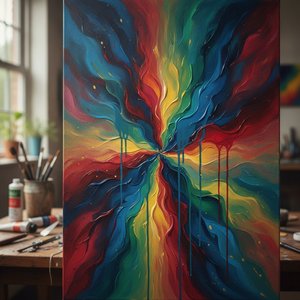
Lyrical Abstraction: The Emotional Power of Color and Form in Modern Art History
Explore the profound emotional depth of Lyrical Abstraction. Discover how masters like Raymond Parker used color and form to bridge Impressionism and Abstract Expressionism. Learn about this pivotal movement through our expert-led art history guide.

Топ 25 шедьоври на Василий Кандински: Абстрактно изкуство за вашия дом | OriginalUniqueArt.com
Разгледайте топ 25 шедьоври на Василий Кандински – пионер на абстрактното изкуство и експресионизма. Открийте историите зад цветните композиции, техниките и вдъхновението му. Купете висококачествени репродукции на картини Кандински за вашия дом на OriginalUniqueArt.com!

Beyond the Lines: Mastering the High-Impact World of Contemporary Abstraction
Master the high-impact world of contemporary abstraction. Discover how bold colors, textures, and modern movements like Abstract Expressionism can transform your space with premium, high-energy art curated for the design-conscious professional.
