Symbolist Painting · 1879
Spring Evening (Арнолд Бьоклин, 1879)
Арнолд Бьоклин (1827–1901) създаде Spring Evening. Датира от 1879. Това произведение принадлежи към движението Symbolist Painting. Изdelano е от Oil On Panel. Експонира се в Музей на изкуствата (Будапеща) в Будапещ, Унгария. Размерите са 67 × 129 cm.
- 1879
- Oil On Panel
- 67 × 129 cm
- Музей на изкуствата (Будапеща)

 Преглед в реален мащаб

 Ръчно изработена маслена картина
 Изпрати
 Сподели
 Информационен лист


 Изтегляне
 Подобни артикули
 Рентгенова снимка
 Слайдшоу
 Въпроси и отговори

 Статистика
Spring Evening накратко
- Заглавие
- Spring Evening
- Художник
- Арнолд Бьоклин (1827–1901)
- Роден в
- Базел, Швейцария
- Дата
- 1879
- Техника
- Oil On Panel
- Размери
- 67 × 129 cm
- Къде може да се види
- Музей на изкуствата (Будапеща), Будапещ, Унгария
- Движение
- Symbolist Painting
- Предмет
- mythology, nymphs, pan, forest, evening, landscape
Какво е изобразено в Spring Evening?
The Ethereal Embrace of Spring Evening
Arnold Böcklin’s “Spring Evening,” painted in 1879, isn't merely a depiction of a woodland scene; it’s an immersion into a realm of melancholic beauty and profound symbolism. Created during his time in Florence – a city that profoundly shaped his artistic vision – the painting captures a fleeting moment of enchantment, steeped in the atmosphere of late Romanticism and foreshadowing the rise of Symbolism. The canvas breathes with a quiet intensity, dominated by muted greens, blues, and browns, creating an almost dreamlike quality that immediately draws the viewer into its hushed world.
At the heart of the composition stands a woman, her posture suggesting both contemplation and vulnerability. Her hand gently resting on her head is a gesture simultaneously of yielding and quiet strength – she’s not passively observing but actively engaged with the scene unfolding before her. Beside her sits a man, seemingly lost in thought as he peruses a book, his presence offering a grounding element to the ethereal atmosphere. A bear, rendered with surprising tenderness, interacts playfully with both figures, blurring the lines between human and animal, nature and civilization. This carefully orchestrated tableau speaks of harmony, connection, and the delicate balance of the natural world.
A Symphony of Symbolism
Böcklin’s work is deeply rooted in mythology and folklore, drawing heavily on ancient Greek and Roman traditions. The central figure, often interpreted as Pan – the god of nature, shepherds, and wild music – plays his pipes, summoning a chorus of unseen nymphs from the surrounding forest. These dryads, with their flowing hair and graceful movements, represent the spirit of the woods, embodying both beauty and danger. The bear itself is a potent symbol, frequently associated with strength, wisdom, and primal instincts—a reminder of humanity’s connection to the earth.
The painting's muted palette contributes significantly to its symbolic weight. The cool blues and greens evoke a sense of melancholy and introspection, while the browns ground the scene in the tangible reality of the forest floor. The lighting is soft and diffused, creating an atmosphere of twilight—a liminal space between day and night, representing transition, mystery, and perhaps even mortality. Böcklin masterfully uses color not to simply depict a landscape but to convey complex emotions and ideas.
Technique and Artistic Influences
“Spring Evening” exemplifies Böcklin’s distinctive artistic style, characterized by meticulous detail, rich textures, and an almost obsessive attention to the natural world. He employed a technique of layering thin glazes of oil paint, building up color gradually to achieve remarkable depth and luminosity. The brushwork is subtle yet expressive, conveying both the smoothness of the forest floor and the intricate details of the foliage.
Böcklin’s artistic journey was profoundly influenced by his time in Düsseldorf, where he studied under Schirmer and became associated with the Düsseldorf School of Painting. However, it was in Florence that he truly developed his unique Symbolist vision, drawing inspiration from the city's rich cultural heritage and its connection to antiquity. The painting also reflects the influence of Romanticism, particularly the emphasis on emotion, imagination, and the sublime beauty of nature—themes central to the movement.
A Timeless Resonance
“Spring Evening” continues to resonate with viewers today because it taps into universal themes of longing, connection, and the search for meaning. Its evocative atmosphere and symbolic richness invite contemplation and offer a glimpse into the artist’s deeply personal vision. The painting's enduring appeal lies in its ability to transport us to another time and place—a world where myth and reality intertwine, and where the beauty of nature is inextricably linked to the mysteries of the human soul.
В кой музей се намира Spring Evening?
Музей на изкуствата (Будапеща)
Будапещ, Унгария
Произход и история на Музея на изкуствата (Будапеща) Създаването на Музея на изкуствата (Будапеща) е официално закреплено чрез Милениумния закон от 1896 г. Това законодателно решение цели да създаде специализирана институция за изкуства в сърцето на Будапещ, Унгария. Избраното място за тази благородна цел е територията, заемана по-рано от павилиона „Ротунда“ – структура, изградена с цел да представя шедьовъра Feszty-körkép.


Изображения с висока резолюция на Spring Evening

Обществено достояние: художникът е починал през 1901 г.
Други размери, кадриране и цитиране →Арнолд Бьоклин, Spring Evening (1879), Музей на изкуствата (Будапеща). Обществено достояние
Отговори на въпроси относно Spring Evening
Къде мога да видя оригиналния „Spring Evening“ на Арнолд Бьоклин?
Оригиналът на „Spring Evening“ на Арнолд Бьоклин се съхранява в Музей на изкуствата (Будапеща), Будапещ, Унгария. Репродукцията позволява произведението да бъде изложено у дома.
В коя година е създадено „Spring Evening“ на Арнолд Бьоклин?
"Spring Evening" датира от 1879. Тази дата поставя произведението в контекста на кариерата на Арнолд Бьоклин и неговата епоха.
С какви материали е създадено "Spring Evening"?
"Spring Evening" е изпълнено в Oil On Panel.
Какви са размерите на оригиналната творба "Spring Evening"?
Размерите на оригиналната творба „Spring Evening“ на Арнолд Бьоклин са 67 x 129 cm.
Какво изобразява „Spring Evening“ на Арнолд Бьоклин?
Обектите на "Spring Evening" са mythology, nymphs, pan, forest, evening, landscape, symbolism, böcklin.
Може ли изображението на „Spring Evening“ на Арнолд Бьоклин да се репродуцира свободно?
Статусът на авторското право за „Spring Evening“ на Арнолд Бьоклин: произведението е в обществено достояние – авторското право е изтекло. Това определя дали могат да се правят свободно репродукции на изображението.
На кой художник се приписва "Spring Evening"?
„Spring Evening“ се приписва на Арнолд Бьоклин.
Към кое художествено течение принадлежи „Spring Evening“ на Арнолд Бьоклин?
Творческото направление, свързано с „Spring Evening“ на Арнолд Бьоклин, е Symbolist Painting. Тази класификация поставя произведението сред съответните автори и художествени творби.
На кой период от кариерата на Арнолд Бьоклин принадлежи „Spring Evening“?
"Spring Evening" представлява Late Period на Арнолд Бьоклин.
За художника Арнолд Бьоклин
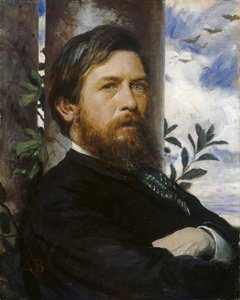
1827–1901, Швейцария
Арнолд Бьоклин
The Shadow of the Isle Basel, Switzerland, provides the starting point for a life defined by the tension between the tangible and the spectral. Born on October 16, 1827, to Christian Frederick Böcklin and Ursula Lippe, the young man would eventually move beyond the silk trade of his father to the rigorous halls of the Düsseldorf Academy. Under the guidance of Schirmer, he began to absorb the language of landscape, a skill that would later be used to map the geography of the human soul. He did not merely paint scenery; he constructed realms where the classical and the macabre collide.
Други творби на Арнолд Бьоклин
 Островът на мъртвите (Първа версия)1880
 Автопортрет със смъртта, свиреща на цигулка
 Война1896
 The Isle of the Dead (Version 2)1880

Есеи по темата Spring Evening
 French artworks of the 1880sFrench Impressionist masterpieces by Claude Monet, Pierre-Auguste Renoir, and Georges Seurat. Find museum-quality reproductions on Original…
 Symphony of Sunlight: The Luminous Legacy of Pine Tree Landscapes in Art HistoryExplore the luminous history of pine landscapes through Sorolla and Shishkin. Discover the magic of forest art today.
 En Plein Air Serenity: Exploring the Luminous Beauty of Impressionist Garden ArtExplore the luminous history of Impressionist garden art through Monet and Van Gogh. Discover the magic of plein air painting today.