

 Преглед в реален мащаб
 Сподели
 Сподели
 Подробности
 Ръководство

 Изтегляне
 Подобни артикули
 Рентгенова снимка
 Слайдшоу
 Статистика
Триумфът на кръста


 Разгърни целия текст
Ръчно изработена маслена репродукция
Ръчно рисувана маслена картина върху платно във вашия размер и рамка, изработена по поръчка от нашите художници. ( Избор на принт Превключване към дигитално изображение)




P118B $10

P118H $10

P118W $10

P438Z $10

P508JH $12

P508YH $12

P805H $10

P805Z $10

P919BZ $10

P919G $10

P919XJ $10

P959ZH $10

P968JZ $12

W106C $8

W218G $10

W218JH $8

W218Y $10

W307PJ $10

W316G $10

W316PJ $8

W316Y $10

W398PJ $8

W4111J $10

W500HY $15

W500JH $15

W692G $12

W849H $8

W940BG $15

W953PJ $8




Изберете от нашите предварително зададени размери, които съответстват на оригиналните пропорции на произведението.

Можете да въведете свои собствени размери, за да паснат на конкретна рамка или пространство. Ако избраният от вас размер не съответства на пропорциите на оригиналното изображение, ние ще изрежем произведението или ще разширим картината с допълнителни ръчно рисувани елементи. Дигитален макет ще бъде изпратен за ваше одобрение преди започване на производството.
Моля, обърнете внимание, че предпрогледа на екрана не отразява действителното изрязване или разширяване. Само макетът ще покаже точно финалната композиция.
Въпреки че са налични персонализирани размери, препоръчваме да изберете размер от предварително дефинирания списък, за да запазите оригиналните пропорции.
След получаване на поръчка, екипът на OriginalUniqueArt.com ще изпрати имейл до клиента с инструкции и ще предостави примерен макет за преглед.
Доставка по целия свят () в рамките на 3-4 седмици вместо стандартните 5 седмици. (25 Септември). Без компромис с качеството.

Безплатна експресна доставка по целия свят

Висококачествено ленено платно

Пълно застраховане на доставката

Гаранция за възстановяване на митнически такси

Гаранция за пълно съответствие на цветовете

Политика за връщане в рамките на 100 дни (само при дефекти)

100% Гаранция за връщане на сумата

Отстъпка при поръчка на повече произведения
 Опцията със стъкло е налична само за размери под 110 см

Триумфът на кръста
Техника на репродукция
Размер на репродукцията
-


Крайна цена
$ 300
Agnolo Gaddi: Bridging Gothic Legacy and Renaissance Promise
The Florentine artist Agnolo Gaddi (1350-1396) stands as a remarkable testament to the transformative period of Italian art history—the cusp between the Late Gothic and Early Renaissance movements. Often hailed as the last major painter directly influenced by Giotto di Bondone’s revolutionary style, dismissing him solely as an imitator overlooks the subtle yet profound ways in which Gaddi reshaped artistic conventions, establishing himself as a pivotal figure in Florence's burgeoning cultural landscape. His life unfolded amidst the vibrant commercial and artistic dynamism of his era, leaving behind a legacy characterized by meticulous craftsmanship and a masterful blending of tradition and innovation.- A Familial Connection: Gaddi’s artistic lineage traced back to Taddeo Gaddi, Giotto's most celebrated pupil—a connection that immediately positioned him within the epicenter of artistic experimentation unfolding in Florence during the fourteenth century. This familial bond wasn’t merely about inheriting a stylistic inheritance; it was about engaging in a dialogue with a monumental figure who fundamentally altered perceptions of representation.
- The Gothic Echoes Remain: Despite his embrace of emerging Renaissance ideals, Gaddi stubbornly clung to the expressive vocabulary of Late Gothic art. His frescoes—particularly those adorning Santa Croce—retain the characteristic flattened perspective and stylized drapery prevalent in Giotto’s groundbreaking compositions. This deliberate preservation of stylistic elements underscores Gaddi's commitment to honoring the artistic heritage of his predecessors.
- A Renaissance Spark Ignites: However, Gaddi wasn’t merely reiterating Gothic conventions; he subtly infused them with nascent Renaissance sensibilities. His meticulous attention to detail—evident in depictions of drapery folds and facial expressions—demonstrates a growing awareness of anatomical accuracy and naturalistic observation—traits that would soon define the aesthetic priorities of the Early Renaissance.
Notable Works: The Triumph of the Cross and Beyond
Gaddi’s artistic output encompassed numerous significant projects, cementing his reputation as one of Florence's foremost painters. Among his most celebrated achievements is “The Triumph of the Cross,” a monumental fresco executed in Santa Croce between 1380 and 1382—a masterpiece that encapsulates Gaddi’s stylistic synthesis. The painting depicts Jesus Christ being crucified on a cross, surrounded by figures representing various aspects of Christian faith and devotion. Notably, a horse dominates the composition, symbolizing Roman imperial power and serving as a visual anchor for the scene.- Symbolism Richly Layered: The fresco’s symbolism is profoundly layered—reflecting Gaddi's deep understanding of theological concepts and artistic conventions. The crucifix itself embodies sacrifice and redemption, while surrounding figures convey themes of piety, compassion, and divine justice.
- Technique: Fresco Painting – A Legacy Preserved: Gaddi employed the technique of fresco painting—a method that involves applying pigment onto wet plaster—resulting in durable, luminous images that have endured for centuries. This painstaking process demanded exceptional skill and patience—characteristics that exemplify Gaddi’s unwavering dedication to artistic excellence.
Influence and Legacy: Shaping Artistic Discourse
Agnolo Gaddi exerted considerable influence on subsequent generations of Florentine artists, notably Cennino Cennini—a craftsman who championed Gaddi's Gothic style as a counterbalance to the increasingly dominant Renaissance aesthetic. Through his meticulous observation of nature and his masterful manipulation of artistic conventions, Gaddi established himself as a pivotal figure in Florence’s artistic evolution—leaving behind a legacy that continues to inspire artists and scholars alike.Further research into Agnolo Gaddi's life and work can be found at Artists Database and Wikipedia Search. Explore detailed images of “The Triumph of the Cross” at Artwork Database and delve into biographical information about Gaddi on Artists Database.
Биография на художника
Agnolo Gaddi: Florentine Painter and the Last Echoes of Giotto
Agnolo Gaddi (c. 1350 – 1396) stands as a singular figure in the artistic panorama of Florence during the mid-XIV century—a descendant of Giotto di Bondone, yet simultaneously forging his own distinctive path toward the burgeoning Renaissance aesthetic. He wasn’t merely perpetuating tradition; he was subtly reshaping it, skillfully bridging the gap between Gothic grandeur and the nascent humanist spirit that would soon dominate European art. While often portrayed as the final bastion of Giottesque style, reducing Gaddi to a mere imitator diminishes the complexity of his artistic contribution—a contribution rooted in profound familial lineage but propelled by an unwavering dedication to innovation.The Legacy of Giotto: Early Influences and Artistic Formation
Agnolo’s formative years were steeped in the shadow of Giotto di Bondone, whose revolutionary frescoes at Assisi and Padua had irrevocably altered artistic conventions. Taddeo Gaddi, Agnolo's father—Giotto’s most devoted pupil—transmitted this groundbreaking vision to his son, instilling a conviction that art should strive for emotional resonance and narrative clarity. This influence is palpable in Gaddi’s earliest works – notably the triptych now residing in Parma’s Galleria Nazionale—where monumental figures convey profound emotion through expressive gestures and carefully crafted drapery. The Gothic sensibility—characterized by dramatic lighting effects, opulent fabrics, and an overarching preoccupation with decorative splendor—permeates his artistic vocabulary. Like Giotto before him, Gaddi embraced a stylistic approach that prioritized emotional impact over mere visual representation, reflecting the spiritual fervor of the era. However, Agnolo swiftly differentiated himself from his father’s style, demonstrating a remarkable sensitivity to nuance and subtlety.A Style Defined by Refinement: Exploring Gaddi's Artistic Distinctiveness
Where Giotto favored robust simplicity—a deliberate rejection of Byzantine formalism—Gaddi pursued elegance and intricacy, incorporating meticulous detail into his compositions. This stylistic divergence is particularly evident in the frescoes adorning Santa Croce—a monumental undertaking that cemented Gaddi’s reputation as Florence’s foremost painter. These canvases depict scenes from *The Legend of the True Cross*, employing a masterful blend of Gothic techniques with emerging Renaissance sensibilities. The use of chiaroscuro—the dramatic interplay between light and shadow—creates an atmosphere of solemn grandeur, mirroring Giotto's pioneering approach yet elevating it to new heights of expressive power. Furthermore, Gaddi’s meticulous rendering of textures—from the velvety folds of drapery to the rough surface of stone—underscores his commitment to realism—a characteristic that would become increasingly prominent in subsequent artistic developments.Santa Croce: A Triumph of Narrative Painting
The frescoes at Santa Croce represent Gaddi's magnum opus—a testament to his artistic prowess and a cornerstone of Florentine art history. The Cappella Baroncelli, housing the monumental panels depicting *The Nativity*, *The Annunciation*, *The Resurrection*, and *The Descent from Calvary*, exemplifies Gaddi’s mastery of narrative painting. Each scene unfolds with meticulous attention to detail—figures rendered with palpable emotion and set within richly textured architectural landscapes—demonstrating a profound understanding of artistic principles. The frescoes are not merely decorative; they convey theological narratives with unwavering conviction, reflecting the spiritual preoccupations of the Florentine elite during Gaddi’s lifetime. Moreover, the stained glass windows in the chancel—designed collaboratively by Gaddi and Giovanni da Milano—further enhance the chapel's visual impact, creating a harmonious ensemble that embodies the artistic ideals of the period.Beyond Santa Croce: Patronage, Technique, and Artistic Legacy
Agnolo Gaddi’s artistic output extended beyond Santa Croce, encompassing commissions for altarpieces, devotional panels, and decorative medallions—a testament to his versatility as an artist and his engagement with Florentine society. His involvement in the production of trefoils for the Loggia dei Lanzi—commissioned by Lorenzo Medici—demonstrates his mastery of sculptural technique alongside painting—further solidifying his position as a multifaceted artistic figure. Gaddi’s meticulous attention to detail—evident throughout his oeuvre—reflects the influence of Giovanni da Milano, whose innovative approach to fresco painting championed realism and expressive dynamism. Giorgio Vasari recognized Gaddi's significance in *Lives of the Most Excellent Painters*, Sculptors, and Architects*, enshrining him as a pivotal figure in Florentine art history—a painter who skillfully navigated the transition between Gothic tradition and Renaissance innovation, leaving behind an enduring legacy of beauty and artistic excellence.
Агноло Гадди
1350 - 1396 , Италия
Бързи факти
- Artistic Movement Or Style: Gothic, Early Renaissance
- Artists Or Movements Influenced By This Artist: ['Cennino Cennini']
- Artists Who Influenced This Artist:
- Taddeo Gaddi
- Giotto
- Date Of Birth: c. 1350
- Date Of Death: October 10, 1396
- Full Name: Agnolo Gaddi
- Nationality: Italian
- Notable Artworks:
- The Last Supper
- Crucifixion
- Discovery of True Cross
- Place Of Birth: Florence, Italy
Свързани статии
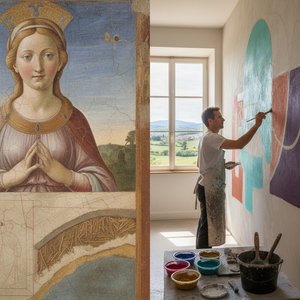
The Enduring Legacy of Fresco Painting: Techniques, History & Contemporary Relevance
Explore the rich history & enduring artistry of fresco painting – from Giotto to Michelangelo! Discover techniques, conservation efforts, & modern applications. Learn how OriginalUniqueArt brings this timeless art form to your home.
Фреската като Семейно Наследство: Пресъздайте Своята История по Стените
Създайте уникална семейна фреска с ! Експертни художници, висококачествени материали и персонализиран дизайн. Запазете спомените си за поколения наред!

The Enduring Legacy of Fresco: Technique, History & Artistic Expression Across Cultures
Explore the rich history & enduring legacy of fresco painting! Discover ancient techniques, Giotto's masterpieces, and modern applications. Expert insights for art lovers & professionals.
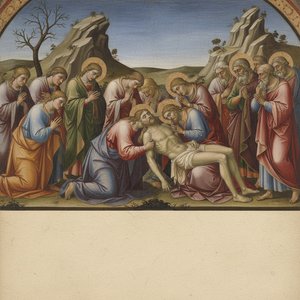
Giotto di Bondone: Revolutionizing Late Medieval Painting through Narrative Innovation
Explore the revolutionary art of Giotto di Bondone! Discover his groundbreaking techniques, iconic frescoes like those in the Arena Chapel, and lasting impact on Renaissance painting. A deep dive for art enthusiasts.
Джорджо Вазари: 25 шедьовъра на Джото ди Бондоне – изкуство за вашия дом
Открийте 25 шедьовъра на Джото ди Бондоне – ренесансов гений и пионер в изкуството! Фрески, Мадони, Христос и библейски сцени. Вдъхновете се за вашия дом с висококачествени репродукции на OriginalUniqueArt.com.

