Портрет на Wang Yuanqi

22-те най-известни картини на Wang Yuanqi, селекция от галерията

Обновено Октомври 2026 · класирано според нашия индекс на популярност (търсения, посещения и поръчки за всяко произведение) · 22 творби на Wang Yuanqi в нашия каталог

Накратко

От всички оригинални произведения, оставени от Wang Yuanqi, най-известната е Landscape for Zhanting (1710). След тях непосредствено следват Wangchuan Villa (1711) и Landscape (1678). Нашият каталог съдържа 22 произведения на Wang Yuanqi; галерията е съхранила 22-те най-обожавани от света, всяко от тях представен с неговата дата, неговия музей и неговата история.

1642 – 1715, Taicang Най-много творби: Метрополитън Музей на изкуствата

Топ 10-те картини на Wang Yuanqi: изборът на галерията

1
Landscape for Zhanting (1710) на Wang Yuanqi

Landscape for Zhanting

1710 · Ink

In Landscape for Zhanting, the artist Wang Yuanqi presents a vast mountain range that stretches across the entire width of the silk. Snow-capped peaks rise against the sky, their white summits catching the light amidst the rugged terrain. These mountains form a heavy, continuous boundary that defines the horizon. The scale of the landscape creates a sense of immense depth, pulling the eye through layers of stone and mist.
2
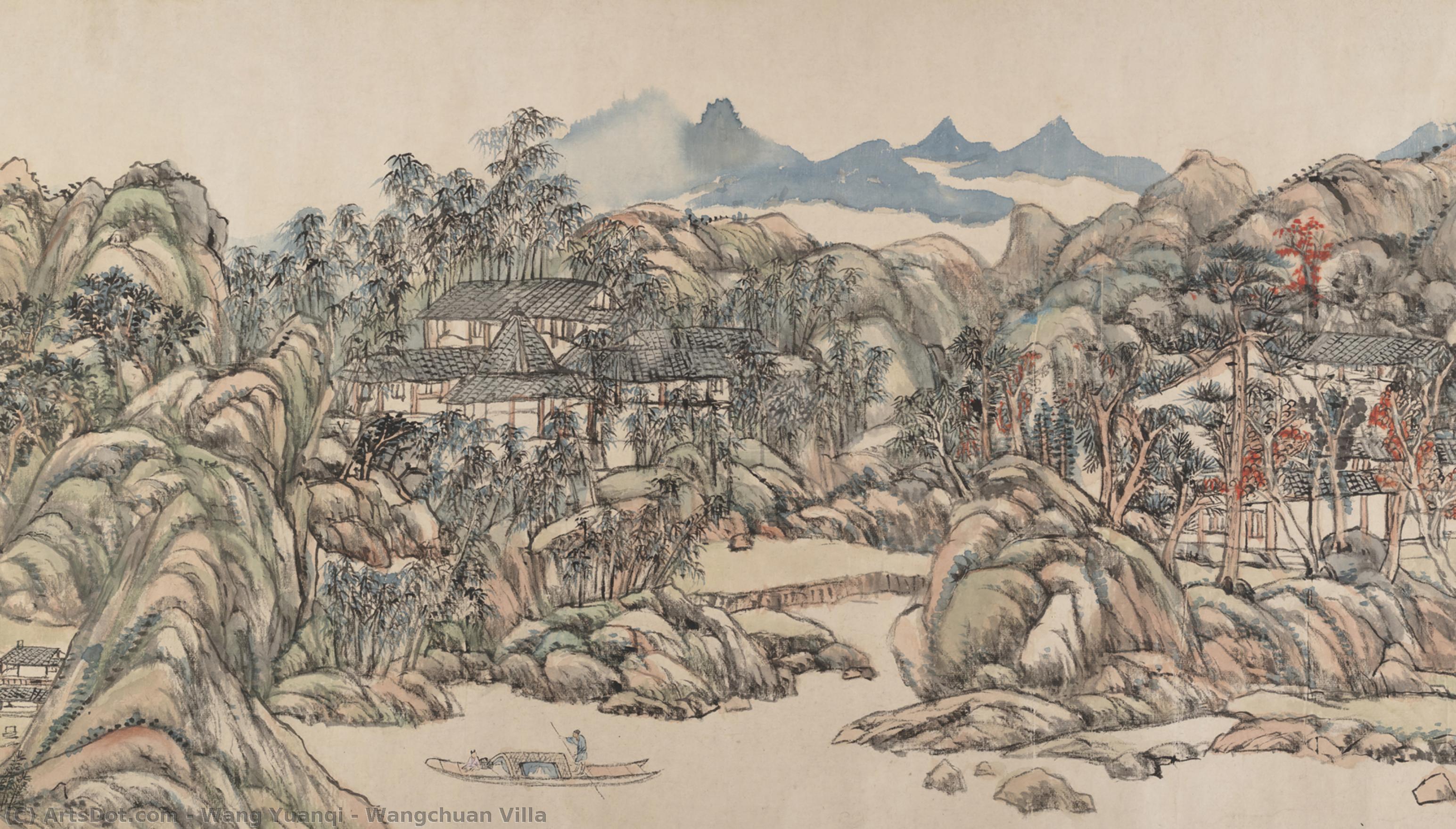
Wangchuan Villa (1711) на Wang Yuanqi

Wangchuan Villa

The handscroll titled Wangchuan Villa emerges from the brush of Wang Yuanqi, a painter who shaped the landscape traditions of the Qing Dynasty. Born in 1642 in Taicang, Jiangsu province, China, Wang Yuanqi carries the weight of a profound artistic lineage. He moves through the world of ink and color as a leading figure of the Orthodox School. His hand brings life to this specific vision of a mountain community,…

Изборът на Wang Yuanqi продължава, от 11 до 22

Темите, които привличат погледа на Wang Yuanqi

Четирите найчесто срещани теми в тези оригинални творби, всяка с най-добрия си пример.

Музеите, в които се съхраняват оригиналите на Wang Yuanqi

8 музея, които притежават най-голям брой от картините на тази страница.

Музеи Град Творения на Wang Yuanqi Картини от този списък
Метрополитън Музей на изкуствата, Ню ЙоркМетрополитън Музей на изкуствата Ню Йорк 7 Wangchuan Villa, 清 王原祁 倣吳鎮山水圖 軸 Landscape after Wu Zhen, Landscape for Zhanting
Art Institute of Chicago, ЧикагоArt Institute of Chicago Чикаго 3 Landscape, Mountainous Landscape after Wang Meng, Landscape after Huang Gongwang
Cleveland Museum of Art, КливландCleveland Museum of Art Кливланд 2 Landscape after Ni Zan, Green Peaks under Clear Sky: After Huang Gongwang
Художествена галерия на Йейлския университет, Ню ХейвънХудожествена галерия на Йейлския университет Ню Хейвън 2 Landscape in the Style of Huang Gongwang, Landscape
Walters Art Museum, БалтиморWalters Art Museum Балтимор 1 Free Spirits Among Streams and Mountains
Детройтският институт за изкуства, ДетройтДетройтският институт за изкуства Детройт 1 Mountain and River Landscape
Музеят Запретният град, ПекинМузеят Запретният град Пекин 1 Wang Yuanqi's Thatched Cottage Ten Records
Национална галерия на Виктория, МелбърнНационална галерия на Виктория Мелбърн 1 The Fuchun Mountians

Wang Yuanqi десетилетие по десетилетие: оригиналът, който дефинира всяко от тях

Произведения по десетилетия

Изберете десетилетие, за да видите оригиналната творба, която го определя.

Въпроси на колекционерите относно картините на Wang Yuanqi

С кое произведение е най-известен Wang Yuanqi?Разкрийте отговора

Landscape for Zhanting (1710). Следващите са Wangchuan Villa (1711) и Landscape (1678).

На каква възраст е бил Wang Yuanqi, когато е създадена Landscape for Zhanting?Разкрийте отговора

68 години: Landscape for Zhanting е от 1710 г., а Wang Yuanqi е роден/а в 1642.

Кои са десетте най-известни картини на Wang Yuanqi?Разкрийте отговора

Landscape for Zhanting, Wangchuan Villa, Landscape, Mountainous Landscape after Wang Meng, Free Spirits Among Streams and Mountains, 清 王原祁 倣吳鎮山水圖 軸 Landscape after Wu Zhen, Landscape for Zhanting, Landscape after Ni Zan, Green Peaks under Clear Sky: After Huang Gongwang и Landscape after Huang Gongwang. Класацията по-горе показва годината и музея за всяко от тях.

Колко картини е оставил Wang Yuanqi?Разкрийте отговора

В нашия каталог са представени 22 произведения на Wang Yuanqi, датирани от 1678 до 1712.

В кои музеи са изложени шедьоврите на Wang Yuanqi?Разкрийте отговора

Предимно в Метрополитън Музей на изкуствата (Ню Йорк), Art Institute of Chicago (Чикаго) и Cleveland Museum of Art (Кливланд). В горната таблица с музеи са изброени всички тях.

В кои години Wang Yuanqi е създал най-известните си произведения?Разкрийте отговора

В 1700s: 5 от 22 произведенията на тази страница са създадени тогава, като Landscape after Ni Zan са сред тях.

Кои са първата и последната известни оригинални творби на Wang Yuanqi?Разкрийте отговора

На тази страница най-старата е Landscape (1678), а най-новата е Landscape in the Style of Huang Gongwang (1712).

Кои теми избира най-често Wang Yuanqi?Разкрийте отговора

Mountains (3), Trees (2) и People (2), разпределени в 22 произведения на тази страница.

Кои произведения на Wang Yuanqi се съхраняват в Метрополитън Музей на изкуствата?Разкрийте отговора

Wangchuan Villa, 清 王原祁 倣吳鎮山水圖 軸 Landscape after Wu Zhen и Landscape for Zhanting: Метрополитън Музей на изкуствата, Ню Йорк притежава 7 от произведенията на тази страница.

Wang Yuanqi: живот и творчество

Wang Yuanqi: A Master of Qing Dynasty Landscape

Early Life and Education

  • Wang Yuanqi (王原祁) was born in 1642 in Taicang, Jiangsu province, China.
  • He came from a family with a strong artistic tradition; his grandfather, Wang Shimin, was a renowned painter of the early Qing dynasty.
  • Yuanqi received rigorous training in painting from his grandfather, laying the foundation for his future artistic endeavors.
  • His style name was 'Mao-ching' and his sobriquet was 'Lu-t’ai'.

Career as a Court Official

  • Wang Yuanqi rose to prominence as a court official during the Qing dynasty, beginning shortly after its establishment in 1644.
  • He served with distinction and was eventually appointed curator of the imperial collection under the Kangxi Emperor.
  • This position granted him access to a vast array of artworks, further enriching his artistic knowledge and influencing his style.
  • He remained a court official throughout his long career, balancing administrative duties with his passion for painting until his death in 1715 at age 73.

Artistic Style and Influences

  • Wang Yuanqi is considered one of the “Six Masters of the early Qing period,” also known as the ‘Four Wangs, a Wu and a Yun’.
  • He was a leading figure in the 'Orthodox School' (正统派) of Chinese landscape painting.
  • His landscapes drew inspiration from Yuan dynasty artists who moved away from the highly realistic depictions favored during the Northern Song period.
  • A key influence on his work was Huang Gongwang, particularly in the use of dry brush strokes, ink washes, and a sophisticated approach to color.
  • He skillfully integrated color patterns into his compositions, complementing abstract designs with rhythmic color flows.

Major Works and Achievements

  • Notable works include Landscape in the Style of Huang Gongwang (1711), currently held in Singapore’s Asian Civilisations Museum.
  • His rendition of Wang Wei's eighth-century hand scroll, The Wang River Villa, is housed in the Metropolitan Museum of Art, New York City.
  • Other significant paintings include “The Fuchun Mountains”, “Landscape for Zhanting” and numerous landscapes after the Four Great Yuan Masters.
  • He excelled at recreating the styles of earlier masters while imbuing his works with a unique personal touch.

Historical Significance

  • Wang Yuanqi played a crucial role in shaping the development of Chinese landscape painting during the Qing dynasty.
  • His adherence to and refinement of the Orthodox School established a standard for generations of artists.
  • He helped preserve and promote traditional artistic values while also demonstrating innovative techniques in composition and color usage.
  • His work continues to be celebrated for its technical mastery, aesthetic beauty, and historical importance within the context of Chinese art history.