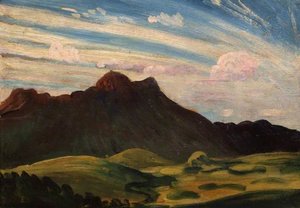
Портрет на Джеймс Диксън Иннес

72-те най-известни картини на Джеймс Диксън Иннес, всяка от които е уникална

Обновено Октомври 2026 · класирано според нашия индекс на популярност (търсения, посещения и поръчки за всяко произведение) · 72 творби на Джеймс Диксън Иннес в нашия каталог

Накратко

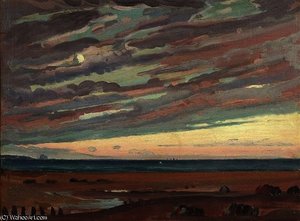
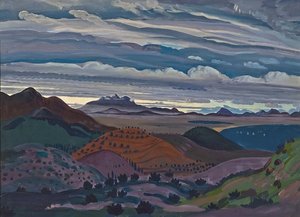
Evening, Sun Setting Behind Arenig Fach е картината на Джеймс Диксън Иннес, която привлича най-много погледи. След това погледът се насочва към A rocky cove и Arenig (1911). Сред 72 произведения на Джеймс Диксън Иннес в нашия каталог, тези 72 са най-известните – всяко от тях е уникален оригинал, представен с годината на създаване, музея и причината за неговата вечност.

1887 – 1914, Ланели Post-impressionism Най-много творби: Национална галерия на Канада

Топ 10 картини на Джеймс Диксън Иннес, през погледа на галерията

Знаменитите картини на Джеймс Диксън Иннес, номера от 11 до 72

11Landscape with a Grazing Horse (1912) на Джеймс Диксън ИннесLandscape with a Grazing Horse1912 · Yale Center for British Art 12Coastal landscape на Джеймс Диксън ИннесCoastal landscape 13Morning light на Джеймс Диксън ИннесMorning light 14Welsh mountains на Джеймс Диксън ИннесWelsh mountains 15Twilight In Aveyron на Джеймс Диксън ИннесTwilight In Aveyron 16The Seine At Caudebec, France на Джеймс Диксън ИннесThe Seine At Caudebec, France 17The Bead Chain на Джеймс Диксън ИннесThe Bead Chain 18Garn Lake на Джеймс Диксън ИннесGarn Lake 19Deep Twilight, Pyrenees на Джеймс Диксън ИннесDeep Twilight, PyreneesYale Center for British Art 20The Spurs Of Arenig на Джеймс Диксън ИннесThe Spurs Of Arenig 21Provençal Coast, Sunset на Джеймс Диксън ИннесProvençal Coast, SunsetБирмингамски музей и художествена галерия 22Girl Playing Guitar на Джеймс Диксън ИннесGirl Playing Guitar 23Ranunculus на Джеймс Диксън ИннесRanunculus 24The castle, chepstow на Джеймс Диксън ИннесThe castle, chepstow 25Girl Standing By A Lake на Джеймс Диксън ИннесGirl Standing By A Lake 26Canigou на Джеймс Диксън ИннесCanigou 27Pembroke Coast на Джеймс Диксън ИннесPembroke Coast 28The Corner Of A Room на Джеймс Диксън ИннесThe Corner Of A Room 29The Cathedral At Elne на Джеймс Диксън ИннесThe Cathedral At Elne 30Landscape, france на Джеймс Диксън ИннесLandscape, france 31Chepstow Castle на Джеймс Диксън ИннесChepstow Castle 32The old barn на Джеймс Диксън ИннесThe old barn 33Arenig на Джеймс Диксън ИннесArenig 34Mountains and lake, wales на Джеймс Диксън ИннесMountains and lake, wales 35Valley with arenig on the left на Джеймс Диксън ИннесValley with arenig on the left 36Tintern abbey на Джеймс Диксън ИннесTintern abbey 37Sea at sunset на Джеймс Диксън ИннесSea at sunset 38Arenig Fawr, North Wales на Джеймс Диксън ИннесArenig Fawr, North WalesFitzwilliam Museum 39Canigou In Snow на Джеймс Диксън ИннесCanigou In Snow 40Vernet (provençal Landscape) на Джеймс Диксън ИннесVernet (provençal Landscape) 41Waterfall на Джеймс Диксън ИннесWaterfall 42An peasant girl by a jetty на Джеймс Диксън ИннесAn peasant girl by a jetty 43Collioure на Джеймс Диксън ИннесCollioure 44The blue pool, dorset на Джеймс Диксън ИннесThe blue pool, dorset 45The Alhambra на Джеймс Диксън ИннесThe Alhambra 46Moorland Landscape With Sunset на Джеймс Диксън ИннесMoorland Landscape With Sunset 47French Landscape на Джеймс Диксън ИннесFrench Landscape 48In The Pyrenees на Джеймс Диксън ИннесIn The Pyrenees 49Dartmoor на Джеймс Диксън ИннесDartmoor 50Vernet на Джеймс Диксън ИннесVernet 51View In Wales на Джеймс Диксън ИннесView In Wales 52Collioure на Джеймс Диксън ИннесCollioure 53The heavy cloud, arenig на Джеймс Диксън ИннесThe heavy cloud, arenig 54South Of France, Bozouls, Near Rodez на Джеймс Диксън ИннесSouth Of France, Bozouls, Near Rodez 55Sunset In The Pyrenees на Джеймс Диксън ИннесSunset In The Pyrenees 56Arenig, Sunny Evening на Джеймс Диксън ИннесArenig, Sunny Evening 57The fair at perpignan на Джеймс Диксън ИннесThe fair at perpignan 58Afternoon, ronda на Джеймс Диксън ИннесAfternoon, ronda 59The Girl In The Cottage на Джеймс Диксън ИннесThe Girl In The Cottage 60Mountain with small meandering stream на Джеймс Диксън ИннесMountain with small meandering stream 61Arenig Mountain на Джеймс Диксън ИннесArenig Mountain 62View From The White Hart, Guestling, Sussex на Джеймс Диксън ИннесView From The White Hart, Guestling, Sussex 63The Town Of Collioure на Джеймс Диксън ИннесThe Town Of Collioure 64Welsh Landscape на Джеймс Диксън ИннесWelsh Landscape 65The Little Mother на Джеймс Диксън ИннесThe Little Mother 66Olives At Collioure на Джеймс Диксън ИннесOlives At Collioure 67Head Of A Gypsy на Джеймс Диксън ИннесHead Of A Gypsy 68Bozouls, Near Rodez на Джеймс Диксън ИннесBozouls, Near Rodez 69Mediterranean Coast Scene на Джеймс Диксън ИннесMediterranean Coast Scene 70A Performance Seen From A Box In Which Three Figures Are Standing на Джеймс Диксън ИннесA Performance Seen From A Box In Which Three Figures Are Standing 71Arenig, North Wales на Джеймс Диксън ИннесArenig, North Wales 72The Ring на Джеймс Диксън ИннесThe Ring

Темите, които привличат погледа на Джеймс Диксън Иннес

Четирите найчесто срещани теми в тези оригинални творби, всяка с най-добрия си пример.

Музеите, в които се съхраняват оригиналите на Джеймс Диксън Иннес

6 музея, които притежават най-голям брой от картините на тази страница.

Музеи Град Творения на Джеймс Диксън Иннес Картини от този списък
Национална галерия на Канада, ОтаваНационална галерия на Канада Отава 2 Arenig, South Wales, Evening
Yale Center for British Art, Ню ХейвънYale Center for British Art Ню Хейвън 2 Landscape with a Grazing Horse, Deep Twilight, Pyrenees
Национална галерия на Виктория, МелбърнНационална галерия на Виктория Мелбърн 1 Collioure
Art Gallery of South Australia, АделайдArt Gallery of South Australia Аделайд 1 Spanish landscape
Бирмингамски музей и художествена галерия, БирмингамБирмингамски музей и художествена галерия Бирмингам 1 Provençal Coast, Sunset
Fitzwilliam MuseumFitzwilliam Museum 1 Arenig Fawr, North Wales

Джеймс Диксън Иннес през годините: уникатните оригинали на всеки

Всяка оригинална творба на Джеймс Диксън Иннес с посочена дата, показана тук, е създадена в рамките на 2 години, между 1911 и 1912: година по година, ето ги.

Работи по години

Изберете година, за да разгледате оригиналите.

Картини на Джеймс Диксън Иннес: въпроси към галерията

Кое е най-известното произведение на Джеймс Диксън Иннес?Разкрийте отговора

Evening, Sun Setting Behind Arenig Fach. Следващите са A rocky cove и Arenig (1911).

Кои са десетте най-известни картини на Джеймс Диксън Иннес?Разкрийте отговора

Evening, Sun Setting Behind Arenig Fach, A rocky cove, Arenig, Bala Lake, South Wales, Evening, Collioure, Landscape With A Figure, Arenig, The Waterfall, View Of Llanelli From The Furnace Quarry и Spanish landscape. Класацията по-горе показва годината и музея за всяко от тях.

Колко са известните творби на Джеймс Диксън Иннес?Разкрийте отговора

В нашия каталог са представени 72 произведения на Джеймс Диксън Иннес, датирани от 1911 до 1912.

Къде могат да се видят най-известните оригинали на Джеймс Диксън Иннес?Разкрийте отговора

Предимно в Национална галерия на Канада (Отава), Yale Center for British Art (Ню Хейвън) и Национална галерия на Виктория (Мелбърн). В горната таблица с музеи са изброени всички тях.

През кой период Джеймс Диксън Иннес създава най-известните си картини?Разкрийте отговора

В 1911: 3 от 72 произведенията на тази страница са създадени тогава, като Arenig са сред тях.

Коя е най-ранната и коя е най-късната известна картина на Джеймс Диксън Иннес?Разкрийте отговора

На тази страница най-старата е Arenig (1911), а най-новата е Spanish landscape (1912).

Какви теми предпочиташе Джеймс Диксън Иннес?Разкрийте отговора

Landscape (8), Mountains (7) и Sunset (6), разпределени в 72 произведения на тази страница.

Към кое художествено направление принадлежи творчеството на Джеймс Диксън Иннес?Разкрийте отговора

Post-impressionism, судейки по оригиналите на тази страница.

Какви оригинални творби на Джеймс Диксън Иннес мога да видя в Национална галерия на Канада?Разкрийте отговора

Arenig и South Wales, Evening: Национална галерия на Канада, Отава притежава 2 от произведенията на тази страница.

Джеймс Диксън Иннес: портрет на художника

A Brief Blaze of Color: The Life and Art of James Dickson Innes

James Dickson Innes, a name that echoes with both brilliance and poignant brevity in the annals of British modernism, represents a fleeting but intensely vibrant moment in art history. Born in Llanelli, South Wales, on February 27th, 1887, his life was tragically curtailed by tuberculosis at just twenty-seven years old. Yet within that remarkably short span, he forged an artistic voice uniquely distinct and profoundly prescient, anticipating many of the developments that would shape British painting for decades to come. His heritage—a Scottish historian father deeply invested in industrial history, and a Catalan mother who instilled within him a rich cultural sensibility—created a potent blend that fundamentally informed both his life and his extraordinary art. This confluence of influences, coupled with an inherently sensitive temperament, propelled him toward a path of artistic exploration that was both daring and deeply personal. Educated at Christ College, Brecon, young James quickly demonstrated a remarkable aptitude for visual expression, leading to his enrollment in the Carmarthen School of Art in 1904 before securing a coveted scholarship to the Slade School of Art in London just a year later. There, under the tutelage of figures like P. Wilson Steer, he absorbed the lessons of English Impressionism while simultaneously cultivating an independent spirit—a willingness to challenge conventions and forge his own distinctive path.

From Impressionistic Roots to Fauvist Fire

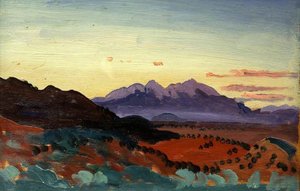
Innes’s early artistic output clearly reflects the influence of his Slade mentors and the broader currents of British painting at the turn of the century. He quickly gained recognition within the New English Art Club, exhibiting landscapes that skillfully echoed the atmospheric effects championed by Steer and Sickert—a subtle mastery of light and shadow, a dedication to capturing the essence of natural beauty. However, around 1908, a pivotal shift began, ignited by exposure to the revolutionary art of French Post-Impressionism during his travels. This wasn’t merely an adoption of techniques; it was a fundamental reorientation of his artistic sensibilities—a complete reimagining of how he approached color, form, and emotion. He moved decisively away from the delicate tonal variations characteristic of Impressionism towards a more decorative treatment of landscape, embracing bold, often non-naturalistic colors and luminous atmospheres that hinted at something far beyond mere representation. The influence of masters like Turner, Constable, and John Sell Cotman remained palpable in his reverence for nature, but it was now filtered through the vibrant palette and expressive brushwork of artists such as Matisse and Derain—a bold assertion of individual vision. This transformative period culminated in a style that art historian David Fraser Jenkins aptly described as “primitive,” suggesting a childlike directness combined with an intense connection to remote, often rugged landscapes. His association with the Camden Town Group in 1911 further solidified his position within the avant-garde, placing him alongside artists like Sickert and Augustus John—individuals who shared his desire to break from tradition and explore new artistic frontiers.

Welsh Landscapes and Continental Journeys

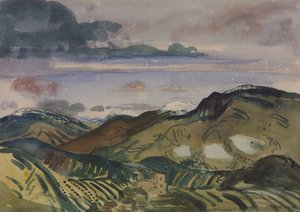
The dramatic peaks of the Welsh countryside, particularly the imposing Arenig Fawr mountain range in North Wales, became a central focus of Innes’s artistic explorations. He frequently painted alongside Augustus John during this period, their shared passion for the landscape resulting in a series of powerfully evocative works that captured both its physical grandeur and its intangible spirit. These paintings weren't simply topographical depictions; they were deeply emotional responses to the land—infused with a sense of mystery, solitude, and even spiritual resonance. However, Innes’s artistic journey extended far beyond the borders of Wales. Diagnosed with tuberculosis, he embarked on several transformative journeys across Europe—to France (Collioure), Spain, and Morocco between 1908 and 1913—seeking both respite from his illness and inspiration for his art. These travels exposed him to new light, colors, and cultures, profoundly enriching his artistic vocabulary and broadening his perspective. Collioure, in particular, with its dazzling Mediterranean palette and dramatic coastal scenery, proved to be a particularly fertile ground for experimentation. His paintings from this period demonstrate an extraordinary ability to capture the *essence* of a place—not just its visual appearance, but also its atmosphere and emotional character. He sought not to replicate reality, but to convey his *experience* of it, imbuing each canvas with a palpable sense of feeling.

Recognition and Lasting Legacy

Despite his tragically short career, James Dickson Innes achieved significant recognition during his lifetime. A joint exhibition with sculptor Eric Gill at the Chenil Gallery in 1911 showcased his landscapes alongside Gill’s work, demonstrating his growing prominence within the London art scene. Perhaps most notably, he was included in the groundbreaking Armory Show in New York City, Chicago, and Boston in 1913—a watershed moment that introduced modernist art to an American audience and brought international attention to Innes's unique vision. His patron, Winifred Coombe Tennant, a Welsh politician and philanthropist, played a crucial role in supporting his work and promoting his career. Tragically, his health continued to deteriorate, and he succumbed to tuberculosis on August 22nd, 1914, at the young age of twenty-seven—a devastating loss for the British art world. Yet, despite this premature death, Innes’s influence endured. His bold use of color and expressive brushwork challenged conventional artistic norms and paved the way for later generations of British artists, including David Hockney. A retrospective exhibition held at the National Museum of Wales in 2014, along with a BBC documentary exploring his relationship with Augustus John and their shared passion for Arenig Fawr, served as powerful reminders of his enduring legacy—a testament to the brilliance of an artist who dared to blaze brightly before being extinguished far too soon.

Key Characteristics of His Work

  • Bold Color Palette: Innes was renowned for his use of vibrant, often non-naturalistic colors, influenced by Fauvism.
  • Expressive Brushwork: His paintings are characterized by loose, energetic brushstrokes that convey a sense of movement and emotion.
  • Landscape Focus: The Welsh countryside, particularly Arenig Fawr, was a recurring subject in his work.
  • Emotional Intensity: Innes sought to capture not just the visual appearance of a scene, but also its atmosphere and emotional impact.
  • Influence of Post-Impressionism: He drew inspiration from artists like Matisse and Derain, incorporating their techniques into his own unique style.
James Dickson Innes’s art remains a powerful reminder that even the briefest of flames can illuminate the world with extraordinary beauty.