Портрет на Filippo De Pisis

Картини на Filippo De Pisis: 60-те най-известни, през погледа на галерията

Обновено Ноември 2026 · класирано според нашия индекс на популярност (търсения, посещения и поръчки за всяко произведение) · 61 творби на Filippo De Pisis в нашия каталог

Накратко

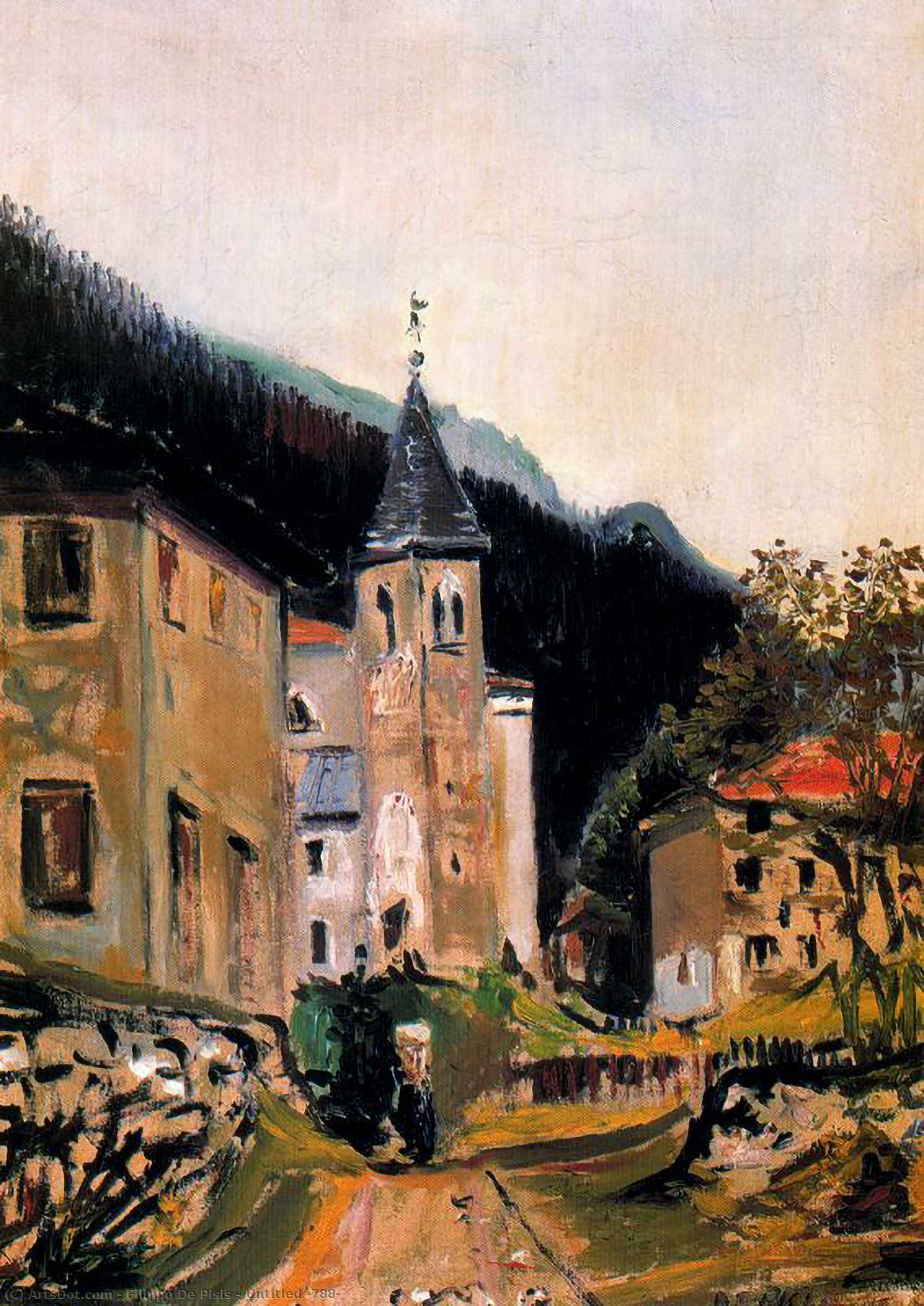
За галерията най-известната картина на Filippo De Pisis е Untitled (839). Untitled (529) и Untitled (788) допълват трио, което всяко око разпознава. От 61 произведения на Filippo De Pisis в нашия каталог, галерията представя 60 най-известните по-долу – всяко от тях е оригинал с посочен година, музей и това, което го прави уникално.

1896 – 1956, Ferrara Impressionism Най-много творби: Galleria d'Arte Moderna Achille Forti

Топ 10 карти на Filippo De Pisis в галерията

1
Untitled (839) на Filippo De Pisis

Untitled (839)

Oil On Canvas

In this work, we find ourselves drifting through a quiet, atmospheric moment in Venice, Italy. The Basilica di Santa Maria della Salute dominates the composition, yet it does not demand attention through rigid lines or heavy outlines. Instead, the structure emerges from a haze of cool blues and purples, its domes catching a diffused light that feels as though it might shift at any second. The scene is one of…

2
Untitled (529) на Filippo De Pisis

Untitled (529)

Oil On Canvas

A man in a white shirt and trousers moves through a dream, caught in a dance pose that defies the stillness of the objects around him. He is partially obscured by a rectangular frame, a boundary that separates the viewer from this fleeting gesture. At the center, a vase overflows with flowers, their petals rendered in thick, impasto strokes that catch the light. Below this arrangement, a single red fruit…

7
Still life with Mushrooms (1934) на Filippo De Pisis

Still life with Mushrooms

In the quiet intimacy of Filippo de Pisis’s Still Life with Mushrooms, we are invited into a world where the mundane is elevated to the level of poetry. Created in 1934, this exquisite composition serves as a masterclass in the art of the fleeting moment. The painting captures a scattered collection of mushrooms, their organic forms resting with a delicate randomness across the canvas. Some lie solitary on the ground,…

Картини на Filippo De Pisis, класирани от 11 до 60

Темите, които привличат погледа на Filippo De Pisis

Четирите найчесто срещани теми в тези оригинални творби, всяка с най-добрия си пример.

Музеите, в които се съхраняват оригиналите на Filippo De Pisis

2 музея, които притежават най-голям брой от картините на тази страница.

Музеи Град Творения на Filippo De Pisis Картини от този списък
Galleria d'Arte Moderna Achille Forti, VeronaGalleria d'Arte Moderna Achille Forti Verona 2 Still life with Mushrooms, Strawberries. Still Life
Art Gallery of New South Wales, СидниArt Gallery of New South Wales Сидни 1 Flowers

Filippo De Pisis, емблематичните картини на всяка година

Десет години, от 1930 до 1939, бяха достатъчни за Filippo De Pisis: галерията ги преминава година по година, едно след друго – известни оригинални творби.

Работи по години

Изберете година, за да разгледате оригиналите.

Картините на Filippo De Pisis: отговорите на галерията

Коя картина на Filippo De Pisis е най-известната от всички?Разкрийте отговора

Untitled (839). Следващите са Untitled (529) и Untitled (788).

Кои са 10-те най-добри картини на Filippo De Pisis?Разкрийте отговора

Untitled (839), Untitled (529), Untitled (788), Flowers, Untitled (620), Untitled (313), Still life with Mushrooms, Untitled (805), Untitled (699) и Untitled (586). Класацията по-горе показва годината и музея за всяко от тях.

Колко произведения е създал Filippo De Pisis?Разкрийте отговора

В нашия каталог са представени 61 произведения на Filippo De Pisis, датирани от 1930 до 1939.

Къде са изложени най-известните оригинали на Filippo De Pisis?Разкрийте отговора

Предимно в Galleria d'Arte Moderna Achille Forti (Verona) и Art Gallery of New South Wales (Сидни). В горната таблица с музеи са изброени всички тях.

Кои са най-ранните и най-късните известни творби на Filippo De Pisis?Разкрийте отговора

На тази страница най-старата е Still Life with Shell (1930), а най-новата е Strawberries. Still Life (1939).

Към кои сюжети Filippo De Pisis се връща най-често?Разкрийте отговора

Still life (6), Italian art (6) и Flowers (2), разпределени в 60 произведения на тази страница.

С коя техника е работил най-често Filippo De Pisis?Разкрийте отговора

Oil On Canvas, за 2 от 60 произведения на тази страница.

С кое художествено направление е свързан(а) Filippo De Pisis?Разкрийте отговора

Impressionism и Post-impressionism, судейки по оригиналите на тази страница.

Кои оригинални творби на Filippo De Pisis притежава Galleria d'Arte Moderna Achille Forti?Разкрийте отговора

Still life with Mushrooms и Strawberries. Still Life: Galleria d'Arte Moderna Achille Forti, Verona притежава 2 от произведенията на тази страница.

Filippo De Pisis: художникът

The Poet of the Fleeting Moment

Born Luigi Filippo Tibertelli in the historic Italian city of Ferrara, Filippo De Pisis was an artist who refused to be confined by a single medium. To understand his canvas, one must first understand his soul as a poet; he viewed the world through a lens of literary sensitivity, where every shadow and light flicker held a narrative weight. His early years in Italy were marked by a profound intellectual curiosity, studying literature and philosophy in Bologna. It was here that he encountered the haunting, dreamlike visions of Giorgio De Chirico, an encounter that would plant the seeds of Metaphysical influence within his burgeoning style. This duality—the precision of a scholar and the wandering eye of a flâneur—defined his approach to art, allowing him to capture not just the physical reality of a subject, but its emotional resonance.

His journey was one of constant movement across the great cultural capitals of Europe. Moving to Rome in 1919 and later settling in Paris in 1925, De Pisis immersed himself in the vibrant, avant-garde pulse of the interwar period. In Paris, his brushwork began to shed its more rigid, metaphysical origins, absorbing the light and movement of French Impressionism. He moved within the same circles as Georges Braque and André Derain, and his style evolved into something uniquely his own: a technique often described as pittura a zancapi mosca—a "fly-wing" style of painting characterized by rapid, fragmented, and nervous brushstrokes. This method allowed him to achieve an airy, almost mirage-like quality, where objects seemed to vibrate with life before dissolving back into the atmosphere.

A Symphony of Light and Melancholy

The heart of De Pisis’s oeuvre lies in his ability to find the eternal within the ephemeral. He possessed a singular talent for elevating the mundane—a simple arrangement of mushrooms, a bowl of strawberries, or a vase of foxgloves—into profound meditations on existence. His still lifes are never merely static arrangements; they are imbued with what he called "pathetic pleasure-pain," a bittersweet recognition of beauty's fleeting nature. Through muted pastel hues and a masterful command of Venetian light, he created compositions where the boundaries between objects and their surroundings blur, suggesting a deep, spiritual interconnectedness between all things.

His fascination with Venice provided much of his most luminous subject matter. The city’s architectural grandeur and its misty, maritime atmosphere served as the perfect stage for his expressive explorations. Whether depicting the rhythmic movement of a seascape or the quiet intimacy of a street scene, De Pisis utilized a broken brushstroke technique that captured the very essence of light hitting water or stone. This period of his work represents a pinnacle of Italian Post-Impressionism, where the artist’s technical skill met an almost obsessive devotion to capturing the "secret spirit" of the moment.

Legacy of the Cosmopolitan Visionary

Despite the disruptions of World War II and his eventual return to Italy, De Pisis never lost the cosmopolitan spirit that had defined his youth. His life was famously eccentric, marked by a dandyish lifestyle and an insatiable appetite for the beauty found in the smallest details—even claiming that a discarded feather on a street could spark a masterpiece. This radical openness to the world ensured that his work remained perpetually fresh, avoiding the stagnation that often plagues established masters.

Today, the significance of Filippo De Pisis rests in his unique position as a bridge between the structured metaphysical movements of the early 20th century and the more spontaneous, emotive expressions of later decades. His legacy is found in:

  • The fusion of poetry and painting: Proving that visual art can be as lyrical and metaphorically rich as the written word.
  • Mastery of atmosphere: Redefining how light and texture can convey complex psychological states like nostalgia and longing.
  • The elevation of the everyday: Transforming simple still lifes into profound explorations of beauty, decay, and the passage of time.

He remains a celebrated figure in the annals of Italian art, remembered not just as a painter of scenes, but as a chronicler of the ephemeral soul.