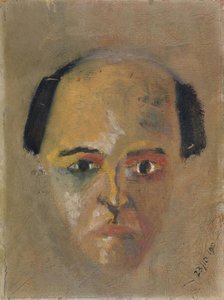
Портрет на Арнолд Шьонберг

65-те най-известни картини на Арнолд Шьонберг, всяка от които е уникална

Обновено Октомври 2026 · класирано според нашия индекс на популярност (търсения, посещения и поръчки за всяко произведение) · 65 творби на Арнолд Шьонберг в нашия каталог

Накратко

Pierrot lunaire, op. 21 - Night (1912) е картината на Арнолд Шьонберг, която привлича най-много погледи; оригиналът се намира в Arnold Schönberg Center, Виена. След това погледът се насочва към Календар на Арнолд Шьонеберг (1935) и Suite, op. 29 - Bi-directional twelve-tone row chart (1924). Сред 65 произведения на Арнолд Шьонберг в нашия каталог, тези 65 са най-известните – всяко от тях е уникален оригинал, представен с годината на създаване, музея и причината за неговата вечност.

1874 – 1951, Виена Expressionism Най-много творби: Arnold Schönberg Center

Топ 10 картини на Арнолд Шьонберг, през погледа на галерията

1
Pierrot lunaire, op. 21 - Night (1912) на Арнолд Шьонберг

Pierrot lunaire, op. 21 - Night

1912 · Acrylic On Canvas · Arnold Schönberg Center, Виена

Arnold Schönberg’s *Pierrot lunaire*, op. 21, stands as a monumental achievement in the evolution of modern music, a work born from the anxieties and aesthetic explorations of early 20th-century Europe. This particular rendition, “Night,” meticulously captured in this evocative photographic reproduction, offers a profound glimpse into Schönberg’s expressionistic vision – a world of fractured emotion, haunting beauty, and unsettling psychological depth. Composed in Berlin in 1912, the piece was commissioned…

2
Календар на Арнолд Шьонеберг (1935) на Арнолд Шьонберг

Календар на Арнолд Шьонеберг

1935 · Акрил върху платно · Arnold Schönberg Center, Виена

The photograph captures a moment frozen in time—a woman seated comfortably in the backseat of a vintage automobile alongside her husband, who steers confidently. More than just an image of domestic life, it embodies the spirit of 1935 Los Angeles, a city brimming with artistic ambition and eager to embrace radical new ideas. The woman’s attire – a hat perched atop her head – speaks volumes about the era's aesthetic…

3
Suite, op. 29 - Bi-directional twelve-tone row chart (1924) на Арнолд Шьонберг

Suite, op. 29 - Bi-directional twelve-tone row chart

1924 · Acrylic On Canvas · Arnold Schönberg Center, Виена

Arnold Schönberg's "Suite, op. 29 – Bi-directional twelve-tone row chart" isn’t merely a musical score; it’s a visual manifestation of radical innovation, a testament to the composer’s relentless pursuit of sonic and artistic boundaries. Created in 1924, during a period of intense experimentation within his own compositional methods—specifically, his “Method of composing with twelve tones which are related only with one another”—this work represents a pivotal moment in 20th-century music…

4
Peace on Earth, op. 13 (1907) на Арнолд Шьонберг

Peace on Earth, op. 13

1907 · Black and White Photography · Arnold Schönberg Center, Виена

To gaze upon this depiction of Arnold Schoenberg's "Peace on Earth, op. 13" is not merely to look at an aged sheet of music; it is to encounter a preserved echo of profound human yearning. This composition, born from the charged atmosphere of early twentieth-century Europe, transcends its musical notation to become a tangible artifact of hope. The visual evidence—the sepia tones, the delicate creases, the faint patina of time…

5
Phantasy for Violin with Piano Accompaniment, op. 47 (1949) на Арнолд Шьонберг

Phantasy for Violin with Piano Accompaniment, op. 47

1949 · Acrylic On Canvas · Arnold Schönberg Center, Виена

This meticulously crafted hand-painted reproduction captures a pivotal moment in the oeuvre of Arnold Schoenberg, a composer who irrevocably altered the landscape of 20th-century music. The piece, “Phantasy for Violin with Piano Accompaniment,” op. 47, born from a commission in 1949, represents more than just a musical composition; it’s a tangible link to a brilliant mind grappling with radical innovation and profound personal transformation. The photograph itself – a stark…

6
Аккомпанемент на кинематографична сцена (1929) на Арнолд Шьонберг

Аккомпанемент на кинематографична сцена

1929 · Акрил върху платно · Arnold Schönberg Center, Виена

Accompaniment to a Cinematographic Scene, op. 34 - Twelve-tone row chart Arnold Schoenberg’s “Accompaniment to a Cinematographic Scene,” Op. 34, stands as an arresting testament to the composer's radical vision of musical expression in the wake of World War I and his unwavering commitment to artistic independence. Commissioned by Heinrichshofen Verlag in Magdeburg in 1929, this orchestral work wasn’t merely a response to a film project; it was a deliberate…

7
Blue Gaze (1910) на Арнолд Шьонберг

Blue Gaze

1910 · Oil On Board · Arnold Schönberg Center, Виена

“Blue Gaze,” painted in 1910 by the titan of musical innovation, Arnold Schoenberg, is more than just a portrait; it's a visceral manifestation of artistic struggle and a testament to the burgeoning power of abstraction. Created during a pivotal period in Schoenberg’s life – a time when he was simultaneously wrestling with the radical new techniques of atonality in music and exploring the uncharted territories of visual expression – this…

8
Transfer ticket for public transport in Berlin (1927) на Арнолд Шьонберг

Transfer ticket for public transport in Berlin

1927 · Acrylic On Canvas · Arnold Schönberg Center, Виена

This meticulously crafted hand-painted reproduction captures a pivotal moment in design history – the 1927 transfer ticket for the Berlin tram system, conceived by the visionary composer Arnold Schönberg. Far more than simply a means of payment, this circular artifact represents a radical shift towards efficiency and user experience, anticipating modern transit systems by nearly a century. Schönberg’s design wasn't born from artistic indulgence; it stemmed from a pragmatic desire…

9
The Musical Idea - W. A. Mozart K 465 (1934) на Арнолд Шьонберг

The Musical Idea - W. A. Mozart K 465

1934 · Giclée Print · Arnold Schönberg Center, Виена

W.A. Mozart’s K. 465, “The Musical Idea,” takes on an entirely new dimension through the lens of Arnold Schönberg's profound inquiry into musical representation. This isn’t merely a reproduction of a classical score; it’s a visual echo of Schönberg’s seminal work, "Der Musikalische Gedanke," a treatise that fundamentally shifted our understanding of composition and its relationship to logic, technique, and artistic expression. The photograph itself – a meticulously annotated music…

10
Piano Piece, op. 19/6 (1911) на Арнолд Шьонберг

Piano Piece, op. 19/6

1911 · Acrylic On Canvas · Arnold Schönberg Center, Виена

This meticulously crafted hand-painted reproduction captures Arnold Schönberg’s poignant “Piano Piece, op. 19/6,” a deceptively simple work born from a moment of profound grief and artistic experimentation. Created in 1911, shortly after the death of Gustav Mahler – a figure Schönberg deeply revered as both mentor and friend – the piece offers a rare glimpse into the composer’s emotional landscape during a period of intense creative upheaval. The image presented…

Знаменитите картини на Арнолд Шьонберг, номера от 11 до 65

11Excerpt from Arnold Schönberg’s own handwritten library catalogue: Works of Richard Strauss (1914) на Арнолд ШьонбергExcerpt from Arnold Schönberg’s own handwritten library catalogue: Works of Richard Strauss1914 · Arnold Schönberg Center 12Self-Portrait (1910) на Арнолд ШьонбергSelf-Portrait1910 · Arnold Schönberg Center 13The Biblical Way (Act I, Scene 2), Stadium (1927) на Арнолд ШьонбергThe Biblical Way (Act I, Scene 2), Stadium1927 · Arnold Schönberg Center 14The Lucky Hand (scene 1) (1910) на Арнолд ШьонбергThe Lucky Hand (scene 1)1910 · Arnold Schönberg Center 15Gertrud Schönberg (1930) на Арнолд ШьонбергGertrud Schönberg1930 · Arnold Schönberg Center 16Tears (1910) на Арнолд ШьонбергTears1910 · Arnold Schönberg Center 17Garden Scene (1907) на Арнолд ШьонбергGarden Scene1907 · Arnold Schönberg Center 18Playing Cards for Whist/Bridge - Jack of Spades (1910) на Арнолд ШьонбергPlaying Cards for Whist/Bridge - Jack of Spades1910 · Arnold Schönberg Center 19Formation scheme for the Gurrelieder (1918) на Арнолд ШьонбергFormation scheme for the Gurrelieder1918 · Arnold Schönberg Center 20The Lucky Hand (scene 2) (1910) на Арнолд ШьонбергThe Lucky Hand (scene 2)1910 · Arnold Schönberg Center 21Red Gaze (1910) на Арнолд ШьонбергRed Gaze1910 · Arnold Schönberg Center 22Piano Concerto, op. 42 - Programmatic keywords (1942) на Арнолд ШьонбергPiano Concerto, op. 42 - Programmatic keywords1942 · Arnold Schönberg Center 23Playing Cards for Whist/Bridge - King of Hearts (1910) на Арнолд ШьонбергPlaying Cards for Whist/Bridge - King of Hearts1910 · Arnold Schönberg Center 24Structural Functions of Harmony - Chart of the Regions (1948) на Арнолд ШьонбергStructural Functions of Harmony - Chart of the Regions1948 · Arnold Schönberg Center 25Interior and Portrait of a Woman (1910) на Арнолд ШьонбергInterior and Portrait of a Woman1910 · Arnold Schönberg Center 26Blue Self-Portrait (1910) на Арнолд ШьонбергBlue Self-Portrait1910 · Arnold Schönberg Center 27Self-Portrait (1918) на Арнолд ШьонбергSelf-Portrait1918 · Arnold Schönberg Center 28Mathilde Schönberg (1909) на Арнолд ШьонбергMathilde Schönberg1909 · Arnold Schönberg Center 29Expectation (Scene 3) (1911) на Арнолд ШьонбергExpectation (Scene 3)1911 · Arnold Schönberg Center 30Handwriting samples (1923) на Арнолд ШьонбергHandwriting samples1923 · Arnold Schönberg Center 31Suite for Piano, op. 25 - Prelude (1921) на Арнолд ШьонбергSuite for Piano, op. 25 - Prelude1921 · Arnold Schönberg Center 32Landscape (1910) на Арнолд ШьонбергLandscape1910 · Arnold Schönberg Center 33Erwartung, op. 17 (1909) на Арнолд ШьонбергErwartung, op. 171909 · Arnold Schönberg Center 34Exlibris (1910) на Арнолд ШьонбергExlibris1910 · Arnold Schönberg Center 35Alliance (Hands) (1910) на Арнолд ШьонбергAlliance (Hands)1910 · Arnold Schönberg Center 36Portrait of a Woman (1910) на Арнолд ШьонбергPortrait of a Woman1910 · Arnold Schönberg Center 37Коалиционна Шахматка (1925) на Арнолд ШьонбергКоалиционна Шахматка1925 · Arnold Schönberg Center 38Moses and Aron (1930) на Арнолд ШьонбергMoses and Aron1930 · Arnold Schönberg Center 39Playing Cards for Whist/Bridge - Queen of clubs (1909) на Арнолд ШьонбергPlaying Cards for Whist/Bridge - Queen of clubs1909 · Arnold Schönberg Center 40Playing card design (1910) на Арнолд ШьонбергPlaying card design1910 · Arnold Schönberg Center 41Brief to Wilhelm von Wymetal (1907) на Арнолд ШьонбергBrief to Wilhelm von Wymetal1907 · Arnold Schönberg Center 42Alexander Zemlinsky (1910) на Арнолд ШьонбергAlexander Zemlinsky1910 · Arnold Schönberg Center 43Green Self-Portrait (1910) на Арнолд ШьонбергGreen Self-Portrait1910 · Arnold Schönberg Center 44Memory of Oskar Kokoschka (1910) на Арнолд ШьонбергMemory of Oskar Kokoschka1910 · Arnold Schönberg Center 45Mathilde Schönberg cooking (1912) на Арнолд ШьонбергMathilde Schönberg cooking1912 · Arnold Schönberg Center 46Model of a set of dentures (1926) на Арнолд ШьонбергModel of a set of dentures1926 · Arnold Schönberg Center 47Coalition Chess - Plane (1925) на Арнолд ШьонбергCoalition Chess - Plane1925 · Arnold Schönberg Center 48Gaze (Karl Kraus – The Great Wall of China) (1910) на Арнолд ШьонбергGaze (Karl Kraus – The Great Wall of China)1910 · Arnold Schönberg Center 49Furniture design (1931) на Арнолд ШьонбергFurniture design1931 · Arnold Schönberg Center 50Self-Portrait (1935) на Арнолд ШьонбергSelf-Portrait1935 · Arnold Schönberg Center 51Self-Portrait (1922) на Арнолд ШьонбергSelf-Portrait1922 · Arnold Schönberg Center 52The Musical Idea - Chart of the Regions (1934) на Арнолд ШьонбергThe Musical Idea - Chart of the Regions1934 · Arnold Schönberg Center 53Schematic representation of European Jewry (1934) на Арнолд ШьонбергSchematic representation of European Jewry1934 · Arnold Schönberg Center 54Model of a chair / library ladder (1945) на Арнолд ШьонбергModel of a chair / library ladder1945 · Arnold Schönberg Center 55Five Pieces for Orchestra, op. 16/5 – First written copy (1909) на Арнолд ШьонбергFive Pieces for Orchestra, op. 16/5 – First written copy1909 · Arnold Schönberg Center 56Staffliner for drawing staves (1950) на Арнолд ШьонбергStaffliner for drawing staves1950 · Arnold Schönberg Center 57Мауриций Зам (1935) на Арнолд ШьонбергМауриций Зам1935 · Arnold Schönberg Center 58Critic I (1910) на Арнолд ШьонбергCritic I1910 · Arnold Schönberg Center 59Emil Hertzka (1910) на Арнолд ШьонбергEmil Hertzka1910 · Arnold Schönberg Center 60Speak not always of the leaves, op. 15/14 (1909) на Арнолд ШьонбергSpeak not always of the leaves, op. 15/141909 · Arnold Schönberg Center 61Музикален пишещ машинен (1909) на Арнолд ШьонбергМузикален пишещ машинен1909 · Arnold Schönberg Center 62Piano Piece, op. 11/2 (1909) на Арнолд ШьонбергPiano Piece, op. 11/21909 · Arnold Schönberg Center 63Walking Self-Portrait (1911) на Арнолд ШьонбергWalking Self-Portrait1911 · Arnold Schönberg Center 64Chess Set на Арнолд ШьонбергChess SetArnold Schönberg Center 65Tape Dispenser (1945) на Арнолд ШьонбергTape Dispenser1945 · Arnold Schönberg Center

Знаменитите картини на Арнолд Шьонберг, период по период

Темите, които привличат погледа на Арнолд Шьонберг

Четирите найчесто срещани теми в тези оригинални творби, всяка с най-добрия си пример.

Музеите, в които се съхраняват оригиналите на Арнолд Шьонберг

Музеят, който притежава най-голям брой от картините на тази страница.

Музеи Град Творения на Арнолд Шьонберг Картини от този списък
Arnold Schönberg Center, ВиенаArnold Schönberg Center Виена 65 Pierrot lunaire, op. 21 - Night, Календар на Арнолд Шьонеберг, Suite, op. 29 - Bi-directional twelve-tone row chart

Арнолд Шьонберг през десетилетията: един уникален оригинал за всяко

Произведения по десетилетия

Изберете десетилетие, за да видите оригиналната творба, която го определя.

Картини на Арнолд Шьонберг: въпроси към галерията

Кое е най-известното произведение на Арнолд Шьонберг?Разкрийте отговора

Pierrot lunaire, op. 21 - Night (1912), Arnold Schönberg Center, Виена. Следват Календар на Арнолд Шьонеберг (1935) и Suite, op. 29 - Bi-directional twelve-tone row chart (1924).

На каква възраст Арнолд Шьонберг създава Pierrot lunaire, op. 21 - Night?Разкрийте отговора

38 години: Pierrot lunaire, op. 21 - Night е от 1912 г., а Арнолд Шьонберг е роден/а в 1874.

Кои са десетте най-известни картини на Арнолд Шьонберг?Разкрийте отговора

Pierrot lunaire, op. 21 - Night, Календар на Арнолд Шьонеберг, Suite, op. 29 - Bi-directional twelve-tone row chart, Peace on Earth, op. 13, Phantasy for Violin with Piano Accompaniment, op. 47, Аккомпанемент на кинематографична сцена, Blue Gaze, Transfer ticket for public transport in Berlin, The Musical Idea - W. A. Mozart K 465 и Piano Piece, op. 19/6. Класацията по-горе показва годината и музея за всяко от тях.

Колко са известните творби на Арнолд Шьонберг?Разкрийте отговора

В нашия каталог са представени 65 произведения на Арнолд Шьонберг, датирани от 1907 до 1950.

Къде могат да се видят най-известните оригинали на Арнолд Шьонберг?Разкрийте отговора

Предимно в Arnold Schönberg Center (Виена). В горната таблица с музеи са изброени всички тях.

През кой период Арнолд Шьонберг създава най-известните си картини?Разкрийте отговора

В 1910s: 29 от 65 произведенията на тази страница са създадени тогава, като Pierrot lunaire, op. 21 - Night са сред тях.

Коя е най-ранната и коя е най-късната известна картина на Арнолд Шьонберг?Разкрийте отговора

На тази страница най-старата е Peace on Earth, op. 13 (1907), а най-новата е Staffliner for drawing staves (1950).

Какви теми предпочиташе Арнолд Шьонберг?Разкрийте отговора

Atonality (11), Arnold schoenberg (9) и Schoenberg (8), разпределени в 65 произведения на тази страница.

С какви материали най-често е живописувал Арнолд Шьонберг?Разкрийте отговора

Acrylic On Canvas, за 16 от 65 произведения на тази страница.

Към кое художествено направление принадлежи творчеството на Арнолд Шьонберг?Разкрийте отговора

Expressionism и Expressionist modernism, судейки по оригиналите на тази страница.

Какви оригинални творби на Арнолд Шьонберг мога да видя в Arnold Schönberg Center?Разкрийте отговора

Pierrot lunaire, op. 21 - Night, Календар на Арнолд Шьонеберг и Suite, op. 29 - Bi-directional twelve-tone row chart: Arnold Schönberg Center, Виена притежава 65 от произведенията на тази страница.

Арнолд Шьонберг: портрет на художника

ранен живот и музикални начала

арнолд Шонберг, австро-американският композитор, е роден на 13 септември 1874 г. във Виена, Австрия. Ранният му живот е белязан от скромно начало, тъй като баща му е бил собственик на обувна been. Въпреки това, вродената страст на Шонберг към музиката го води до голяма степен към самообразование в тази област.

музикална еволюция и забележителни произведения

Ранните творби на Шонберг, като Verklärte Nacht (1899), демонстрират синтез между стиловете на Брамс и Вагнер. С развитието си той се превръща в централна фигура на Втората виенска школа, заедно с Антон Веберн и Албан Берг. Неговите композиции, включително Струнно квартетно № 2 (1907–1908), Erwartung (1909) и Pierrot Lunaire (1912), въплъщават неговия иновативен подход към атоналостта.

преподаване, емиграция и по-късен живот

Шонберг подава оставка от Пруската академия по изкуствата през 1933 г. поради възхода на нацистите, които определят музиката му като „дегенеративна“. След това той преподава в САЩ, включително в Калифорнийския университет в Лос Анджелис (1936–1944), където някои сгради са кръстени с неговото име. [https://OriginalUniqueArt.com/@/arnold-sunchberg](открийте повече за живота и творбите на Шонберг в OriginalUniqueArt).

наследство и влияние

Докато светът научава за Холокоста, Шонберг увековечава неговите жертви в A Survivor from Warsaw (1947). Израелската консерватория и академия по музика го избират за почетен президент през 1951 г. [https://OriginalUniqueArt.com/@@/a@d3bqc7-the-museum-destroyed-by-fire-(united-states)](научете повече за въздействието на неговата работа в OriginalUniqueArt). Ключови моменти:
  • Иновативната музика на Шонберг е сред най-влиятелните и спорни в класическата музика на 20-ти век.
  • Поне три поколения композитори разширяват нейните формални принципи.
  • Неговите естетически и музико-исторически възгледи повлияят на музиколозите Теодор Адорно и Карл Далхаус.
[https://OriginalUniqueArt.com/@@/a@d3cl2x--a-journey-through-art-history-with-OriginalUniqueArt-s-extensive-collection-](разгледайте огромната колекция от изкуство в OriginalUniqueArt, обхващаща периода от 12-ти до 20-ти век).