Портрет на Antonio Zanchi

24-те най-известни картини на Antonio Zanchi, всяка от които е уникална

Обновено Ноември 2026 · класирано според нашия индекс на популярност (търсения, посещения и поръчки за всяко произведение) · 24 творби на Antonio Zanchi в нашия каталог

Накратко

Abraham Teaching Astrology To The Egyptians е картината на Antonio Zanchi, която привлича най-много погледи. След това погледът се насочва към Sisyphus (1662) и Caterina Cornaro Received in Venice by Doge Agostino Barbaro (1650). Сред 24 произведения на Antonio Zanchi в нашия каталог, тези 24 са най-известните – всяко от тях е уникален оригинал, представен с годината на създаване, музея и причината за неговата вечност.

1631 – 1722, Este Най-много творби: Баварски държавни списъци с произведения на изкуството

Топ 10 картини на Antonio Zanchi, през погледа на галерията

1
Abraham Teaching Astrology To The Egyptians на Antonio Zanchi

Abraham Teaching Astrology To The Egyptians

Oil On Canvas

The painting titled Abraham Teaching Astrology To The Egyptians is a work by the artist Antonio Zanchi. This canvas captures a moment of ancient instruction, where celestial knowledge is passed between figures in a quiet, focused assembly. The scene centers on the transmission of wisdom, a theme often explored through the lens of biblical narrative and historical setting.

2
Sisyphus (1662) на Antonio Zanchi

Sisyphus

1662 · Oil On Canvas · Mauritshuis, Хага

In this oil on canvas, Antonio Zanchi captures the mythological figure Sisyphus in a moment of absolute physical strain. The man’s body is a landscape of tension, defined by the heavy weight of his eternal task. His muscular torso dominates the view, every rib and sinew highlighted by a sharp, directional light. He is caught in the middle of a struggle that has no end, his face partially hidden by…

3
Caterina Cornaro Received in Venice by Doge Agostino Barbaro (1650) на Antonio Zanchi

Caterina Cornaro Received in Venice by Doge Agostino Barbaro

1650 · Oil On Canvas

The oil on canvas work titled Caterina Cornaro Received in Venice by Doge Agostino Barbaro depicts a formal ceremonial encounter. This 17th-century painting is attributed to the artist Antonio Zanchi. Historical records also associate the work with Padovanino, also known as Alessandro Varotari. The scene captures a significant moment of reception involving nobility and high-ranking officials within a structured, theatrical setting.

5
Joseph as Interpreter of Dreams (1676) на Antonio Zanchi

Joseph as Interpreter of Dreams

In this oil on canvas, three figures occupy a shallow, dark space. The scene is defined by a strong, directional light source originating from the upper left, which casts deep shadows across the composition. This lighting highlights the muscular anatomy of the central figure and the specific facial features of the surrounding subjects. The figures are positioned in a tight arrangement, creating an intimate perspective that brings the viewer close…

6
Thanks offering (1676) на Antonio Zanchi

Thanks offering

In "Thanks offering" by Antonio Zanchi, a heavy diagonal movement pulls the eye from the lower left toward the upper left. A group of men, women, and children gather around an altar where a sacrificial fire burns. Their faces turn upward, caught in a shared moment of awe, prayer, or sorrow. Above this earthly assembly, a celestial figure emerges from swirling clouds, suspended in the heavens.

7
Arrest of Simson (1676) на Antonio Zanchi

Arrest of Simson

In the "Arrest of Simson" by Antonio Zanchi, a chaotic biblical struggle erupts across a large-scale Baroque canvas. The composition is crowded, a knot of muscular male figures locked in a frantic, physical contest. Diagonal lines cut through the space, creating a turbulent movement that pulls the eye through the struggle. This sense of motion is anchored by a shallow perspective, which pushes the violent action directly toward the viewer's…

8
Jacob Recibe La Bendición De Isaac на Antonio Zanchi

Jacob Recibe La Bendición De Isaac

Oil

The scene captures a pivotal biblical encounter through a lens of intense chiaroscuro. An elderly man, his hair and beard a stark white against a deep, shadowed background, extends a gesture of blessing toward a younger figure. This recipient, partially obscured by shadow, wears a yellow garment that catches the light, creating a sharp visual contrast against the surrounding darkness. To the side, an observer in a blue robe watches…

9
The Virgin Appears To The Plague Victims на Antonio Zanchi

The Virgin Appears To The Plague Victims

Oil On Canvas

In 1666, Antonio Zanchi captured a moment of celestial intervention set against the visceral reality of human agony. The composition centers on the Virgin Mary, draped in white, holding the Christ child as she descends to offer solace to those ravaged by disease. Below this divine presence, a crowded assembly of figures endures the physical toll of the plague. Some lie prostrate in despair, while others sit or stand in…

10
Samson And Delilah на Antonio Zanchi

Samson And Delilah

Oil On Canvas

The composition centers on two figures positioned in a tight, dramatic arrangement. On the left, Samson is depicted from the waist up, his muscular physique rendered with heavy emphasis on the anatomical structure of his torso and arms. His hair is long, and a beard and mustache frame his face. To his right, Delilah leans toward him, her hands positioned near his head. She holds a pair of scissors in…

Знаменитите картини на Antonio Zanchi, номера от 11 до 24

Знаменитите картини на Antonio Zanchi, период по период

Темите, които привличат погледа на Antonio Zanchi

Четирите найчесто срещани теми в тези оригинални творби, всяка с най-добрия си пример.

Музеите, в които се съхраняват оригиналите на Antonio Zanchi

8 музея, които притежават най-голям брой от картините на тази страница.

Музеи Град Творения на Antonio Zanchi Картини от този списък
Баварски държавни списъци с произведения на изкуството, МюнхенБаварски държавни списъци с произведения на изкуството Мюнхен 3 Joseph as Interpreter of Dreams, Thanks offering, Arrest of Simson
Mauritshuis, ХагаMauritshuis Хага 1 Sisyphus
Словачка национална галерия, БратиславаСловачка национална галерия Братислава 1 circumcision of the Son of Moses
Rijksmuseum, АмстердамRijksmuseum Амстердам 1 Man with Urine Bottle in his Hand, Antonio Zanchi (attributed to), c. 1650 - c. 1674
Ca' Rezzonico – Музей на 18-ти век във Венеция, ВенецияCa' Rezzonico – Музей на 18-ти век във Венеция Венеция 1 Allegory of pure Love
Национален музей във Варшава, ВаршаваНационален музей във Варшава Варшава 1 Myrrha and Cinyras
Музей Прадо, МадридМузей Прадо Мадрид 1 Magdalena Penitente, Museo Del Prado
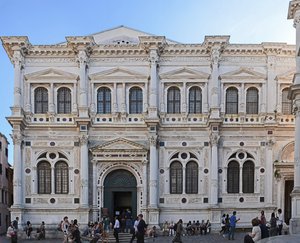
Scuola Grande di San Rocco, ВенецияScuola Grande di San Rocco Венеция 1 The Virgin Appearing to the Plague Victims

Antonio Zanchi през десетилетията: един уникален оригинал за всяко

Произведения по десетилетия

Изберете десетилетие, за да видите оригиналната творба, която го определя.

Картини на Antonio Zanchi: въпроси към галерията

Кое е най-известното произведение на Antonio Zanchi?Разкрийте отговора

Abraham Teaching Astrology To The Egyptians. Следващите са Sisyphus (1662) и Caterina Cornaro Received in Venice by Doge Agostino Barbaro (1650).

Кои са десетте най-известни картини на Antonio Zanchi?Разкрийте отговора

Abraham Teaching Astrology To The Egyptians, Sisyphus, Caterina Cornaro Received in Venice by Doge Agostino Barbaro, circumcision of the Son of Moses, Joseph as Interpreter of Dreams, Thanks offering, Arrest of Simson, Jacob Recibe La Bendición De Isaac, The Virgin Appears To The Plague Victims и Samson And Delilah. Класацията по-горе показва годината и музея за всяко от тях.

Колко са известните творби на Antonio Zanchi?Разкрийте отговора

В нашия каталог са представени 24 произведения на Antonio Zanchi, датирани от 1650 до 1676.

Къде могат да се видят най-известните оригинали на Antonio Zanchi?Разкрийте отговора

Предимно в Баварски държавни списъци с произведения на изкуството (Мюнхен), Mauritshuis (Хага) и Словачка национална галерия (Братислава). В горната таблица с музеи са изброени всички тях.

През кой период Antonio Zanchi създава най-известните си картини?Разкрийте отговора

В 1670s: 5 от 24 произведенията на тази страница са създадени тогава, като circumcision of the Son of Moses са сред тях.

Коя е най-ранната и коя е най-късната известна картина на Antonio Zanchi?Разкрийте отговора

На тази страница най-старата е Caterina Cornaro Received in Venice by Doge Agostino Barbaro (1650), а най-новата е Joseph as Interpreter of Dreams (1676).

Какви теми предпочиташе Antonio Zanchi?Разкрийте отговора

People (6), Man (6) и Figures (5), разпределени в 24 произведения на тази страница.

С какви материали най-често е живописувал Antonio Zanchi?Разкрийте отговора

Oil On Canvas, за 9 от 24 произведения на тази страница.

Какви оригинални творби на Antonio Zanchi мога да видя в Баварски държавни списъци с произведения на изкуството?Разкрийте отговора

Joseph as Interpreter of Dreams, Thanks offering и Arrest of Simson: Баварски държавни списъци с произведения на изкуството, Мюнхен притежава 3 от произведенията на тази страница.

Antonio Zanchi: портрет на художника

Antonio Zanchi: A Venetian Baroque Master

Early Life and Training

  • Born: Este, Italy on December 6, 1631.
  • Zanchi began his artistic journey with training under Giacomo Pedrali, followed by studies with Matteo Ponzone and ultimately Francesco Ruschi in Venice.
  • Early in his career, he demonstrated versatility beyond painting, etching frontispieces for opera librettos, including La Statira by Giovanni Francesco Busenello.

Artistic Development and Influences

  • Key Influences: Zanchi’s style was profoundly shaped by the works of Luca Giordano and Giovan Battista Langetti.
  • He emerged in the 1660s as a prominent tenebrist, embracing dramatic contrasts of light and shadow – a hallmark of his early work.
  • His style evolved over time; initially characterized by intense drama, it later softened with diffused contours and flatter coloring, reflecting changing artistic tastes.

Major Works and Achievements

  • Early Masterpiece: The Plague of Venice (1666), painted for the Scuola di San Rocco, established Zanchi’s reputation.
  • Later Works: He created significant ceiling frescoes, including The Crowning of the Virgin Mary with St. Girolamo Miani (1703) in the Patriarchal Seminary of Venice.
  • Zanchi also produced numerous canvases for the Venetian church of Santa Maria del Giglio.
  • German Commissions: In the 1670s, he worked extensively in Germany, creating pieces for the Munich Residenz and Theatine Church in Munich.

Style and Themes

  • Tenebrism: Zanchi was renowned for his masterful use of tenebrism – a dramatic style employing strong contrasts between light and dark to heighten emotional impact.
  • Religious Subjects: The majority of his works focused on religious themes, reflecting the artistic demands of the Baroque period.
  • Ceiling Frescoes: He excelled in creating elaborate and dynamic ceiling frescoes that showcased his skill in perspective and composition.

Legacy and Historical Significance

  • Pupils & Influence: Zanchi’s artistic lineage continued through pupils like Antonio Molinari and Francesco Trevisani, who adapted his Baroque realism to suit evolving 18th-century tastes.
  • Prolific Output: His prolific career spanned several decades, leaving a substantial body of work across Italy and Bavaria.
  • Transition in Style: Zanchi’s stylistic evolution demonstrates his adaptability to changing artistic preferences throughout his long career. He represents a bridge between the high Baroque and later styles.
  • Death: Antonio Zanchi passed away in Venice on April 12, 1722.