

A Roman Jewel: Unveiling Santa Maria dell’Anima
Nestled just west of the vibrant Piazza Navona in Rome, Santa Maria dell’Anima stands as a singular testament to centuries of faith, artistic patronage, and cultural exchange. More than simply a church, it's a living chronicle of European history—a place where the echoes of Dutch merchants, German emperors, and Renaissance masters converge within its breathtaking walls. Founded in the 14th century as a haven for pilgrims from the Low Countries, this “hall church” – characterized by its soaring nave and distinctive aisle design – quickly evolved into the national church of the Holy Roman Empire in Rome, a role it continues to hold today. Its story is one of resilience, transformation, and an enduring commitment to art and spiritual devotion.
The church’s origins are deeply intertwined with the burgeoning mercantile activity along the Rhine River. Dutch traders, seeking respite and spiritual guidance during their journeys to Rome, established a small hospice dedicated to Our Lady of Souls – *Beata Mariae Animarum* – recognizing the Virgin Mary's role as protector of the departed. This humble beginning quickly blossomed into a significant institution, attracting not only pilgrims but also prominent figures from across Europe, including cardinals, princes, and artists. The strategic location near Piazza Navona further cemented its importance, placing it at the heart of Rome’s social and cultural life.
Architectural Grandeur and Artistic Treasures
Santa Maria dell’Anima's architecture is a captivating blend of Northern European Gothic influences and Italian Renaissance sensibilities. The imposing façade, designed by Giuliano da Sangallo in the early 16th century, immediately commands attention with its robust structure, symmetrical design, and intricate detailing. Above the central portal stands a sculpted group depicting the Virgin Mary and Child, a poignant reminder of the church’s foundational devotion. The bell tower, a later addition, adds a striking vertical element to the skyline, crowned with a polychrome spire that shimmers in the Roman sunlight.
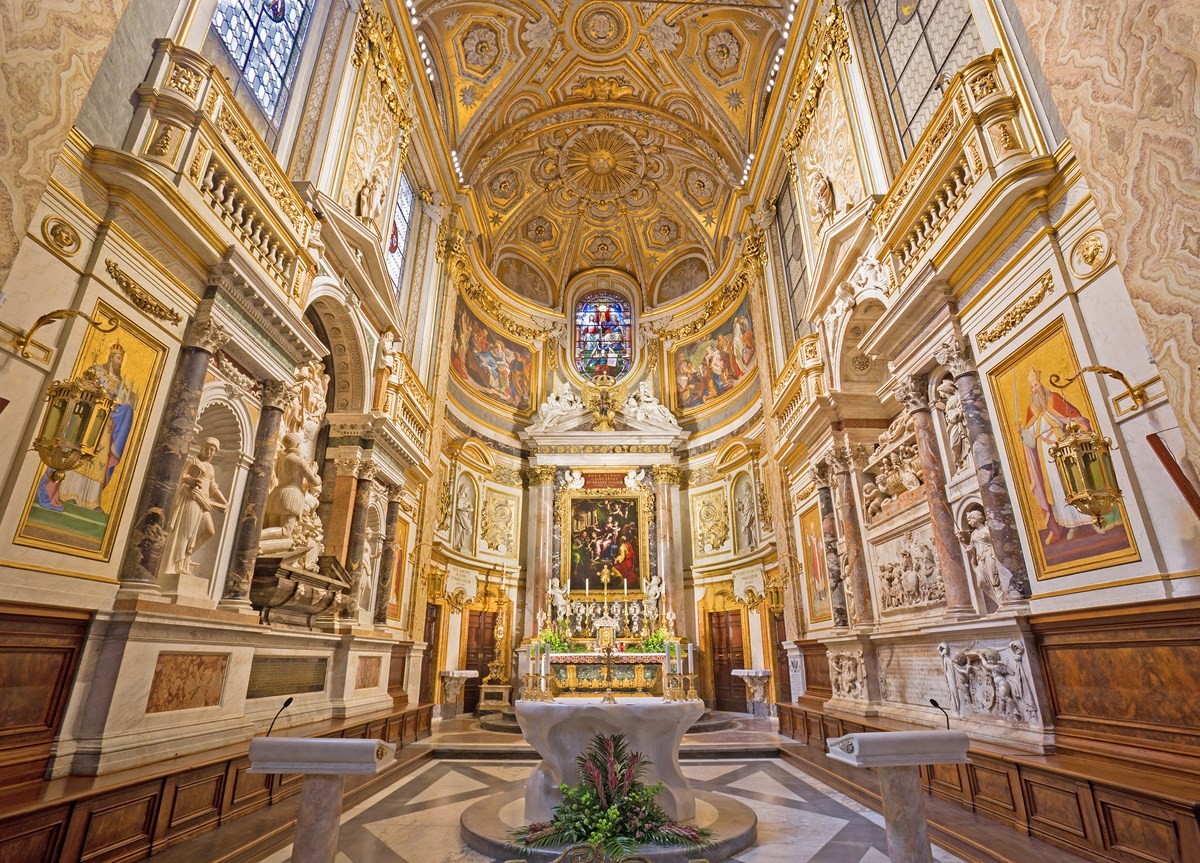
But it is within the interior that Santa Maria dell’Anima truly reveals its artistic treasures. The nave, bathed in soft light filtering through stained-glass windows, leads to a series of chapels adorned with masterpieces spanning several centuries. The frescoes by Carlo Saraceni, particularly those depicting scenes from the life of St. Benedict and the *Miracles of St. Bennone*, are considered highlights of the church’s collection, showcasing the artist's mastery of tenebrism – a dramatic use of light and shadow that evokes a sense of drama and spirituality. The altarpiece, attributed to Giulio Romano, is a breathtaking depiction of the Holy Family, radiating with serene beauty and demonstrating the influence of Raphael.
The Fugger Chapel: A Testament to Wealth and Patronage
Perhaps the most remarkable feature of Santa Maria dell’Anima is the Fugger Chapel, commissioned by the wealthy Fugger family – a dynasty of Florentine bankers who exerted considerable influence throughout Europe. This chapel represents an extraordinary example of Renaissance design, showcasing intricate stucco work, elaborate frescoes, and precious materials. The walls are adorned with scenes from the life of St. Sebastian, reflecting the Fuggers’ devotion to the saint, while the ceiling is embellished with a complex geometric pattern that embodies the family's wealth and status. The chapel stands as a tangible reminder of the significant role played by wealthy patrons in shaping the artistic landscape of Rome.
A Legacy of German Heritage
Santa Maria dell’Anima holds a unique place in Roman history as the national church of the Holy Roman Empire for much of its existence. For centuries, it served as a center for the German-speaking community in Rome, providing spiritual guidance and fostering cultural exchange. The church's traditions reflect this heritage, with services often conducted in German alongside Latin and Italian. Today, the church continues to be a vital institution, welcoming visitors from around the world who are drawn to its architectural beauty, artistic treasures, and rich historical significance. It remains a poignant symbol of Europe’s complex past and a testament to the enduring power of faith and art.
Notable Exhibitions & Events
While Santa Maria dell’Anima doesn't host large-scale temporary exhibitions in the traditional sense, it regularly hosts intimate concerts featuring choral music and organ recitals. The church also plays a role in various cultural events related to German heritage and European history. Visitors can often witness restoration work being undertaken on the building’s historic elements, offering a rare glimpse into the ongoing preservation of this remarkable landmark. Check the church's website for upcoming events and services.