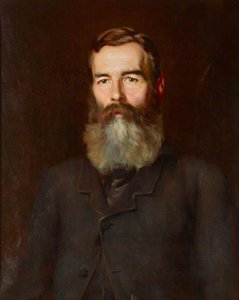
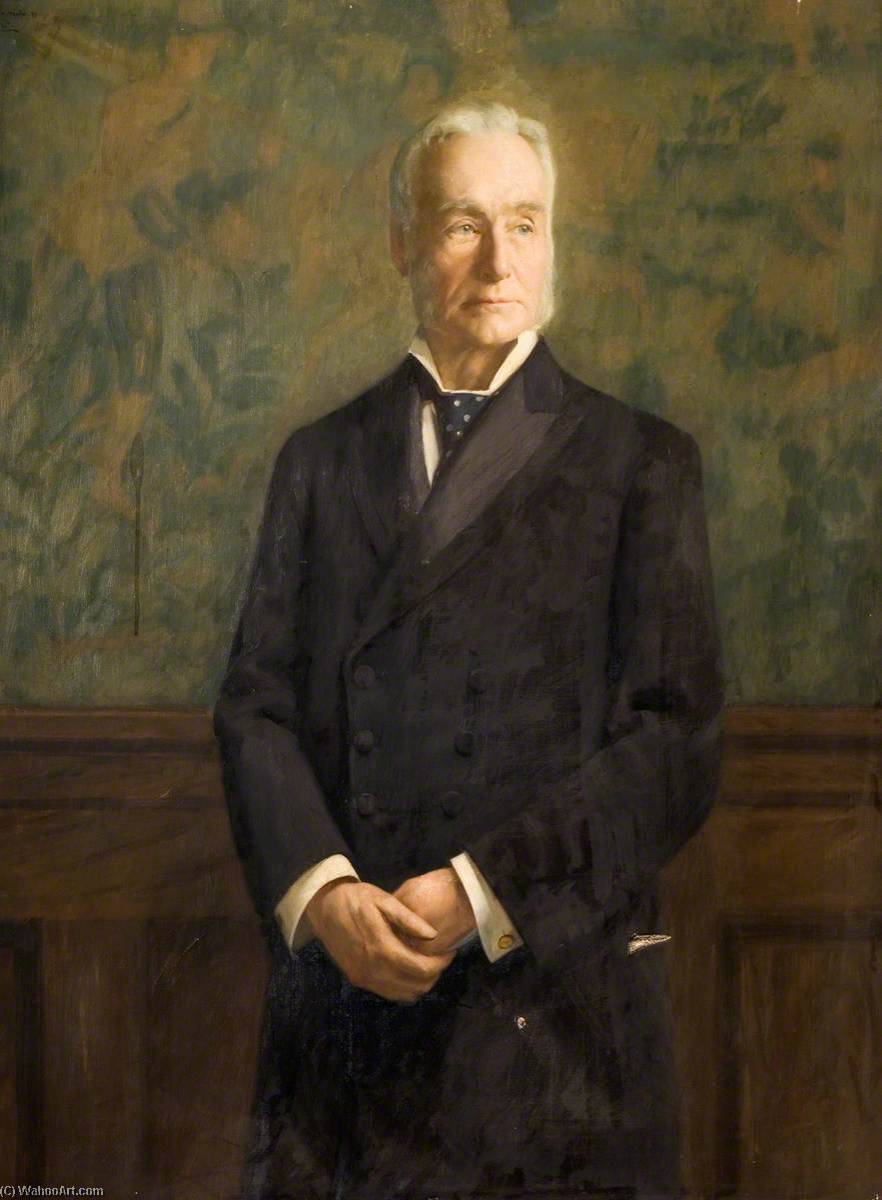
بورتريه لـ William Mainwaring Palin

أشهر 16 لوحات لـ William Mainwaring Palin، كل واحدة منها فريدة من نوعها

تحديث نوفمبر 2026 · مُرتبة حسب مؤشر شعبيتنا (عمليات البحث، والزيارات، والطلبات لكل عمل فني) · 16 من أعمال William Mainwaring Palin في كتالوجنا

باختصار

تُعد William Millett Edge (b.1838) (1888) اللوحة الأكثر جذباً للأنظار للفنان William Mainwaring Palin. بعد ذلك، تتجه العين إلى Sir James Nicholas Douglass (1826–1898), FRS (1892) و Sir George Livesey (1890). من بين 16 من أعمال William Mainwaring Palin في كتالوجنا، تُعد هذه 16 الأعمال هي الأكثر شهرة، حيث تُعرض كل واحدة منها كعمل أصلي فريد مع سنة إنتاجها، والمتحف الذي تضمّه، والسبب وراء خلودها.

1862 – 1947 أكبر مجموعة أعمال: Staffordshire County Buildings

أفضل 10 لوحات لـ William Mainwaring Palin، بعيون المعرض

1
William Millett Edge (b.1838) (1888) للفنان William Mainwaring Palin

William Millett Edge (b.1838)

1888 · Oil On Canvas

Created in 1888, this work belongs to a period of transition in portraiture. It avoids the overly dramatic flourishes of earlier decades, opting instead for a grounded, observational approach. The painting carries the patina of its age, a vintage quality that lends it an air of historical gravity. It is a window into a specific social reality, where the portrait served as a permanent record of an individual's character and…

2
Sir James Nicholas Douglass (1826–1898), FRS (1892) للفنان William Mainwaring Palin

Sir James Nicholas Douglass (1826–1898), FRS

1892 · Oil On Canvas

The man sits in a moment of heavy stillness, his hands folded calmly in his lap. He wears a dark suit and a crisp tie, the fabric of his clothing rendered with a meticulous attention to every fold and crease. His expression remains stern, a gaze that carries the weight of a life spent navigating the complexities of engineering and the rigors of the Royal Society. The light catches the…

3
Sir George Livesey (1890) للفنان William Mainwaring Palin

Sir George Livesey

1890 · Oil On Canvas · Southwark Art Collection, لندن

The man stares directly from the canvas, his gaze meeting the viewer with a quiet, steady intensity. He is draped in the heavy, dark fabrics of a Victorian gentleman, his suit and vest rendered in deep blacks that seem to absorb the surrounding light. A well-groomed beard and mustache frame a face that carries the weight of experience, etched with the subtle lines of a life lived in the public…

4
The Temple of Fame (1895) للفنان William Mainwaring Palin

The Temple of Fame

1895 · Oil On Canvas

The Temple of Fame is an oil painting on canvas by the artist William Mainwaring Palin. This vertical work was executed about 1895. The composition depicts a religious scene within a grand architectural setting, featuring a central figure seated on an elevated dais. Surrounding this figure are various attendants, including angels and apostles, positioned within a semi-circular room defined by columns and ornate detailing.

5
Thomas Hulme, JP (1830–1905) (1894) للفنان William Mainwaring Palin

Thomas Hulme, JP (1830–1905)

1894 · Oil On Canvas

A man sits anchored at a desk, caught in a moment of quiet industry. He is dressed in a dark suit, the fabric heavy and somber, contrasted by the crisp white of his shirt and the patterned detail of his tie. His beard is full, a silvered landscape upon his face, framing a gaze that remains fixed and serious. One hand rests upon the edge of the desk, steady and…

6
James Mansergh (1834–1905), FRS (1903) للفنان William Mainwaring Palin

James Mansergh (1834–1905), FRS

1903 · Oil On Canvas · Lancaster Town Hall, لانكستر

In this 1903 oil on canvas, we find ourselves in a private, shadowed interior, observing a moment of stillness. The subject, James Mansergh, sits in a chair with his legs crossed, a man settled into the gravity of his own thoughts. He is depicted with a beard and mustache, a cigar held in a way that suggests a pause in a long afternoon. The room around him is cluttered with…

7
Portrait of a Gentleman (1901) للفنان William Mainwaring Palin

Portrait of a Gentleman

1901 · Oil On Canvas

In this 1901 portrait, we encounter an older man whose presence commands the space through a quiet, steady gaze. He is captured in a moment of stillness, his white hair and beard catching the light to create a sense of texture and age. There is a certain weight to his expression, a confidence that suggests a life lived with authority. He wears formal attire, the structured lines of his suit…

8
John Alcock, JP للفنان William Mainwaring Palin

John Alcock, JP

Oil On Canvas

In this formal portrait, we encounter John Alcock, JP, presented in a three-quarter view that suggests a quiet, settled authority. The subject is positioned slightly off-center, a choice that lends a natural, unforced quality to his presence. He sits with his hands clasped loosely before him, a gesture that conveys a sense of calm and self-possession. His attire—a dark suit, waistcoat, and tie—speaks to a life of respectability and social…

9
Francis Elliott Kitchener (1838–1915), MA, JP (1912) للفنان William Mainwaring Palin

Francis Elliott Kitchener (1838–1915), MA, JP

1912 · Oil On Canvas · Staffordshire County Buildings, ستوك أون ترينت

In this 1912 portrait, we encounter Francis Elliott Kitchener, a man whose steady gaze and composed posture suggest a life of significant social standing. The painting captures him in a moment of quiet gravity, his features rendered with a precision that honors the dignity of his position. He is depicted with a well-groomed beard and mustache, elements that frame a face marked by experience and a certain sternness. His attire,…

10
John Wilcox Edge (1844–1923) (1923) للفنان William Mainwaring Palin

John Wilcox Edge (1844–1923)

1923 · Oil On Canvas · Staffordshire County Buildings, ستوك أون ترينت

The room settles into a heavy, thoughtful stillness as we gaze upon John Wilcox Edge. He sits before a table, his hands clasped in a gesture of calm contemplation, looking directly at us through the lens of a steady, intellectual gaze. His beard and mustache frame a face that carries the weight of many years, while his glasses catch the light, adding a layer of scholarly depth to his presence.…

لوحات William Mainwaring Palin الشهيرة، من رقم 11 إلى 16

المواضيع التي استأثرت باهتمام William Mainwaring Palin

المواضيع الأربعة التي تتكرر باستمرار في هذه الأعمال الأصلية، مع تقديم أروع مثال لكل منها.

المتاحف التي تحتفظ بالأعمال الأصلية لـ William Mainwaring Palin

المتاحف الـ 5 التي تضم أكبر عدد من اللوحات الموجودة في هذه الصفحة.

المتاحف المدينة أعمال William Mainwaring Palin لوحات من هذه القائمة
Staffordshire County Buildings, ستوك أون ترينتStaffordshire County Buildings ستوك أون ترينت 2 Francis Elliott Kitchener (1838–1915), MA, JP, John Wilcox Edge (1844–1923)
Southwark Art Collection, لندنSouthwark Art Collection لندن 1 Sir George Livesey
Lancaster Town Hall, لانكسترLancaster Town Hall لانكستر 1 James Mansergh (1834–1905), FRS
National Maritime Museum, لندنNational Maritime Museum لندن 1 Sir William White (1845–1913)
Rye Art Gallery, رايRye Art Gallery راي 1 Tree in Summer

William Mainwaring Palin عبر العقود: لوحة أصلية فريدة لكل عقد

الأعمال حسب العقد

اختر عقداً لتشاهد العمل الأصلي الذي يجسده.

لوحات William Mainwaring Palin: أسئلة حول المعرض

ما هو العمل الأكثر شهرة لـ William Mainwaring Palin؟اكتشف الإجابة

William Millett Edge (b.1838) (1888). يليه Sir James Nicholas Douglass (1826–1898), FRS (1892) و Sir George Livesey (1890).

في أي عمر أبدع William Mainwaring Palin عمل William Millett Edge (b.1838)؟اكتشف الإجابة

عمر 26 عاماً: يعود تاريخ William Millett Edge (b.1838) إلى 1888، وقد وُلد William Mainwaring Palin في 1862.

ما هي أشهر عشر لوحات للفنان William Mainwaring Palin؟اكتشف الإجابة

William Millett Edge (b.1838), Sir James Nicholas Douglass (1826–1898), FRS, Sir George Livesey, The Temple of Fame, Thomas Hulme, JP (1830–1905), James Mansergh (1834–1905), FRS, Portrait of a Gentleman, John Alcock, JP, Francis Elliott Kitchener (1838–1915), MA, JP و John Wilcox Edge (1844–1923). يوضح التصنيف أعلاه سنة كل لوحة والمتحف التابعة له.

كم عدد الأعمال المعروفة لـ William Mainwaring Palin؟اكتشف الإجابة

يضم كتالوجنا 16 من أعمال William Mainwaring Palin، التي يعود تاريخها من 1888 إلى 1923.

أين يمكن مشاهدة الأعمال الأصلية الأكثر شهرة لـ William Mainwaring Palin؟اكتشف الإجابة

توجد غالبيتها في Staffordshire County Buildings (ستوك أون ترينت), Southwark Art Collection (لندن) و Lancaster Town Hall (لانكستر). يدرج جدول المتاحف أعلاه جميعها.

في أي فترة زمنية أبدع William Mainwaring Palin أشهر لوحاته؟اكتشف الإجابة

في 1890s: تم إنجاز 5 من أصل 16 من الأعمال في هذه الصفحة خلال تلك الفترة، من بينها Sir James Nicholas Douglass (1826–1898), FRS.

ما هي أقدم لوحة فنية للفنان William Mainwaring Palin، وما هي أحدثها؟اكتشف الإجابة

في هذه الصفحة، أقدم الأعمال يعود إلى William Millett Edge (b.1838) (1888) وأحدثها يعود إلى John Wilcox Edge (1844–1923) (1923).

ما هي الموضوعات التي كان William Mainwaring Palin يفضلها؟اكتشف الإجابة

Man (12), Suit (11) و Tie (9)، عبر 16 من الأعمال في هذه الصفحة.

ما هي المواد التي استخدمها William Mainwaring Palin في الرسم أكثر من غيرها؟اكتشف الإجابة

Oil On Canvas، لـ 14 من أصل 16 من الأعمال في هذه الصفحة.

ما هي الأعمال الأصلية لـ William Mainwaring Palin التي يمكنني رؤيتها في Staffordshire County Buildings؟اكتشف الإجابة

Francis Elliott Kitchener (1838–1915), MA, JP و John Wilcox Edge (1844–1923): يضم Staffordshire County Buildings, ستوك أون ترينت 2 من الأعمال المعروضة في هذه الصفحة.

William Mainwaring Palin: صورة شخصية للفنان

The Weaver of Floral Visions: The Life and Legacy of William Mainwaring Palin

In the heart of the British Arts and Crafts movement, where the rebellion against industrial coldness met a fervent revival of traditional craftsmanship, there existed a voice as delicate as a wildflower and as enduring as woven silk. William Mainwasting Palin (1862–1947) was not merely a designer; he was a poet of the botanical world, translating the fleeting beauty of the English countryside into permanent, tactile masterpieces. His life’s work stands as a testament to an era that sought to find the divine in the details of nature, capturing the very essence of Victorian elegance through a lens of meticulous organic truth.

Born in 1862, Palin’s journey was deeply rooted in the landscapes of Worcestershire. His early education provided him with a classical foundation, yet it was his practical apprenticeship that would define his artistic soul. Immersing himself in the legendary Merton Abbey Studios under the tutelage of William Morris, Palin breathed in the very principles of the Arts and Crafts movement. This period was transformative, instilling in him a profound reverence for natural materials and the rhythmic, meditative process of handweaving. From Morris, he inherited a belief that art should not be confined to gilded frames but should permeate the very fabric of daily life, turning walls and furnishings into living tapestries of light and color.

A Botanical Precision: Technique and Artistry

While many of his contemporaries leaned toward the stylized or the abstract, Palin’s genius lay in his unwavering commitment to botanical accuracy. He possessed a rare, almost scientific eye for the subtle nuances of the natural world. To look upon a Palin design is to witness a masterclass in texture and light; he did not simply draw a fern or a rose, he sought to recreate its very spirit. His work in wallpaper and furnishing fabrics was characterized by an unparalleled ability to capture the delicate veins of a leaf, the soft velvet of a petal, and the intricate architecture of herbaceous borders.

His technical mastery allowed him to bridge the gap between fine art and decorative utility. Through his use of oil on canvas for figurative works—such as the hauntingly beautiful Life Study (1890)—and his exquisite textile designs, he demonstrated a versatile command over medium and subject. His approach was defined by:

  • Meticulous Detail: A dedication to capturing individual plant specimens with breathtaking precision.
  • Organic Symbiosis: An ability to weave complex floral motifs into patterns that felt both structured and wild.
  • Textural Depth: Utilizing the inherent qualities of handweaving and oil pigments to create a sense of three-dimensional life.

Historical Significance and Enduring Influence

Though his total body of work may not possess the sheer volume of giants like Morris, Palin’s contribution to the decorative arts is monumental. He served as a vital link in the chain of British design history, refining the aesthetic of the late Victorian period into something more intimate and detailed. His ability to translate the ephemeral beauty of wildflowers into enduring woven patterns helped foster a widespread cultural appreciation for handcrafted beauty during a time of rapid industrial change.

Today, the legacy of William Mainwaring Palin lives on in the collections of prestigious institutions like the Victoria and Albert Museum, where his ability to capture the human form and botanical splendor continues to captivate. He remains a pivotal figure for anyone studying the intersection of nature and design, reminding us that true art is found when we pause to observe the intricate, often overlooked, wonders of the natural world.