بورتريه لـ هيروشيغه

لوحات هيروشيغه: أشهر 100 لوحة، بعيون معرض فني

تحديث نوفمبر 2026 · مُرتبة حسب مؤشر شعبيتنا (عمليات البحث، والزيارات، والطلبات لكل عمل فني) · 353 أعمال لـ هيروشيغه في كتالوجنا

باختصار

من وجهة نظر المعرض، تُعد Early Department from a Daimyo أشهر لوحات هيروشيغه، والتي تُعرض لوحتها الأصلية في Nakagawa-machi Bato Hiroshige Museum of Art، ناغازاكي. The maple leaves of Mama, Tekona shrine and Tsugi bridge (1857) و Hakone (1834) يكملان الثلاثية التي تدركها كل عين. من بين 353 من أعمال هيروشيغه في كتالوجنا، يعرض المعرض أدناه 100 من أشهرها، كل منها عمل أصلي مع سنة إنتاجه، والمتحف الذي يضمها، وما يجعلها فريدة من نوعها.

1797 – 1858, إيدو Japanese landscape painting أكبر مجموعة أعمال: Nakagawa-machi Bato Hiroshige Museum of Art

أفضل 10 لوحات لـ هيروشيغه في المعرض

1
Early Department from a Daimyo للفنان هيروشيغه

Early Department from a Daimyo

Woodblock Print · Nakagawa-machi Bato Hiroshige Museum of Art, ناغازاكي

In the delicate dance of lines and muted pigments, Utagawa Hiroshige’s Early Department from a Daimyo invites us to step through a portal into the heart of Edo-period Japan. This exquisite woodblock print captures a moment of vibrant communal life along a bustling riverside, where the rigid structures of social hierarchy melt into the shared leisure of a sunny afternoon. As we gaze upon the scene, we are not merely…

2
The maple leaves of Mama, Tekona shrine and Tsugi bridge (1857) للفنان هيروشيغه

The maple leaves of Mama, Tekona shrine and Tsugi bridge

1857 · Woodblock Print · متحف فان جوخ, أمستردام

Utagawa Hiroshige (1797-1858), arguably the last titan of *ukiyo-e*, didn't merely depict landscapes; he crafted them into meditations on beauty and impermanence. “The Maple Leaves of Mama, Tekona Shrine and Tsugi Bridge,” created in 1857 during a period of significant societal transformation—the waning influence of feudal Japan as Western ideas crept in—stands as a testament to his enduring artistic legacy. More than just a visual record, it’s an embodiment of…

3
Hakone (1834) للفنان هيروشيغه

Hakone

1834 · Woodblock Print · متحف إنديانابوليس للفنون, إنديانابوليس

Utagawa Hiroshige’s “Hakone,” created in 1834, is more than just a landscape; it's a poetic meditation on the beauty and transience of nature within Edo-period Japan. This woodblock print, part of his renowned series "The Fifty-three Stations of the Tōkaidō," captures a specific moment along the vital trade route connecting Tokyo (then Edo) with Kyoto. However, Hiroshige elevates this seemingly simple depiction of a mountain pass into something profoundly evocative,…

4
Station 36, Goyu; Kyoka Tokaido Series (1855) للفنان هيروشيغه

Station 36, Goyu; Kyoka Tokaido Series

1855 · Woodblock Print · متحف إنديانابوليس للفنون, إنديانابوليس

In the delicate interplay of ink and paper, Utagawa Hiroshige’s "Station 36, Goyu; Kyoka Tokaido Series" offers much more than a mere topographical record of a journey. Completed in 1855, this exquisite woodblock print serves as a profound distillation of Edo-period sensibilities, capturing a yearning for tranquility amidst the burgeoning dynamism of a Japan in transition. As the nation stood at a pivotal crossroads between ancient feudal traditions and the…

5
فوشيمي، المحطة رقم ٥١ (1842) للفنان هيروشيغه

فوشيمي، المحطة رقم ٥١

1842 · الطباعة بالقوالب الخشبية · متحف إنديانابوليس للفنون, إنديانابوليس

الفنان هيروشيجي تويوكوغي: رؤية شعرية لمدينة إدو اليابانية تعتبر لوحة هيروشيجي تويوكوغي، التي تحمل عنوان "محطة فوشيمي رقم 51"، تحفة فنية فريدة من نوعها في عالم الفنون اليابانية التقليدية، وتجسد روحًا أدبية عميقة تعكس جمال الطبيعة والتراث الثقافي لإدو في القرن التاسع عشر. لم يكن هيروشيجي مجرد رسام يتقن تقنية الطباعة الخشبية، بل كان فنانًا يتميز بقدرته على تحويل المشاهد الطبيعية إلى لوحات تتجاوز الوصف، وتلامس القلوب والعقول بصدق العاطفة…

6
Ichikoku Bridge in the Eastern Capital (Tōto: Ichikoku bashi) (1858) للفنان هيروشيغه

Ichikoku Bridge in the Eastern Capital (Tōto: Ichikoku bashi)

1858 · Woodblock Print · متحف إنديانابوليس للفنون, إنديانابوليس

The Ichikoku Bridge spans a quiet stretch of water in the Eastern Capital. Beneath its wooden arch, two boats drift through the current. People move across the structure, some carrying backpacks and others clutching small handbags. A mountain rises in the distance, watching over the scene. Trees frame the edges of the view, their leaves casting shadows near the water's edge.

7
Shinagawa Sunrise from the series Fifty-three Stations on the Tokaido Road (1834) للفنان هيروشيغه

Shinagawa Sunrise from the series Fifty-three Stations on the Tokaido Road

1834 · Woodblock Print · Hill-Stead Museum, فارمينغتون

In the soft, burgeoning light of a nineteenth-century morning, Utagawa Hiroshige invites us to witness a moment of profound stillness along the Tōkaidō road. Shinagawa Sunrise is not merely a depiction of a coastal village; it is a masterclass in the art of atmosphere. As the sun begins its ascent, the boundary between the heavens and the earth dissolves into a luminous haze. The water of the bay reflects a…

8
The Rokugo River Ferry, Kawasaki, from the series the Fifty-three Stations of the Tokaido (Hoeido edition ) للفنان هيروشيغه

The Rokugo River Ferry, Kawasaki, from the series the Fifty-three Stations of the Tokaido (Hoeido edition )

Woodblock Print · Nakagawa-machi Bato Hiroshige Museum of Art, ناغازاكي

In the delicate dance of woodblock printing, few masters captured the ephemeral beauty of Japanese life as profoundly as Utagawa Hiroshige. His masterpiece, The Rokugo River Ferry, Kawasaki, serves as a breathtaking window into the Edo period, inviting the viewer to step onto the bustling banks of one of the most vital crossings on the Tokaido road. This evocative scene from his legendary series, The Fifty-three Stations of the Tokaido,…

9
Itsukushima in Aki Province (1858) للفنان هيروشيغه

Itsukushima in Aki Province

1858 · Woodblock Print · Brooklyn Museum, بروكلين

In the delicate interplay of mist and water, Itsukushima in Aki Province offers more than a mere glimpse of a Japanese landmark; it provides a profound meditation on the ephemeral nature of existence. Created by the legendary ukiyo-e master Ando Hiroshige in 1858, this woodcut print captures the spiritual essence of the Itsukushima shrine area with a poetic sensitivity that remains unparalleled. As one gazes upon the composition, the eye…

10
Tenryu River Ferry Crossing, Mitsuke, from the series The Fifty-three Stations of the Tokaido (Gyosho Edition) للفنان هيروشيغه

Tenryu River Ferry Crossing, Mitsuke, from the series The Fifty-three Stations of the Tokaido (Gyosho Edition)

Woodblock Print · Nakagawa-machi Bato Hiroshige Museum of Art, ناغازاكي

The woodblock print depicts a section of the Tenryu River near the station of Mitsuke. In the center of the composition, a large sandbank divides the water into two distinct currents. Several small wooden boats occupy the river, with figures positioned within them to manage the crossing. Some vessels are moored directly against the central sandbank, while others navigate the moving water. The far shore is visible in the distance,…

لوحات هيروشيغه، مرتبة من 11 إلى 100

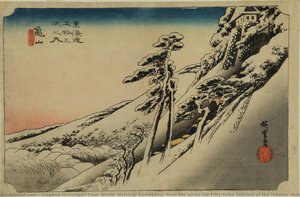
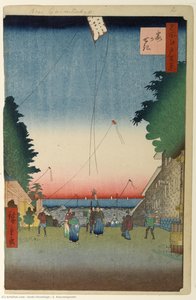
11الببغاء والكرزيات (1800) للفنان هيروشيغهالببغاء والكرزيات1800 · متحف إنديانابوليس للفنون 12The Pine Woods of Miho in Suruga Province (Suruga Miho no matsubara) (1858) للفنان هيروشيغهThe Pine Woods of Miho in Suruga Province (Suruga Miho no matsubara)1858 · متحف إنديانابوليس للفنون 1362 (55) Komakata Hall and Azuma Bridge (1857) للفنان هيروشيغه62 (55) Komakata Hall and Azuma Bridge1857 · Brooklyn Museum 14Evening Snow at Kanbara (1834) للفنان هيروشيغهEvening Snow at Kanbara1834 · متحف لوس أنجلوس الإقليمي للفنون 15Dawn in the licensed quarters (1857) للفنان هيروشيغهDawn in the licensed quarters1857 · Art Gallery of New South Wales 16Night View of Saruwakacho للفنان هيروشيغهNight View of Saruwakacho 17Station 28, Fukuroi (1855) للفنان هيروشيغهStation 28, Fukuroi1855 · متحف إنديانابوليس للفنون 18Evening Snow at Asakusa or Woman with Umbrella from the series Eight Views of the Environs of Edo (1800) للفنان هيروشيغهEvening Snow at Asakusa or Woman with Umbrella from the series Eight Views of the Environs of Edo1800 · Hill-Stead Museum 19Keishi (Kyoto), Capital (1834) للفنان هيروشيغهKeishi (Kyoto), Capital1834 · متحف إنديانابوليس للفنون 20Hara: View of Ashitakayama and Fuji (1855) للفنان هيروشيغهHara: View of Ashitakayama and Fuji1855 · متحف إنديانابوليس للفنون 21Yokkaichi (Station #44) (1834) للفنان هيروشيغهYokkaichi (Station #44)1834 · متحف إنديانابوليس للفنون 22Desolate Wintry Scene, Hamamatsu, from the series the Fifty-three Stations of the Tokaido (Hoeido edition) للفنان هيروشيغهDesolate Wintry Scene, Hamamatsu, from the series the Fifty-three Stations of the Tokaido (Hoeido edition)Nakagawa-machi Bato Hiroshige Museum of Art 23Noge and Yokohama in Musashi Province (Musashi, Noge, Yokohama) (1858) للفنان هيروشيغهNoge and Yokohama in Musashi Province (Musashi, Noge, Yokohama)1858 · متحف إنديانابوليس للفنون 24Wild sea breaking on the rocks (1856) للفنان هيروشيغهWild sea breaking on the rocks1856 25شيراسوقا، شيومي زاكاو (إطلالة على تل شيمَا) (1833) للفنان هيروشيغهشيراسوقا، شيومي زاكاو (إطلالة على تل شيمَا)1833 · متحف إنديانابوليس للفنون 26Mt.Fuji on the Left, Yoshiwara, from the series the Fifty-three Stations of the Tokaido (Hoeido edition) للفنان هيروشيغهMt.Fuji on the Left, Yoshiwara, from the series the Fifty-three Stations of the Tokaido (Hoeido edition)Nakagawa-machi Bato Hiroshige Museum of Art 27Tsukuda Offing in the Eastern Capital (Tōto: Tsukuda oki) (1858) للفنان هيروشيغهTsukuda Offing in the Eastern Capital (Tōto: Tsukuda oki)1858 · متحف إنديانابوليس للفنون 28Kawachi (1853) للفنان هيروشيغهKawachi1853 · متحف إنديانابوليس للفنون 29The Dye Craft Shops of Arimatsu, Narumi, from the series The Fifty-three Stations of the Tokaido (Gyosho edition) للفنان هيروشيغهThe Dye Craft Shops of Arimatsu, Narumi, from the series The Fifty-three Stations of the Tokaido (Gyosho edition)Nakagawa-machi Bato Hiroshige Museum of Art 30View of Shiomi Slope, Shirasuka, from the series The Fifty-three Stations of the Tokaido (Gyosho edition) للفنان هيروشيغهView of Shiomi Slope, Shirasuka, from the series The Fifty-three Stations of the Tokaido (Gyosho edition)Nakagawa-machi Bato Hiroshige Museum of Art 31Entrance to Enoshima in Sagami Province (Sagami Enoshima iriguchi) (1858) للفنان هيروشيغهEntrance to Enoshima in Sagami Province (Sagami Enoshima iriguchi)1858 · متحف إنديانابوليس للفنون 32Morning Mist, Mishima, from the series the Fifty-three Stations of the Tokaido (Hoeido edition ) للفنان هيروشيغهMorning Mist, Mishima, from the series the Fifty-three Stations of the Tokaido (Hoeido edition )Nakagawa-machi Bato Hiroshige Museum of Art 33The Imagire Sea Ferry, Maisaka, from the series The Fifty-three Stations of the Tokaido (Gyosho edition) للفنان هيروشيغهThe Imagire Sea Ferry, Maisaka, from the series The Fifty-three Stations of the Tokaido (Gyosho edition)Nakagawa-machi Bato Hiroshige Museum of Art 34Sukiya Riverbank in the Eastern Capital (Tōto sukiya kaigan) (1858) للفنان هيروشيغهSukiya Riverbank in the Eastern Capital (Tōto sukiya kaigan)1858 · متحف إنديانابوليس للفنون 35Satta Pass, Yui, from the series the Fifty-three Stations of the Tokaido (Hoeido edition) للفنان هيروشيغهSatta Pass, Yui, from the series the Fifty-three Stations of the Tokaido (Hoeido edition)Nakagawa-machi Bato Hiroshige Museum of Art 36True View of Imagire, Maisaka, from the series the Fifty-three Stations of the Tokaido (Hoeido edition) للفنان هيروشيغهTrue View of Imagire, Maisaka, from the series the Fifty-three Stations of the Tokaido (Hoeido edition)Nakagawa-machi Bato Hiroshige Museum of Art 37Clear Winter Morning, Kameyama, from the series the Fifty-three Stations of the Tokaido (Hoeido edition) للفنان هيروشيغهClear Winter Morning, Kameyama, from the series the Fifty-three Stations of the Tokaido (Hoeido edition)Nakagawa-machi Bato Hiroshige Museum of Art 38The Tenryu River, Mitsuke, from the series the Fifty-three Stations of the Tokaido (Hoeido edition) للفنان هيروشيغهThe Tenryu River, Mitsuke, from the series the Fifty-three Stations of the Tokaido (Hoeido edition)Nakagawa-machi Bato Hiroshige Museum of Art 39The Seven-ri Ferry Crossing, Kuwana, from the series the Fifty-three Stations of the Tokaido (Hoeido edition) للفنان هيروشيغهThe Seven-ri Ferry Crossing, Kuwana, from the series the Fifty-three Stations of the Tokaido (Hoeido edition)Nakagawa-machi Bato Hiroshige Museum of Art 40Aronia and Bullfinch للفنان هيروشيغهAronia and Bullfinch 41الطيور المهاجرة إلى كاتاتا (1834) للفنان هيروشيغهالطيور المهاجرة إلى كاتاتا1834 · متحف إنديانابوليس للفنون 42Yugyoji Temple, Fujisawa, from the series the Fifty-three Stations of the Tokaido (Hoeido edition) للفنان هيروشيغهYugyoji Temple, Fujisawa, from the series the Fifty-three Stations of the Tokaido (Hoeido edition)Nakagawa-machi Bato Hiroshige Museum of Art 43Travellers and Soliciting Women, Goyu, from the series the Fifty-three Stations of the Tokaido (Hoeido edition) للفنان هيروشيغهTravellers and Soliciting Women, Goyu, from the series the Fifty-three Stations of the Tokaido (Hoeido edition)Nakagawa-machi Bato Hiroshige Museum of Art 44The Totoumi Bank of the Oi River, Kanaya, from the series the Fifty-three Stations of the Tokaido (Hoeido edition) للفنان هيروشيغهThe Totoumi Bank of the Oi River, Kanaya, from the series the Fifty-three Stations of the Tokaido (Hoeido edition)Nakagawa-machi Bato Hiroshige Museum of Art 45The Suruga Bank of the Oi River, Shimada, from the series the Fifty-three Stations of the Tokaido (Hoeido edition) للفنان هيروشيغهThe Suruga Bank of the Oi River, Shimada, from the series the Fifty-three Stations of the Tokaido (Hoeido edition)Nakagawa-machi Bato Hiroshige Museum of Art 46Kyoka Tokaido Series, Kanagawa (Yokohama) للفنان هيروشيغهKyoka Tokaido Series, Kanagawa (Yokohama)متحف إنديانابوليس للفنون 47Distant View of Miho, Ejiri, from the series the Fifty-three Stations of the Tokaido (Hoeido edition) للفنان هيروشيغهDistant View of Miho, Ejiri, from the series the Fifty-three Stations of the Tokaido (Hoeido edition)Nakagawa-machi Bato Hiroshige Museum of Art 48Mt. Fuji in the Morning, Hara, from the series the Fifty-three Stations of the Tokaido (Hoeido edition) للفنان هيروشيغهMt. Fuji in the Morning, Hara, from the series the Fifty-three Stations of the Tokaido (Hoeido edition)Nakagawa-machi Bato Hiroshige Museum of Art 49A Horse Fair, Chiriu, from the series the Fifty-three Stations of the Tokaido (Hoeido edition) للفنان هيروشيغهA Horse Fair, Chiriu, from the series the Fifty-three Stations of the Tokaido (Hoeido edition)Nakagawa-machi Bato Hiroshige Museum of Art 50Wakasa (1853) للفنان هيروشيغهWakasa1853 · متحف إنديانابوليس للفنون 51Distant View of Mt.Akiba, Kakegawa, from the series the Fifty-three Stations of the Tokaido (Hoeido edition) للفنان هيروشيغهDistant View of Mt.Akiba, Kakegawa, from the series the Fifty-three Stations of the Tokaido (Hoeido edition)Nakagawa-machi Bato Hiroshige Museum of Art 52The Ichiri-Han Sea Ferry, Arai, from the series The Fifty-three Stations of the Tokaido (Gyosho edition) للفنان هيروشيغهThe Ichiri-Han Sea Ferry, Arai, from the series The Fifty-three Stations of the Tokaido (Gyosho edition)Nakagawa-machi Bato Hiroshige Museum of Art 53Gateway Entrance to the Atsuta Shrine on the Beach, Miya, from the series The Fifty-three Stations of the Tokaido (Gyosho edition) للفنان هيروشيغهGateway Entrance to the Atsuta Shrine on the Beach, Miya, from the series The Fifty-three Stations of the Tokaido (Gyosho edition)Nakagawa-machi Bato Hiroshige Museum of Art 54Akasaka, from the series The Fifty-three Stations of the Tokaido (Gyosho edition) للفنان هيروشيغهAkasaka, from the series The Fifty-three Stations of the Tokaido (Gyosho edition)Nakagawa-machi Bato Hiroshige Museum of Art 55The Sakawa River, Odawara, from the series the Fifty-three Stations of the Tokaido (Hoeido edition) للفنان هيروشيغهThe Sakawa River, Odawara, from the series the Fifty-three Stations of the Tokaido (Hoeido edition)Nakagawa-machi Bato Hiroshige Museum of Art 56A Footpath between Ricefield, Hiratsuka, from the series the Fifty-three Stations of the Tokaido (Hoeido edition) للفنان هيروشيغهA Footpath between Ricefield, Hiratsuka, from the series the Fifty-three Stations of the Tokaido (Hoeido edition)Nakagawa-machi Bato Hiroshige Museum of Art 57Awa Province: Whirlpool at Naruto (1853) للفنان هيروشيغهAwa Province: Whirlpool at Naruto1853 5873 The City Flourishing, the Tanabata Festival (1857) للفنان هيروشيغه73 The City Flourishing, the Tanabata Festival1857 59Sarugababa Plain, Futagawa, from the series the Fifty-three Stations of the Tokaido (Hoeido edition) للفنان هيروشيغهSarugababa Plain, Futagawa, from the series the Fifty-three Stations of the Tokaido (Hoeido edition)Nakagawa-machi Bato Hiroshige Museum of Art 60Local Specialty Teahouse, Mariko, from the series the Fifty-three Stations of the Tokaido (Hoeido edition) للفنان هيروشيغهLocal Specialty Teahouse, Mariko, from the series the Fifty-three Stations of the Tokaido (Hoeido edition)Nakagawa-machi Bato Hiroshige Museum of Art 61Sakanoshita للفنان هيروشيغهSakanoshitaمتحف إنديانابوليس للفنون 62محطة ٢٣، فوجيدا للفنان هيروشيغهمحطة ٢٣، فوجيدامتحف إنديانابوليس للفنون 63Marsh Grasses and Mandarin Ducks للفنان هيروشيغهMarsh Grasses and Mandarin Ducks 6450th station, Minakuchi للفنان هيروشيغه50th station, Minakuchi 65Sakanoshita: the Throwing Away the Brush Peak (1834) للفنان هيروشيغهSakanoshita: the Throwing Away the Brush Peak1834 · Brooklyn Museum 66Shibaura Bay of Musashi Province (801) للفنان هيروشيغهShibaura Bay of Musashi Province801 · متحف المتروبوليتان للفنون 67Koyurugi Beach of Sagami Province (801) للفنان هيروشيغهKoyurugi Beach of Sagami Province801 · متحف المتروبوليتان للفنون 68Honmoku Bay of Musashi Province (801) للفنان هيروشيغهHonmoku Bay of Musashi Province801 · متحف المتروبوليتان للفنون 69Untitled (Two Rabbits, Pampas Grass, and Full Moon) (1851) للفنان هيروشيغهUntitled (Two Rabbits, Pampas Grass, and Full Moon)1851 7011. Kiyomizu Hall and Shinobazu Pond at Ueno (1857) للفنان هيروشيغه11. Kiyomizu Hall and Shinobazu Pond at Ueno1857 7185. Kinokuni Hill and Distant View of Akasaka and the Tameike Pond (1857) للفنان هيروشيغه85. Kinokuni Hill and Distant View of Akasaka and the Tameike Pond1857 7276 Bamboo Quay by Kyōbashi Bridge (1857) للفنان هيروشيغه76 Bamboo Quay by Kyōbashi Bridge1857 7358 (52) Sudden Shower over Shin-Ōhashi bridge and Atake (1857) للفنان هيروشيغه58 (52) Sudden Shower over Shin-Ōhashi bridge and Atake1857 · Tokyo Fuji Art Museum 74103. Senju Great Bridge (1857) للفنان هيروشيغه103. Senju Great Bridge1857 7518. The Ōji Inari Shrine (1857) للفنان هيروشيغه18. The Ōji Inari Shrine1857 76113. Aoi Slope Outside Toranomon Gate (1857) للفنان هيروشيغه113. Aoi Slope Outside Toranomon Gate1857 77114. Bikuni Bridge in Snow (1857) للفنان هيروشيغه114. Bikuni Bridge in Snow1857 7870 (60) The Mouth of the Nakagawa River (1857) للفنان هيروشيغه70 (60) The Mouth of the Nakagawa River1857 792. Kasumigaseki (1857) للفنان هيروشيغه2. Kasumigaseki1857 8015. Suwa Bluff in Nippori (1857) للفنان هيروشيغه15. Suwa Bluff in Nippori1857 8163 (69) The Ayase River and Kanegafuchi (1857) للفنان هيروشيغه63 (69) The Ayase River and Kanegafuchi1857 82115. The Takata Riding Grounds (1857) للفنان هيروشيغه115. The Takata Riding Grounds1857 8386. Naitō Shinjuku in Yotsuya (1857) للفنان هيروشيغه86. Naitō Shinjuku in Yotsuya1857 8416. Flower Park and Dangozaka Slope in Sendagi (1857) للفنان هيروشيغه16. Flower Park and Dangozaka Slope in Sendagi1857 8568 (59) Open Garden at the Hachiman Shrine in Fukagawa (1857) للفنان هيروشيغه68 (59) Open Garden at the Hachiman Shrine in Fukagawa1857 8610. Sunrise at Kanda Myōjin Shrine (1857) للفنان هيروشيغه10. Sunrise at Kanda Myōjin Shrine1857 87Peach and Long-tailed Bird للفنان هيروشيغهPeach and Long-tailed Bird 88Golden Pheasant in Bracken للفنان هيروشيغهGolden Pheasant in Bracken 89The Imado Bridge at the Foot of Mount Matsuchi (801) للفنان هيروشيغهThe Imado Bridge at the Foot of Mount Matsuchi801 · متحف المتروبوليتان للفنون 90Dog (1858) للفنان هيروشيغهDog1858 · متحف إنديانابوليس للفنون 91118. Kitsunebi on New Year's Night Under the Enoki Tree near Ōji (1857) للفنان هيروشيغه118. Kitsunebi on New Year's Night Under the Enoki Tree near Ōji1857 92109. Minami Shinagawa and Samezu Coast (1857) للفنان هيروشيغه109. Minami Shinagawa and Samezu Coast1857 93Night View of Matsuchiyama and the San (1857) للفنان هيروشيغهNight View of Matsuchiyama and the San1857 · متحف لوس أنجلوس الإقليمي للفنون 94أكاساكا، رقم 37 للفنان هيروشيغهأكاساكا، رقم 37متحف إنديانابوليس للفنون 95Shiojiri Pass in Shinano Province (Shinano Shiojiritōge) (1858) للفنان هيروشيغهShiojiri Pass in Shinano Province (Shinano Shiojiritōge)1858 · متحف إنديانابوليس للفنون 96Yoshiwara للفنان هيروشيغهYoshiwaraمتحف إنديانابوليس للفنون 97Fuchu, No. 20 للفنان هيروشيغهFuchu, No. 20متحف إنديانابوليس للفنون 98Woman Walking in the Snow (1850) للفنان هيروشيغهWoman Walking in the Snow1850 · متحف المتروبوليتان للفنون 9982. Moon Viewing (1857) للفنان هيروشيغه82. Moon Viewing1857 100Station 27, Kakegawa (1855) للفنان هيروشيغهStation 27, Kakegawa1855 · متحف إنديانابوليس للفنون

لوحات هيروشيغه الشهيرة، حسب الفترات الزمنية

المواضيع التي استأثرت باهتمام هيروشيغه

المواضيع الأربعة التي تتكرر باستمرار في هذه الأعمال الأصلية، مع تقديم أروع مثال لكل منها.

المتاحف التي تحتفظ بالأعمال الأصلية لـ هيروشيغه

المتاحف الـ 8 التي تضم أكبر عدد من اللوحات الموجودة في هذه الصفحة.

المتحف المدينة أعمال هيروشيغه لوحات من هذه القائمة
Nakagawa-machi Bato Hiroshige Museum of Art, ناغازاكيNakagawa-machi Bato Hiroshige Museum of Art ناغازاكي 30 Early Department from a Daimyo, The Rokugo River Ferry, Kawasaki, from the series the Fifty-three Stations of the Tokaido (Hoeido edition ), Tenryu River Ferry Crossing, Mitsuke, from the series The Fifty-three Stations of the Tokaido (Gyosho Edition)
متحف إنديانابوليس للفنون, إنديانابوليسمتحف إنديانابوليس للفنون إنديانابوليس 35 Hakone, Station 36, Goyu; Kyoka Tokaido Series, فوشيمي، المحطة رقم ٥١
متحف المتروبوليتان للفنون, نيويوركمتحف المتروبوليتان للفنون نيويورك 8 Shibaura Bay of Musashi Province, Koyurugi Beach of Sagami Province, Honmoku Bay of Musashi Province
Brooklyn Museum, بروكلينBrooklyn Museum بروكلين 4 Itsukushima in Aki Province, 62 (55) Komakata Hall and Azuma Bridge, Sakanoshita: the Throwing Away the Brush Peak
Hill-Stead Museum, فارمينغتونHill-Stead Museum فارمينغتون 3 Shinagawa Sunrise from the series Fifty-three Stations on the Tokaido Road, Evening Snow at Asakusa or Woman with Umbrella from the series Eight Views of the Environs of Edo
متحف لوس أنجلوس الإقليمي للفنون, لوس أنجلوسمتحف لوس أنجلوس الإقليمي للفنون لوس أنجلوس 2 Evening Snow at Kanbara, Night View of Matsuchiyama and the San
متحف فان جوخ, أمسترداممتحف فان جوخ أمستردام 1 The maple leaves of Mama, Tekona shrine and Tsugi bridge
Art Gallery of New South Wales, سيدنيArt Gallery of New South Wales سيدني 1 Dawn in the licensed quarters

هيروشيغه، لوحة أيقونية واحدة لكل عقد

الأعمال حسب العقد

اختر عقداً لتشاهد العمل الأصلي الذي يجسده.

لوحات هيروشيغه: إجابات المعرض

ما هي اللوحة الأكثر شهرة لـ هيروشيغه على الإطلاق؟اكتشف الإجابة

Early Department from a Daimyo، Nakagawa-machi Bato Hiroshige Museum of Art, ناغازاكي. ويليها The maple leaves of Mama, Tekona shrine and Tsugi bridge (1857) وHakone (1834).

ما هي أفضل 10 لوحات لـ هيروشيغه؟اكتشف الإجابة

Early Department from a Daimyo, The maple leaves of Mama, Tekona shrine and Tsugi bridge, Hakone, Station 36, Goyu; Kyoka Tokaido Series, فوشيمي، المحطة رقم ٥١, Ichikoku Bridge in the Eastern Capital (Tōto: Ichikoku bashi), Shinagawa Sunrise from the series Fifty-three Stations on the Tokaido Road, The Rokugo River Ferry, Kawasaki, from the series the Fifty-three Stations of the Tokaido (Hoeido edition ), Itsukushima in Aki Province و Tenryu River Ferry Crossing, Mitsuke, from the series The Fifty-three Stations of the Tokaido (Gyosho Edition). يوضح التصنيف أعلاه سنة كل لوحة والمتحف التابعة له.

كم عدد الأعمال التي أبدعها هيروشيغه؟اكتشف الإجابة

يضم كتالوجنا 353 من أعمال هيروشيغه، التي يعود تاريخها من 1833 إلى 1858.

أين تُعرض أشهر الأعمال الأصلية لـ هيروشيغه؟اكتشف الإجابة

توجد غالبيتها في Nakagawa-machi Bato Hiroshige Museum of Art (ناغازاكي), متحف إنديانابوليس للفنون (إنديانابوليس) و متحف المتروبوليتان للفنون (نيويورك). يدرج جدول المتاحف أعلاه جميعها.

متى أبدع هيروشيغه أشهر لوحاته؟اكتشف الإجابة

في 1850s: تم إنجاز 44 من أصل 100 من الأعمال في هذه الصفحة خلال تلك الفترة، من بينها The maple leaves of Mama, Tekona shrine and Tsugi bridge.

ما هي أشهر أعمال هيروشيغه المبكرة والأخيرة؟اكتشف الإجابة

في هذه الصفحة، أقدم الأعمال يعود إلى شيراسوقا، شيومي زاكاو (إطلالة على تل شيمَا) (1833) وأحدثها يعود إلى Ichikoku Bridge in the Eastern Capital (Tōto: Ichikoku bashi) (1858).

ما هي المواضيع التي عاد إليها هيروشيغه أكثر من غيرها؟اكتشف الإجابة

Edo period (30), Ukiyo-e (22) و Woodblock print (20)، عبر 100 من الأعمال في هذه الصفحة.

ما هو الوسيط الفني الذي استخدمه هيروشيغه بشكل أكبر؟اكتشف الإجابة

Woodblock Print، لـ 88 من أصل 100 من الأعمال في هذه الصفحة.

ما هي المدرسة الفنية التي ينتمي إليها هيروشيغه؟اكتشف الإجابة

Japanese landscape painting، بناءً على الأعمال الأصلية في هذه الصفحة.

ما هي الأعمال الأصلية لـ هيروشيغه التي تمتلكها Nakagawa-machi Bato Hiroshige Museum of Art؟اكتشف الإجابة

Early Department from a Daimyo, The Rokugo River Ferry, Kawasaki, from the series the Fifty-three Stations of the Tokaido (Hoeido edition ) و Tenryu River Ferry Crossing, Mitsuke, from the series The Fifty-three Stations of the Tokaido (Gyosho Edition): يضم Nakagawa-machi Bato Hiroshige Museum of Art, ناغازاكي 29 من الأعمال المعروضة في هذه الصفحة.

هيروشيغه: الفنان

رؤية شاعرية لليابان في عصر إيدو: حياة وفن أوتاغاوا هيروشيغه

يبرز أوتاغاوا هيروشيغه، الذي ولد باسم أندو توكتارو عام 1797 في مدينة إيدو الصاخبة (طوكيو الحديثة)، كشخصية محورية في عالم الـ "أوكييو-إيه"، أو ما يعرف بـ "صور العالم العائم". ورغم جذوره الضاربة في تقاليد الطباعة الخشبية اليابانية، إلا أن هيروشيغه تجاوز مجرد المحاكاة التقليدية، حيث غمر مناظره الطبيعية بحس شاعري تردد صداه بعمق داخل اليابان، ولاحقاً عبر عالم الفن الغربي. لقد تفتحت فصول حياته خلال فترة من السلام والازدهار النسبي تحت حكم شوغونية توكوغاوا، وهي حقبة اتسمت أيضاً بتغيرات اجتماعية متزايدة وتغريب تدريجي؛ وهي القوى التي ساهمت في نهاية المطاف في تراجع فن الـ "أوكييو-إيه" بقدر ما عززت الإرث الخالد لهيروشيغه. ورغم أنه كان مقدراً له في البداية سلوك مسار تقليدي ضمن عائلة ساموراي، حيث عمل والده كمسؤول إطفاء، إلا أن ميوله الفنية قادته إلى التلمذة على يد أوتغاوا تويوهيرو، أحد أساتذة مدرسة أوتغاوا. وقد شكل هذا التحول نقطة فارقة في مسيرته، إذ صرف انتباهه عن التصوير الشائع للمحظيات والممثلين الذي فضله العديد من فناني الـ "أوكييو-إيه"، ليوجه بصره نحو المناظر الطبيعية، وهو النوع الذي أعاد صياغة مفاهيمه في نهاية المطاف.

من المشاهد اليومية إلى المناظر الطبيعية الموحية

التزمت أعمال هيروشيغه المبكرة بالتقاليد المتبعة في مدرسته، حيث ركزت على الصور الشخصية ومشاهد من الحياة اليومية، ومع ذلك، كان اعتناقه للمناظر الطبيعية هو ما ميزه حقاً. وتأثراً بأساتذة سابقين مثل هوكوساي، الذي أسرت مجموعته "ستة وثلاثون منظراً لجبل فوجي" الألباب، طور هيرموغه أسلوباً فريداً يتميز بالمنظور الجوي، ولوحات لونية رقيقة، وحساسية عميقة تجاه تغير الفصول. لم يكن يكتفي بمجرد تصوير الأماكن، بل كان يستحضر روحها، ملتقطاً جوهر لحظة زمنية معينة. وتعد سلسلة "محطات توكايدو الثلاث والخمسون" (1833-1834)، والتي ربما تكون أعظم إنجازاته، نموذجاً لهذا النهج؛ فهذا العمل الضخم لم يوثق الرحلة على طول طريق توكايدو، المسار الرئيسي الذي يربط إيدو بكيوتو، كمجرد سجل سفر مباشر، بل كسلسلة من اللوحات الموحية: زخات مطر مفاجئة في شونو، إطلالة بعيدة لجبل فوجي من كانايا، والنشاط الصاخب في أوداوارا. كل مطبوعة مشبعة بإحساس بالزوال والجمال الهادئ، تدعو المشاهدين لخوض الرحلة جنباً إلى جنب مع المسافرين، حيث استخدم ببراعة تقنية الـ "بوكاشي"، وهي تقنية تعتمد على طبقات متعددة لخلق تدرجات لونية ناعمة، مما أضفى عمقاً وجواً ساحراً على تكويناته.

سيد الأجواء والتقنية

كانت مهارة هيروشيyle التقنية مذهلة بقدر رؤيته الفنية؛ فلم يكن مهتماً بمجرد التمثيل الدقيق للواقع، بل سعى لالتقاط "شعور" المكان. وكان استخدامه للألوان، رغم كونه متحفظاً في كثير من الأحيان مقارنة معاصريه، حاسماً في تحقيق هذا التأثير. فقد استخدم تكرار القوالب الخشبية للون واحد، مما سمح له بخلق ظلال دقيقة وتأثيرات جوية كان من الصعب للغاية تكرارها. إن تلك الغسلات الرقيقة من اللون الأزرق في تصويره للمطر أو الضباب، والألوان الدافئة لأوراق الشجر في الخريف، لم تكن عفوية، بل كانت عناصر مدروسة بعناية لإثارة مشاعر وأحاسيس محددة. وإلى جانب تقنية الـ "بوكاشي"، برع هيروشيغه في استخدام المساحات الفارغة، أو ما يعرف بـ "ما"، وهو مفهوم مركزي في الجماليات اليابانية، مما سمح لمساحات المطبوعة بأن "تتنفس" وعزز الشعور العام بالسكينة. كما أظهرت سلسلته "مائة منظر شهير لإيدو" (1856-1858) براعته بشكل أكبر، حيث قدم لمحات حميمة عن الحياة والمناظر الطبيعية في مدينته المحبوبة.

الإرث الخالد: الـ "جابونيزم" وما وراءه

على الرغم من أن تقاليد الـ "أوكييو-إيه" بدأت في التراجع بعد وفاة هيروشيغه عام 1858، وهو تراجع تسارع بفعل عصر ميجي وما تبعه من تدفق للثقافة الغربية، إلا أن تأثيره على عالم الفن أثبت استمرارية مذهلة. ففي أواخر القرن التاسلدين، غمرت المطبوعات اليابانية أوروبا، مما أشعل ظاهرة عُرفت باسم الـ "جابونيزم" (النزعة اليابانية). وقد سُحر فنانون مثل إدوارد مانيه، وكلود مونيه، وإدغار ديغا بالتكوينات الجريئة، والمنظور المسطح، والمخططات اللونية غير التقليدية للـ "أوفوكيو-إيه"، ودمجوا هذه العناصر في أعمالهم الخاصة. وكان فينست فان جوخ مفتوناً بشكل خاص بمطبوعات هيروشيغه، حيث رسم نسخاً لعدة لوحات، بما في ذلك "حديقة البرقوق في كامييدو"، مما أظهر إعجابه العميق باستخدام المعلم الياباني للون والتكوين. امتد تأثير هيروشيغه إلى ما وراء الرسم؛ إذ يمكن رؤيته في العمارة، والتصميم، وحتى الأدب. واليوم، يُذكر أوتغاوا هيروشيغه ليس فقط كفنان عبقري، بل كسفير ثقافي ساعد في جسر الفجوة بين الشرق والغرب، تاركاً بصمة لا تُمحى في تاريخ الفن. إن مناظره الطبيعية الهادئة لا تزال تلهم الرهبة والتأمل، وتذكرنا بجمال وعابرية العالم الطبيعي.

أعمال بارزة

  • محطات توكايدو الثلاث والخمسون: أشهر سلاسل هيروشيغه، والتي تصور الرحلة على طول الطريق الرئيسي بين إيدو وكيوتو.
  • مائة منظر شهير لإيدو: تصوير آسر للحياة والمناظر الطبيعية في مدينته المحبوبة.
  • التأثير على سلسلة "الجابونيزري" لفينسنت فان جوخ: بما في ذلك لوحة "شجرة البرقوق المزهرة على طريقة هيروشيغه"، والتي تجسد إعجاب فان جوخ العميق بالمعلم الياباني.