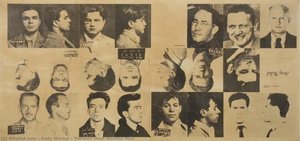
بورتريه لـ أندي وارهول

أشهر 100 لوحات لـ أندي وارهول، مختارات من المعرض

تحديث نوفمبر 2026 · مُرتبة حسب مؤشر شعبيتنا (عمليات البحث، والزيارات، والطلبات لكل عمل فني) · 428 أعمال لـ أندي وارهول في كتالوجنا

باختصار

من بين جميع الأعمال الأصلية التي تركها أندي وارهول، تُعد علب حساء كامبل (1962) هي الأشهر، وهي ضمن مجموعة متحف الفن الحديث (MoMA) في مدينة نيويورك. تأتي بعدهما مباشرة كل من آندي وارhol حياة غارقة في صورة أمريكيةآندي وارhol، المولود أندرو وارhola الابن في عام 1928 وسط قلب الصناعة في بيتسبرغ، بنسلفانيا، كان شخصية مقدرة لإعادة تعريف حدود الفن والشهرة. تميزت حياته المبكرة بكل من الصعوبة والإبداع المتنامي. مرض الطفولة، رقصة سيتا (1962) و حادث سيارة بيضاء 19 مرة، خاص (1963). يضم كتالوجنا 428 من أعمال أندي وارهول؛ حيث احتفظ المعرض بـ 100 من أكثر الأعمال التي يعجب بها العالم، مع عرض كل منها مع تاريخها ومتحفها وقصتها.

1928 – 1987, بيتسبرغ فن البوب أكبر مجموعة أعمال: معهد شيكاغو للفنون

أفضل 10 لوحات لـ أندي وارهول: مختارات المعرض

1
علب حساء كامبل (1962) للفنان أندي وارهول

علب حساء كامبل

1962 · زيت على كانفاس · متحف الفن الحديث (MoMA), مدينة نيويورك

Subject and Iconography This iconic artwork features a grid of thirty-two meticulously rendered Campbell’s soup cans, each representing a different flavor from the original product line. The cans are depicted frontally, emphasizing their commercial branding and familiar shapes. As a symbol of everyday consumer culture, these cans elevate mundane objects to the status of fine art, inviting viewers to reconsider the boundaries between high and low culture. The repetition of…

2
آندي وارhol

حياة غارقة في صورة أمريكيةآندي وارhol، المولود أندرو وارhola الابن في عام 1928 وسط قلب الصناعة في بيتسبرغ، بنسلفانيا، كان شخصية مقدرة لإعادة تعريف حدود الفن والشهرة. تميزت حياته المبكرة بكل من الصعوبة والإبداع المتنامي. مرض الطفولة، رقصة سيتا (1962) للفنان أندي وارهول

آندي وارhol حياة غارقة في صورة أمريكيةآندي وارhol، المولود أندرو وارhola الابن في عام 1928 وسط قلب الصناعة في بيتسبرغ، بنسلفانيا، كان شخصية مقدرة لإعادة تعريف حدود الفن والشهرة. تميزت حياته المبكرة بكل من الصعوبة والإبداع المتنامي. مرض الطفولة، رقصة سيتا

1962 · الطباعة بالشاشة الحريرية

إن لوحة "مارلين ثنائية" (Marilyn Diptych) التي رسمها آندي وارhol عام 1962 ليست مجرد صورة، بل هي بيان ضخم حول الشهرة والفناء وقوة وسائل الإعلام المتنامية. جاءت هذه التحفة الفنية في أعقاب وفاة مارلين مونرو المأساوية، لتتجاوز التمثيل البسيط لتصبح انعكاسًا مؤثرًا على ثقافة المشاهير والتناقضات الكامنة فيها. حجم اللوحة الهائل – الذي يبلغ ارتفاعه ما يقرب من ستة أقدام – يجذب الانتباه ويجذب المشاهدين إلى عالم تتلاشق فيه الصورة…

3
حادث سيارة بيضاء 19 مرة، خاص (1963) للفنان أندي وارهول

حادث سيارة بيضاء 19 مرة، خاص

1963 · الطباعة بالشاشة الحريرية

يتم تقديم الموضوع—وهو حدث عنيف—بشكل مجرد وغير شخصي بشكل غريب من خلال أسلوب وارهول المميز. فبدلاً من تقديم تصوير درامي واحد، نجد أنفسنا أمام تسعة عشر صورة شبه متطابقة مرتبة في شبكة منظمة. هذا التكرار لا يهدف إلى تمجيد الحادث، بل يتعلق بمفهوم التبلد الشعوري؛ حيث يعكس وارهول الطريقة التي كان الجمهور يستهلك بها مثل هذه الأحداث المتزايدة عبر الصحف والتلفزيون، حيث تتحول لمحات عابرة من المأساة إلى أمر مألوف…

4
مارلين، معرض ليون كاستيلي، نيويورك (1964) للفنان أندي وارهول

مارلين، معرض ليون كاستيلي، نيويورك

1964 · الطباعة الحريرية

في قلب حركة البوب آرت، يبرز عمل "مارلين، معرض ليون كاستيلي، نيويورك" للفنان آندي وارهول كتحفة فنية خالدة. هذه اللوحة ليست مجرد صورة للممثلة الأسطورية مارلين مونرو؛ بل هي انعكاس لثقافة المشاهير والاحتفاء بالصور النمطية في المجتمع الأمريكي خلال الستينيات. يجسد هذا العمل ببراعة رؤية وارهول الفريدة، حيث يمزج بين الفن التجاري وتقنيات الرسم الراقية لخلق قطعة فنية مؤثرة بصريًا تتجاوز حدود الزمان والمكان.

5
علبة حساء كامبلز (طماطم) للفنان أندي وارهول

علبة حساء كامبلز (طماطم)

رسومات حبر على الورق

في قلب حركة البوب آرت، تبرز لوحة "علبة حساء كامبلز (طماطم)" للفنان أندي وارهول كتحفة فنية خالدة. إنها ليست مجرد صورة لمنتج استهلاكي عادي، بل هي تعبير جريء عن ثقافة الاستهلاك والتبسيط المفرط الذي ساد في أمريكا خلال الستينيات. يجسد هذا العمل الفني رؤية وارهول الفريدة التي أسهمت في إعادة تعريف مفهوم الفن نفسه، وتحويل الأشياء اليومية إلى رموز ثقافية قوية.

6
مارلين مونرو الذهبية للفنان أندي وارهول

مارلين مونرو الذهبية

ألوان أكريليك على كانفاس

Subject and Iconography This striking artwork captures the legendary Marilyn Monroe, an enduring symbol of glamour, beauty, and Hollywood allure. Through a bold, contemporary lens, the piece emphasizes her status as a cultural icon, evoking both admiration and reflection on the fleeting nature of fame. Monroe’s visage, rendered with vivid colors and sharp contrasts, invites viewers to contemplate the complex relationship between celebrity and societal perception. Stylistic Approach and Technique…

7
شغب عرقي أحمر (1964) للفنان أندي وارهول

شغب عرقي أحمر

1964 · كولاج

Powerful Subject Matter and Social Commentary This striking artwork confronts viewers with a visceral depiction of social unrest and racial tension during the 1960s. Through a series of layered, collage-like images, it captures the chaos and confrontation of protests, symbolizing the broader struggles for civil rights and justice. The figures, rendered as stark silhouettes against a vivid red background, evoke a sense of urgency and emotional intensity, inviting viewers to…

8
إلفيس الثلاثي (1963) للفنان أندي وارهول

إلفيس الثلاثي

1963 · الطباعة الحريرية

Subject and Iconography This striking artwork features a triptych of Elvis Presley, the legendary King of Rock and Roll, captured in a bold, high-contrast style. The repeated image emphasizes Elvis’s status as a cultural icon, symbolizing fame, rebellion, and the transformative power of music. The central figure’s intense gaze and commanding posture evoke a sense of charisma and timeless allure, inviting viewers to reflect on the enduring impact of celebrity…

9
ميكي للفنان أندي وارهول

ميكي

ألوان أكريليك على كانفاس

إعادة تصور أيقونة البوب: استكشاف لوحة "ميكي" لآندي وارهول تعد لوحة آندي وارهول التي أبدعها عام 1982، والموسومة باسم "ميكي"، نموذجاً جوهرياً لقدرة فن البوب على الارتقاء بالثقافة الشعبية إلى مصاف الفنون الجميلة. هذا العمل النابض بالحياة والذي يمكن التعرف عليه فوراً لا يكتفي بمجرد تصوير ميكي ماوس، بل يقوم بتشريح وإعادة تقديم أيقونة بصرية، مما يدفع المشاهدين للتأمل في موضوعات الاستهلاك، والشهرة، وطبيعة إعادة إنتاج الصور في المجتمع الحديث.…

10
الروح الجديدة (بطوط) للفنان أندي وارهول

الروح الجديدة (بطوط)

زيت على كانفاس

أندي وارهول وتحدي التقاليد الفنية في عصر الثورة أندي وارهول لم يكن مجرد فنان، بل كان ثورة فكرية وأسلوبًا بصريًا أحدث تحولًا جذريًا في المشهد الفني الأمريكي، حيث استعاد الفنان البالغ من العمر 49 عامًا الإثارة والتجديد الذي غاب عن الأجيال السابقة، وتجاوز حدود الرسم التقليدي ليقدم رؤية جديدة للعالم الفني والإبداعي. بدأ وارهول مسيرته المهنية في عالم الإعلانات والمجلات، حيث صقل مهاراته في استخدام التصميم البصري واللون لإضفاء الحيوية…

تستمر مجموعة أندي وارهول، من 11 إلى 100

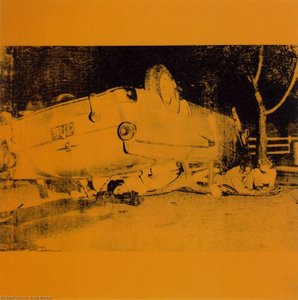
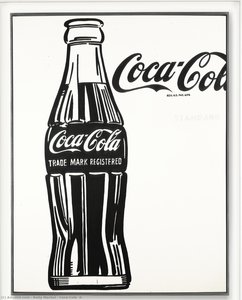
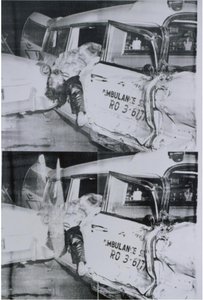
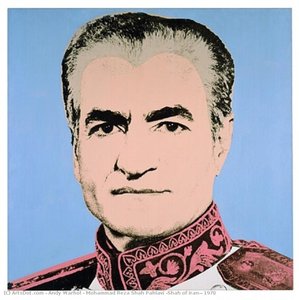
11خمس وفيات (1963) للفنان أندي وارهولخمس وفيات1963 12تشي جيفارا للفنان أندي وارهولتشي جيفارا 13129 Die in Jet! (1962) للفنان أندي وارهول129 Die in Jet!1962 14زهور للفنان أندي وارهولزهور 15صورة ذاتية (التمويه) (1986) للفنان أندي وارهولصورة ذاتية (التمويه)1986 16الحمار الوحشي للفنان أندي وارهولالحمار الوحشي 17زهور للفنان أندي وارهولزهورمعهد شيكاغو للفنون 18غوتة (1982) للفنان أندي وارهولغوتة1982 · مؤسسة آندي وارهول للفنون البصرية 19فلاش - ٢٢ نوفمبر ١٩٦٣ (1968) للفنان أندي وارهولفلاش - ٢٢ نوفمبر ١٩٦٣1968 20بدون عنوان (3257) للفنان أندي وارهولبدون عنوان (3257)Ulyanovsk Oblast Art Museum 21ضفدع للفنان أندي وارهولضفدع 22بات هيرن (1985) للفنان أندي وارهولبات هيرن1985 · معهد شيكاغو للفنون 23ديب هاري (1980) للفنان أندي وارهولديب هاري1980 24مارلون براندو (1966) للفنان أندي وارهولمارلون براندو1966 25فياثيو للفنان أندي وارهولفياثيو 26Pat Hearn (1985) للفنان أندي وارهولPat Hearn1985 · معهد شيكاغو للفنون 27Coca-Cola (3) (1962) للفنان أندي وارهولCoca-Cola (3)1962 28مارلين للفنان أندي وارهولمارلين 29مايكل جاكسون للفنان أندي وارهولمايكل جاكسون 30زهور للفنان أندي وارهولزهورمعهد شيكاغو للفنون 31فلاش – ٢٢ نوفمبر ١٩٦٣ (1968) للفنان أندي وارهولفلاش – ٢٢ نوفمبر ١٩٦٣1968 32الظِل (1981) للفنان أندي وارهولالظِل1981 33Black Lenin للفنان أندي وارهولBlack Lenin 34شانيل للفنان أندي وارهولشانيل 35الساحرة (1981) للفنان أندي وارهولالساحرة1981 36(Untitled) من الغروب (1972) للفنان أندي وارهول(Untitled) من الغروب1972 37سوبرمان (1981) للفنان أندي وارهولسوبرمان1981 38ماو (1972) للفنان أندي وارهولماو1972 · Lentos Kunstmuseum Linz 39ماو للفنان أندي وارهولماو 40Campbells للفنان أندي وارهولCampbells 41لويزا مينلي (1979) للفنان أندي وارهوللويزا مينلي1979 42Sixteen Jackies (1964) للفنان أندي وارهولSixteen Jackies1964 43Beethoven (1987) للفنان أندي وارهولBeethoven1987 44Ambulance Disaster (1964) للفنان أندي وارهولAmbulance Disaster1964 45أربع موناليزات (1978) للفنان أندي وارهولأربع موناليزات1978 · معهد شيكاغو للفنون 46إلفيس بريسلي للفنان أندي وارهولإلفيس بريسلي 47صور الفنانين (1967) للفنان أندي وارهولصور الفنانين1967 48ماري لين (1967) للفنان أندي وارهولماري لين1967 · Lentos Kunstmuseum Linz 49فلوت أندرو هول & نيكو للفنان أندي وارهولفلوت أندرو هول & نيكو 50One Hundred and Fifty Multicolored Marilyns (1979) للفنان أندي وارهولOne Hundred and Fifty Multicolored Marilyns1979 · متحف غوغنهايم بلباو 51Mick Jagger للفنان أندي وارهولMick Jagger 52Gun للفنان أندي وارهولGun 53ميك جاغر للفنان أندي وارهولميك جاغر 54جودي غارلاند وليزا مينلي (1979) للفنان أندي وارهولجودي غارلاند وليزا مينلي1979 55ليز تايلور للفنان أندي وارهولليز تايلورمعهد شيكاغو للفنون 56صورة ذاتية، خاصة (1986) للفنان أندي وارهولصورة ذاتية، خاصة1986 57وميض – ٢٢ نوفمبر ١٩٦٣ (1968) للفنان أندي وارهولوميض – ٢٢ نوفمبر ١٩٦٣1968 58مامى للفنان أندي وارهولمامى 59غير معنون (من مارلين مونرو) (1967) للفنان أندي وارهولغير معنون (من مارلين مونرو)1967 60دراكولا للفنان أندي وارهولدراكولا 61Self-Portrait للفنان أندي وارهولSelf-Portrait 62بقرة للفنان أندي وارهولبقرة 63Vesuvius (1985) للفنان أندي وارهولVesuvius1985 · متحف كابوديمونتي 64The Last Supper (1986) للفنان أندي وارهولThe Last Supper1986 65Magazine and History (1983) للفنان أندي وارهولMagazine and History1983 66ظل (1981) للفنان أندي وارهولظل1981 67علي للفنان أندي وارهولعلي 68Hand (1959) للفنان أندي وارهولHand1959 69Drag Queen للفنان أندي وارهولDrag Queen 70Flash--November 22, 1963 (1968) للفنان أندي وارهولFlash--November 22, 19631968 71Speed Skater (1983) للفنان أندي وارهولSpeed Skater1983 72ماو (1972) للفنان أندي وارهولماو1972 73محمد علي للفنان أندي وارهولمحمد علي 74صورة جايمي واييت للفنان أندي وارهولصورة جايمي واييت 75فراشة للفنان أندي وارهولفراشة 76National Velvet (1963) للفنان أندي وارهولNational Velvet1963 · متحف سان فرانسيسكو للفن الحديث 77Mohammad Reza Shah Pahlavi (Shah of Iran), 1978 (1978) للفنان أندي وارهولMohammad Reza Shah Pahlavi (Shah of Iran), 19781978 78Self-Portrait (1967) للفنان أندي وارهولSelf-Portrait1967 · مجموعات بافاريا الحكومية للرسم 79الظل (1981) للفنان أندي وارهولالظل1981 80Beethoven b (1987) للفنان أندي وارهولBeethoven b1987 81مايكى ماوس للفنان أندي وارهولمايكى ماوس 82بورتريه إندريا برغام للفنان أندي وارهولبورتريه إندريا برغام 83بيرغامون - (2405583) للفنان أندي وارهولبيرغامون - (2405583) 84A Boy for Meg (1962) للفنان أندي وارهولA Boy for Meg1962 85Suicide للفنان أندي وارهولSuicide 86Marilyn Diptych (1962) للفنان أندي وارهولMarilyn Diptych1962 · تات مدرن 87زهور للفنان أندي وارهولزهور 88تذكير ذاتي (1986) للفنان أندي وارهولتذكير ذاتي1986 89Untitled from Sunset (1972) للفنان أندي وارهولUntitled from Sunset1972 90Superman (1961) للفنان أندي وارهولSuperman1961 91بلاك جلاما (جودي غارلاند) للفنان أندي وارهولبلاك جلاما (جودي غارلاند) 92Love 311 (1983) للفنان أندي وارهولLove 3111983 93Thirteen Most Wanted Men (1964) للفنان أندي وارهولThirteen Most Wanted Men1964 94ماو للفنان أندي وارهولماو 95Botticelli (dettaglio) للفنان أندي وارهولBotticelli (dettaglio) 96Green Coca-Cola Bottles للفنان أندي وارهولGreen Coca-Cola Bottles 97لوحة ناف كيمبرنر (1973) للفنان أندي وارهوللوحة ناف كيمبرنر1973 98Jackie Kennedy III (1966) للفنان أندي وارهولJackie Kennedy III1966 99Self-portrait للفنان أندي وارهولSelf-portraitمعهد شيكاغو للفنون 100Robert Mapplethorpe للفنان أندي وارهولRobert Mapplethorpe

لوحات أندي وارهول الشهيرة، حسب الفترات الزمنية

النضوج الفني

1980 – 1981 · 3 أعمال في هذه القائمة

المواضيع التي استأثرت باهتمام أندي وارهول

المواضيع الأربعة التي تتكرر باستمرار في هذه الأعمال الأصلية، مع تقديم أروع مثال لكل منها.

المتاحف التي تحتفظ بالأعمال الأصلية لـ أندي وارهول

المتاحف الـ 8 التي تضم أكبر عدد من اللوحات الموجودة في هذه الصفحة.

المتحف المدينة أعمال أندي وارهول لوحات من هذه القائمة
معهد شيكاغو للفنون, شيكاغومعهد شيكاغو للفنون شيكاغو 12 زهور, بات هيرن, Pat Hearn
Lentos Kunstmuseum Linz, لينزLentos Kunstmuseum Linz لينز 2 ماو, ماري لين
تات مدرن, لندنتات مدرن لندن 3 Marilyn Diptych
متحف الفن الحديث (MoMA), مدينة نيويوركمتحف الفن الحديث (MoMA) مدينة نيويورك 2 علب حساء كامبل
مجموعات بافاريا الحكومية للرسم, ميونخمجموعات بافاريا الحكومية للرسم ميونخ 2 Self-Portrait
مؤسسة آندي وارهول للفنون البصرية, لندنمؤسسة آندي وارهول للفنون البصرية لندن 1 غوتة
Ulyanovsk Oblast Art MuseumUlyanovsk Oblast Art Museum 1 بدون عنوان (3257)
متحف غوغنهايم بلباو, بيلباومتحف غوغنهايم بلباو بيلباو 1 One Hundred and Fifty Multicolored Marilyns

أندي وارهول عقداً بعد عقد: الأعمال الأصلية التي ميزت كل حقبة

الأعمال حسب العقد

اختر عقداً لتشاهد العمل الأصلي الذي يجسده.

أسئلة المقتنين حول لوحات أندي وارهول

ما هو العمل الأكثر شهرة لـ أندي وارهول؟اكتشف الإجابة

علب حساء كامبل (1962)، متحف الفن الحديث (MoMA), مدينة نيويورك. ويليها آندي وارhol حياة غارقة في صورة أمريكيةآندي وارhol، المولود أندرو وارhola الابن في عام 1928 وسط قلب الصناعة في بيتسبرغ، بنسلفانيا، كان شخصية مقدرة لإعادة تعريف حدود الفن والشهرة. تميزت حياته المبكرة بكل من الصعوبة والإبداع المتنامي. مرض الطفولة، رقصة سيتا (1962) وحادث سيارة بيضاء 19 مرة، خاص (1963).

كم كان عمر أندي وارهول عندما تم إنجاز علب حساء كامبل؟اكتشف الإجابة

عمر 34 عاماً: يعود تاريخ علب حساء كامبل إلى 1962، وقد وُلد أندي وارهول في 1928.

ما هي أشهر عشر لوحات لـ أندي وارهول؟اكتشف الإجابة

علب حساء كامبل, آندي وارhol حياة غارقة في صورة أمريكيةآندي وارhol، المولود أندرو وارhola الابن في عام 1928 وسط قلب الصناعة في بيتسبرغ، بنسلفانيا، كان شخصية مقدرة لإعادة تعريف حدود الفن والشهرة. تميزت حياته المبكرة بكل من الصعوبة والإبداع المتنامي. مرض الطفولة، رقصة سيتا, حادث سيارة بيضاء 19 مرة، خاص, مارلين، معرض ليون كاستيلي، نيويورك, علبة حساء كامبلز (طماطم), مارلين مونرو الذهبية, شغب عرقي أحمر, إلفيس الثلاثي, ميكي و الروح الجديدة (بطوط). يوضح التصنيف أعلاه سنة كل لوحة والمتحف التابعة له.

كم عدد اللوحات التي تركها أندي وارهول؟اكتشف الإجابة

يضم كتالوجنا 428 من أعمال أندي وارهول، التي يعود تاريخها من 1959 إلى 1987.

في أي متاحف تُعرض روائع أندي وارهول؟اكتشف الإجابة

توجد غالبيتها في معهد شيكاغو للفنون (شيكاغو), Lentos Kunstmuseum Linz (لينز) و تات مدرن (لندن). يدرج جدول المتاحف أعلاه جميعها.

في أي سنوات رسم أندي وارهول أشهر أعماله؟اكتشف الإجابة

في 1960s: تم إنجاز 26 من أصل 100 من الأعمال في هذه الصفحة خلال تلك الفترة، من بينها علب حساء كامبل.

ما هي أول وآخر الأعمال الأصلية الشهيرة لـ أندي وارهول؟اكتشف الإجابة

في هذه الصفحة، أقدم الأعمال يعود إلى Hand (1959) وأحدثها يعود إلى Beethoven (1987).

ما هي المواضيع التي اختارها أندي وارهول بشكل متكرر؟اكتشف الإجابة

Pop art (15), Celebrity (14) و Andy warhol (14)، عبر 100 من الأعمال في هذه الصفحة.

ما هي التقنية التي استخدمها أندي وارهول بشكل أكبر؟اكتشف الإجابة

ألوان أكريليك على كانفاس، لـ 25 من أصل 100 من الأعمال في هذه الصفحة.

إلى أي حركة فنية ينتمي أندي وارهول؟اكتشف الإجابة

فن البوب، بناءً على الأعمال الأصلية في هذه الصفحة.

ما هي أعمال أندي وارهول المعروضة في معهد شيكاغو للفنون؟اكتشف الإجابة

زهور, بات هيرن و Pat Hearn: يضم معهد شيكاغو للفنون, شيكاغو 7 من الأعمال المعروضة في هذه الصفحة.

أندي وارهول: حياته وأعماله

The Early Life of Andy Warhol

To understand the mechanics of the modern image, one must look back to the industrial grit of Pittsburgh, Pennsylvania. Andy Warhol was born Andrew Warhola Jr. on August 6, 1928, into a working-class environment that lacked any pretense of high culture. He was the youngest of three sons, born to Andrej Warhola and Julia Zavacky Warhola. His parents were immigrants from the European region that is now Slovakia, a background that anchored him in a specific, unvarnished American reality. This lineage provided the foundational tension between the immigrant experience and the consumerist explosion he would later document.

The stability of his early years was cut short by the realities of industrial labor and disease. His father worked in a coal mine, a job that defined the family's economic landscape until his death in 1942 from tubercular peritonitis. This loss occurred when Warhol was only fourteen, a period that stripped away the domestic security of his youth. The household was shaped by the harshness of the Pittsburgh landscape and the sudden absence of a primary provider. These early years were not a prelude to fame, but a period of stark, material necessity.

Childhood Illness and Early Creativity

The visual language that would eventually define a century began with the forced stillness of a sickroom. A childhood bout with Sydenham's chorea, also known as St. Vitus’ Dance, kept him indoors for long stretches. This confinement was not a void; it was a period of intense, focused observation. He spent these days drawing and constructing scrapbooks from Hollywood magazines, absorbing the glossy, manufactured faces of a distant celebrity culture. His mother provided the essential raw material: comic books and movie magazines. These were the first images he learned to decode, establishing a preference for the mass-produced over the unique.

This early immersion in printed media created a specific way of seeing. He did not look at the world through classical lenses but through the saturated, repetitive imagery of the magazine page. His fascination with the camera emerged alongside this visual training. He enjoyed using the family's Kodak Baby Brownie Special camera to capture his surroundings. This interest was taken seriously by his family; his father and brothers built a darkroom in the basement for him. This setup allowed him to move from mere observation to the technical manipulation of images, a skill that would later underpin his entire approach to reproduction.

Formal Training and Commercial Success

Warhol’s transition from a student to a professional was driven by a technical precision learned through formal education. After attending Holmes Elementary School and Schenley High School, he moved into higher studies at the Carnegie Institute of Technology. He graduated in 1949 with a Bachelor of Fine Art in Pictorial Design. This specific training provided the structural foundation for a career that would eventually dismantle the distinction between high art and commercial imagery. He moved to New York City in 1949, carrying the discipline of a designer into the competitive landscape of Manhattan.

His early professional years were defined by high-stakes commercial illustration. He did not start by challenging the status quo; he mastered it. Working for major names like Tiffany & Co., Vogue, and Harper's Bazaar, he learned how brands manufacture desire. His client list was a map of mid-century American consumption, including The New York Times, I. Miller Shoes, Bonavit Teller, Columbia Records, Fleming-Joffe, and NBC. This period of service was not a detour. It was a rigorous apprenticeship in the mechanics of mass distribution and visual branding. He understood the lifecycle of a product before he ever attempted to deconstruct it on a canvas.

The Rise of Pop Art and The Factory

By the 1960s, the shift from illustrating products to treating the products themselves as subjects changed everything. Warhol stopped drawing the brand and started presenting the object. He adopted the silkscreen printing process to mirror the repetitive nature of consumer culture, a method that stripped away the traditional hand of the artist in favor of a mechanical aesthetic. This wasn't about craft; it was about the logic of the assembly line applied to the canvas.

His studio, known as The Factory, functioned as a central point for a specific New York social circle. It was a hub for avant-garde experimentation that pulled together drag queens, poets, bohemians, musicians, and wealthy patrons. This space blurred the lines between private life and public persona, creating a controlled environment where culture was manufactured alongside the art. Between 1963 and 1968, he expanded this experimentation into film, producing over 600 works that challenged how audiences consumed moving images.

Themes of Consumerism and Celebrity

Warhol’s fascination with the pervasive influence of celebrity culture on American society was not a passive observation; it was a dissection of how fame is manufactured and consumed. He understood that a person could be turned into a product through repetition and media saturation. This logic applied equally to the supermarket shelf and the silver screen. By treating the faces of stars like Marilyn Monroe and Elizabeth Taylor with the same mechanical detachment used for commercial goods, he exposed the artificiality of the public persona. He did not merely paint people; he documented the construction of the modern idol.

This obsession with the repetitive nature of consumption extended into the mundane. His depictions of Campbell’s Soup Cans from 1962 turned everyday objects into subjects of high art, mirroring the mass-produced reality of the mid-century American experience. He saw the supermarket as a landscape as significant as any gallery. However, his gaze was not always bright or colorful. He also interrogated the darker, more violent facets of the American experience, producing series that focused on car crashes and electric chairs. These works stripped away the glamour of the media age to reveal the grim reality of the sensationalism that drives public attention.

His influence even bled into the music industry through his management of the rock band The Velvet Underground. This connection further blurred the lines between high art and the gritty, underground pulse of popular culture. He was interested in the way everything—from a soup can to a rock star—could be packaged, branded, and sold to the masses.

Technique and Artistic Methods

Warhol’s impact stems from his deliberate rejection of the traditional artist's hand. He embraced the silkscreen printing process to achieve a flattened, mechanical aesthetic that mirrored the mass production of the consumer goods he depicted. This method allowed for a detachment from manual brushwork, favoring a repetitive, industrial look. In his earlier work, he utilized the 'blotted line' technique, a method that emphasized the graphic quality of his drawings. His approach was never about the singular touch of a creator, but about the efficiency of the machine.

His experimentation extended into the temporal realm through film. He utilized long, unblinking takes in works like Sleep and Empire to challenge how an audience consumes moving images. These static, extended durations forced a confrontation with the medium itself. He also moved through various photographic and cinematic methods, including 35 mm photography and single-frame cinematography. He frequently used a Polaroid Big Shot to capture his subjects, a practice that informed his visual language of immediacy and repetition.

  • Sleep (1963)
  • Empire (1964)

The Attempted Assassination and Later Career

The trajectory of Warhol's career shifted permanently in 1968 when Valerie Solanas entered his Manhattan studio and shot him. This violent intrusion did more than leave lasting physical injuries; it fundamentally altered the mechanics of his operation. The chaotic, social energy of the early Factory era hardened into a more structured, business-oriented enterprise. He moved away from the unpredictable fringes of the underground and toward a more calculated management of his own brand and media presence.

His later years were defined by an aggressive expansion into publishing and television. He founded Interview magazine, a publication that focused on the intersection of film, fashion, and popular culture. This move mirrored his lifelong obsession with the mechanics of fame. He also moved into the living rooms of the public through television shows, including Andy Warhol's TV (1980–83) and Andy Warhol's Fifteen Minutes (1985–87). These projects were not mere diversions; they were extensions of his interest in how images are consumed and broadcast.

Even as he solidified his commercial standing, he maintained a connection to the emerging avant-garde through significant collaborations. He worked alongside young artists Jean-Michel Basquiat and Keith Haring, bridging the gap between his established Pop Art legacy and the next generation of visual expression. This period proved that his influence was not a static relic of the 1960s, but a continuous, evolving force in the media landscape.

The Final Years and Death

By the end of his life, Warhol had long since abandoned the singular identity of a painter. He had become a multi-media entity, moving through photography, publishing, and television with the same mechanical efficiency he once applied to silkscreening. This expansion was not a departure from his interests but a logical progression of his obsession with the image. He was no longer just making art; he was managing a brand that occupied every available screen and page.

The end came abruptly in New York City. Following surgery to remove his gall bladder, he died on February 22, 1987. The cause was cardiac arrhythmia. He was 58 years old. His death marked the conclusion of a career that had successfully merged the high-brow gallery with the mass-produced reality of the supermarket shelf and the television screen.

The Enduring Legacy of Warhol

Warhol remains the most important artist of the second half of the 20th century. He did not merely observe the media age; he interrogated the very nature of what it means to be seen within it. By turning the repetitive textures of consumerism into a visual language, he predicted a reality defined by digital saturation and constant visibility. He is the man who popularized the expression "15 minutes of fame," a concept that has transitioned from a prediction to a fundamental rule of modern existence. His work anticipated the way celebrity and commodity become indistinguishable in a hyper-connected society.

The market recognizes his influence through sheer economic weight. He has been described as the bellwether of the art market, a figure whose output dictates the direction of high-stakes collecting. His ability to bridge the gap between the supermarket shelf and the gallery wall changed how value is assigned to imagery. He moved art away from the internal soul and toward the external, mass-produced object. This shift ensured that his presence would be felt in every corner of contemporary visual culture, from high-end auctions to the filtered aesthetics of social media.

Where to See His Works Today

To encounter the physical reality of his output, one must look to the institutions that preserved his presence. The Andy Warhol Museum in Pittsburgh holds the most significant concentration of his work, standing as the largest museum in the United States dedicated to a single artist. It remains the primary site for those seeking to understand the scale of his production. Beyond the American landscape, his influence is anchored in major international collections. The Tate Modern in London and the Museum of Modern Art in New York City each hold two works, providing essential touchpoints for the study of his visual language. In Europe, the Lentos Kunstmuseum Linz also maintains two pieces in its collection.

These collections offer more than mere viewing; they provide the specific context of his engagement with mass media and celebrity. Seeing his work in these settings allows for a direct confrontation with the mechanical textures he utilized to mirror consumer culture. The presence of his imagery in such diverse geographic locations confirms the reach of his aesthetic. His work exists in these spaces as a record of a specific, media-saturated era.