بورتريه لـ Marcelo Grassmann

The 7 Most Famous Marcelo Grassmann Paintings, Each One of a Kind

تحديث أكتوبر 2026 · مُرتبة حسب مؤشر شعبيتنا (عمليات البحث، والزيارات، والطلبات لكل عمل فني) · 7 أعمال لـ Marcelo Grassmann في كتالوجنا

In short

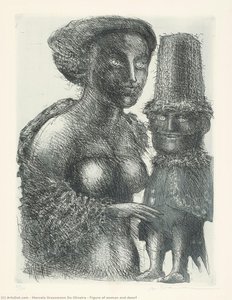
Cavalo morto (1944) is the Marcelo Grassmann painting that draws the most eyes; the original belongs to the Centro Cultural São Paulo, ساو باولو. After it, the eye goes to Figure of woman and dwarf and Cavalos (1944). Among the 7 works of Marcelo Grassmann in our catalog, these 7 are the most famous, each a unique original presented with its year, its museum and the reason it endures.

1925 – 2013, Sao Joao do Rio Preto Surrealism أكبر مجموعة أعمال: Museu de Valores do Banco Central do Brasil

Top 10 paintings by Marcelo Grassmann, through the gallery's eye

1
Cavalo morto (1944) للفنان Marcelo Grassmann

Cavalo morto

1944 · Drawing · Centro Cultural São Paulo, ساو باولو

In the hauntingly beautiful drawing Cavalo morto, created in 1944, the Brazilian master Marcelo Grassmann de Oliveira invites us into a profound meditation on the cycle of life and the inevitability of decay. This striking black and white work captures a lifeless horse resting upon the earth, its emaciated form rendered with a precision that transcends mere anatomical study. The composition is anchored by the heavy, stillness of the subject,…

5
Cavalos (1944) للفنان Marcelo Grassmann

Cavalos

1944 · Acrylic On Canvas · Centro Cultural São Paulo, ساو باولو

Marcelo Grassmann de Oliveira’s “Cavalos” (1944) stands as a testament to Brazilian Expressionism, capturing not merely an image of a horse in motion but a visceral embodiment of energy, struggle, and primal instinct. Executed in monochrome ink or charcoal on paper—a deliberate choice that amplifies the artwork's textural qualities—the drawing immediately draws the viewer into its turbulent landscape.

6
Blue warrior and spear للفنان Marcelo Grassmann

Blue warrior and spear

Painting · Museu de Valores do Banco Central do Brasil, برازيليا

In the evocative realm of Marcelo Grassmann de Oliveira, the boundaries between reality and dream dissolve into a singular, striking vision. Blue Warrior and Spear serves as a profound testament to the artist's ability to conjure mythic figures from the depths of the subconscious. The painting presents a solitary figure, draped in shades of cerule respect and deep azure, poised with a spear that acts as both a weapon and…

The subjects that held Marcelo Grassmann's eye

The four subjects that come back most often in these originals, each with its finest example.

The museums that keep Marcelo Grassmann's originals

المتاحف 2 التي تضم أكبر عدد من اللوحات الموجودة في هذه الصفحة.

المتحف المدينة أعمال Marcelo Grassmann لوحات من هذه القائمة
Museu de Valores do Banco Central do Brasil, برازيلياMuseu de Valores do Banco Central do Brasil برازيليا 4 Figure of woman and dwarf, Horses, Blue warrior and spear
Centro Cultural São Paulo, ساو باولوCentro Cultural São Paulo ساو باولو 3 Cavalo morto, Cavalos, Cavalos

Marcelo Grassmann across the years: the unique originals of each

Marcelo Grassmann's dated originals shown here fit into about ten years, 1944 to 1954: the eye follows them year by year.

الأعمال حسب السنة

Pick a year to see its originals.

Marcelo Grassmann's paintings: questions for the gallery

What is the single most famous work of Marcelo Grassmann?Reveal the answer

Cavalo morto (1944), Centro Cultural São Paulo, ساو باولو. Figure of woman and dwarf and Cavalos (1944) come next.

At what age did Marcelo Grassmann create Cavalo morto?Reveal the answer

19 years old: Cavalo morto dates from 1944, and Marcelo Grassmann was born in 1925.

How many works by Marcelo Grassmann are known?Reveal the answer

Our catalog holds 7 works by Marcelo Grassmann, dated from 1944 to 1954.

Where can the most famous Marcelo Grassmann originals be seen?Reveal the answer

Mostly in Museu de Valores do Banco Central do Brasil (برازيليا) و Centro Cultural São Paulo (ساو باولو). The museum table above lists them all.

During which period did Marcelo Grassmann create the best-known paintings?Reveal the answer

In 1944: 3 of the 7 works on this page were made then, Cavalo morto among them.

Which famous Marcelo Grassmann painting is the earliest, and which the latest?Reveal the answer

On this page, the earliest is Cavalo morto (1944) and the latest Horses (1954).

What subjects did Marcelo Grassmann favour?Reveal the answer

Dreamlike (4) و Horses (2), across the 7 works on this page.

What materials did Marcelo Grassmann paint with most?Reveal the answer

Drawing, for 3 of the 7 works on this page.

Which movement does the work of Marcelo Grassmann belong to?Reveal the answer

Surrealism, judging by the originals on this page.

What Marcelo Grassmann originals can I see at the Museu de Valores do Banco Central do Brasil?Reveal the answer

Figure of woman and dwarf, Horses و Blue warrior and spear: the Museu de Valores do Banco Central do Brasil, برازيليا holds 4 of the works on this page.

Marcelo Grassmann: a portrait of the artist

Marcelo Grassmann de Oliveira: A Life in Engraving and Drawing

  • Born: September 23, 1925, São João do Rio Preto, Brazil
  • Died: June 21, 2013
  • Nationality: Brazilian
  • Known For: Engravings, Drawings, Metal Engraving, Wood Engraving

Early Life and Artistic Development

  • Initially pursued sculpture before discovering his passion for engraving in the 1940s.
  • Transitioned from wood engraving to metal engraving in the 1950s, marking a significant shift in his artistic practice.
  • Influenced by Austrian artist Alfred Kubin and prominent Brazilian engravers Oswaldo Goeldi and Livio Abramo. These influences shaped his early style and thematic concerns.
  • Developed a distinctive visual language characterized by dreamlike imagery and recurring motifs such as knights, maidens, death, horses, and crabs – often imbued with symbolic meaning.

Artistic Style and Major Themes

  • Dreamlike Imagery: Grassmann's work is renowned for its surreal and evocative atmosphere, transporting viewers to fantastical realms.
  • Recurring Motifs: The consistent presence of knights, maidens, death, horses, and crabs suggests a fascination with themes of mortality, chivalry, mythology, and the subconscious.
  • Technical Mastery: His engravings demonstrate exceptional technical skill, showcasing intricate detail and precise linework.
  • Symbolism: The figures and scenes in his work are often laden with symbolic meaning, inviting multiple interpretations.
  • Exploration of the Human Condition: Through his fantastical imagery, Grassmann explored universal themes of life, death, love, loss, and the search for meaning.

Recognition and Achievements

  • International Awards: Received numerous prestigious awards throughout his career, including first prizes at the I Salon of Modern Art of Rio de Janeiro (1953), the III Biennale of São Paulo (1955), and the XXXI Biennale of Venice (1958) for sacred art.
  • Exhibitions: Participated in significant international exhibitions, including the III Biennale for Graphic Arts in Florence (1972).
  • Museum Collections: His works are held in prominent museum collections worldwide, including the Museum of Modern Art (MoMA) in New York, the Bibliothèque Nationale in Paris, the Museum of Fine Arts in Dallas, and the Pinacoteca do Estado in São Paulo.

Legacy and Historical Significance

  • Unique Contribution to Brazilian Art: Grassmann made a significant contribution to Brazilian art through his innovative approach to engraving and draughtsmanship.
  • Influence on Subsequent Artists: His unique style and technical skill have inspired generations of artists in Brazil and beyond.
  • Preservation of Cultural Heritage: His works serve as valuable documents of Brazilian culture and artistic expression, offering insights into the country's history and identity.
  • Enduring Appeal: Grassmann’s art continues to resonate with audiences today due to its timeless themes, captivating imagery, and exceptional craftsmanship.

جميع أعمال 7 لـ Marcelo Grassmann →