بورتريه لـ Robert Smithson

لوحات Robert Smithson: أشهر 4 لوحة، بعيون معرض فني

تحديث نوفمبر 2026 · مُرتبة حسب مؤشر شعبيتنا (عمليات البحث، والزيارات، والطلبات لكل عمل فني) · 6 أعمال لـ Robert Smithson في كتالوجنا

باختصار

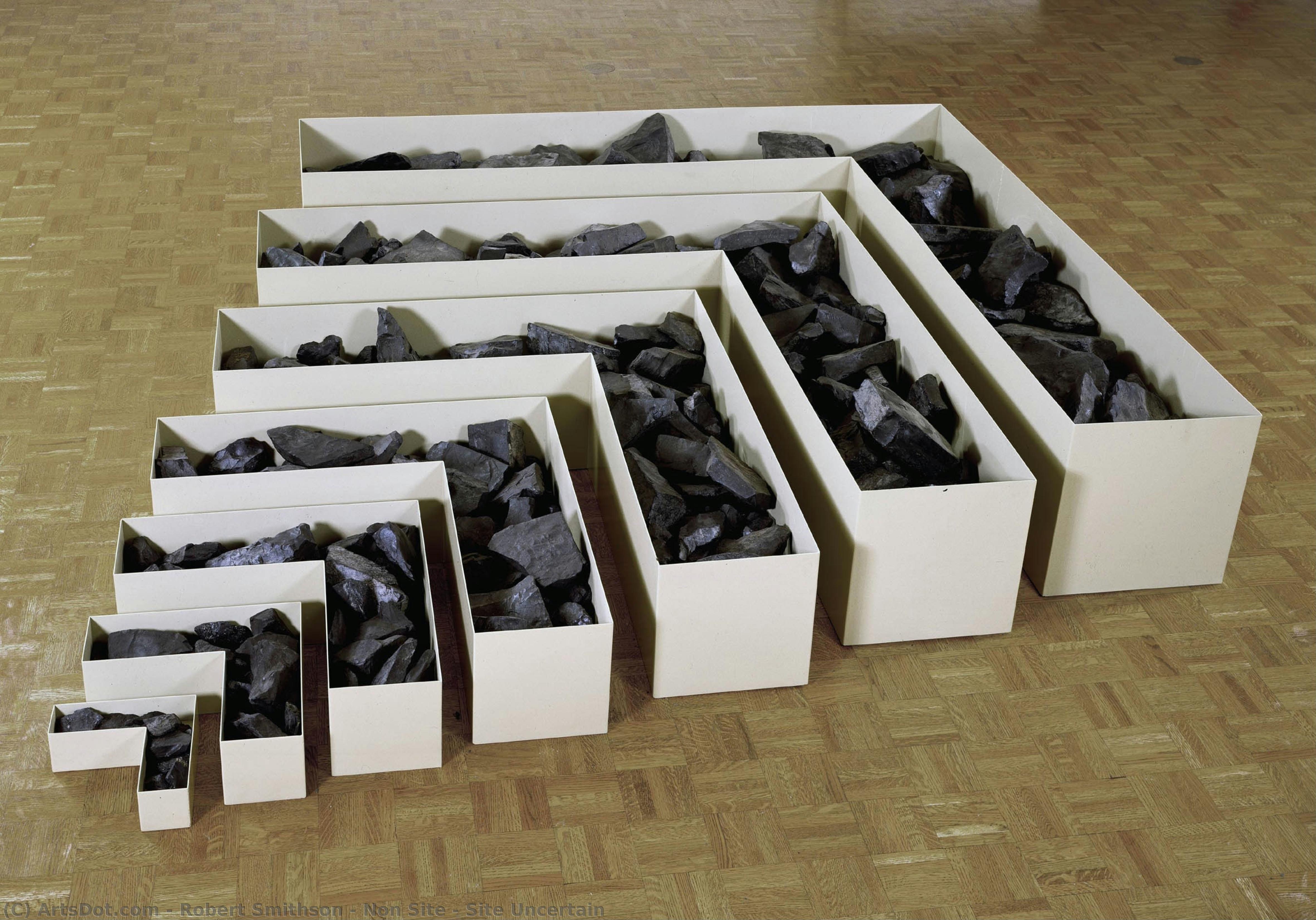
من وجهة نظر المعرض، تُعد Non Site - Site Uncertain أشهر لوحات Robert Smithson، والتي تُعرض لوحتها الأصلية في معهد ديترويت للفنون، ديترويت. Three-Sided Vortex (1966) و Ruin of Map of Hipparchus (100 B.C.) in Oswego Lake Quadrangle (1954 55) (1967) يكملان الثلاثية التي تدركها كل عين. من بين 6 من أعمال Robert Smithson في كتالوجنا، يعرض المعرض أدناه 4 من أشهرها، كل منها عمل أصلي مع سنة إنتاجه، والمتحف الذي يضمها، وما يجعلها فريدة من نوعها.

1938 – 1973, Passaic أكبر مجموعة أعمال: معهد ديترويت للفنون

أفضل 10 لوحات لـ Robert Smithson في المعرض

المتاحف التي تحتفظ بالأعمال الأصلية لـ Robert Smithson

المتاحف 2 التي تضم أكبر عدد من اللوحات الموجودة في هذه الصفحة.

المتحف المدينة أعمال Robert Smithson لوحات من هذه القائمة
معهد ديترويت للفنون, ديترويتمعهد ديترويت للفنون ديترويت 1 Non Site - Site Uncertain
Chrysler Museum of Art, نورفولكChrysler Museum of Art نورفولك 1 Three-Sided Vortex

Robert Smithson، اللوحات المميزة لكل عام

5 عاماً، من 1966 إلى 1970، تستعرض هذه الصفحة المسيرة المهنية الكاملة لـ Robert Smithson عبر تاريخها: مسيرة قصيرة، نراها هنا عاماً تلو الآخر من خلال أشهر أعمالها الأصلية.

الأعمال حسب السنة

اختر سنة لعرض أعمالها الأصلية.

لوحات Robert Smithson: إجابات المعرض

ما هي اللوحة الأكثر شهرة لـ Robert Smithson على الإطلاق؟اكتشف الإجابة

Non Site - Site Uncertain، معهد ديترويت للفنون, ديترويت. ويليها Three-Sided Vortex (1966) وRuin of Map of Hipparchus (100 B.C.) in Oswego Lake Quadrangle (1954 55) (1967).

كم عدد الأعمال التي أبدعها Robert Smithson؟اكتشف الإجابة

يضم كتالوجنا 6 من أعمال Robert Smithson، التي يعود تاريخها من 1966 إلى 1970.

أين تُعرض أشهر الأعمال الأصلية لـ Robert Smithson؟اكتشف الإجابة

توجد غالبيتها في معهد ديترويت للفنون (ديترويت) و Chrysler Museum of Art (نورفولك). يدرج جدول المتاحف أعلاه جميعها.

ما هي أشهر أعمال Robert Smithson المبكرة والأخيرة؟اكتشف الإجابة

في هذه الصفحة، أقدم الأعمال يعود إلى Three-Sided Vortex (1966) وأحدثها يعود إلى Torn Photograph from the 2nd Stop (Rubble) (2nd Mountain of Six Stops on a Section) from Artists Photographs (1970).

Robert Smithson: الفنان

Early Life and Artistic Beginnings

  • Born: January 2, 1938, in Passaic, New Jersey
  • Early years spent in Rutherford and Clifton, New Jersey
  • Studied painting and drawing at the Art Students League of New York (1955-1956)
  • Early artwork explored collage influenced by homoerotic themes, science fiction, and pop art. Primarily identified as a painter during this period.
  • Influenced by William Carlos Williams, who was his pediatrician.

The Shift to Minimalism and Conceptual Art

  • After a three-year break from the art world, emerged in 1964 as a proponent of the minimalist movement.
  • Abandoned figurative work, focusing on glass sheet and neon lighting tubes exploring visual refraction and mirroring.
  • Developed interest in entropy (the second law of thermodynamics) – decay, renewal, chaos, order, non-sites, and earthworks. Saw entropy not as a disadvantage but as a form of transformation.
  • Associated with minimalist artists like Nancy Holt (his wife), Robert Morris, and Sol LeWitt.
  • Became a critic for *Arts Magazine* and *Artforum*, gaining recognition as a writer before his art.

Land Art and Earthworks: Spiral Jetty and Beyond

  • Fascination with industrial areas in New Jersey led to the development of "Non-Sites" – sculptures incorporating earth and rocks from specific locations, often combined with mirrors or glass.
  • Spiral Jetty (1970): His most famous work, a massive coil of basalt rock extending into the Great Salt Lake in Utah. A key example of land art, exploring themes of entropy, time, and geological processes.
  • Explored temporary sculptures using mirrors in the Yucatan Peninsula, documented in "Incidents of Mirror-Travel in the Yucatan."
  • Recovered 18th- and 19th-century conceptions of landscape architecture, influencing his later earthwork explorations.

Theoretical Writings and Landscape Perspectives

  • Wrote extensively on art theory, including "A Heap of Language," exploring how writing could become an artwork.
  • Examined Frederick Law Olmsted's design for Central Park in New York City, recovering issues of site specificity, human intervention, and the picturesque landscape.
  • His writings demonstrate a deep engagement with history, philosophy, geology, and cultural theory.

Legacy and Historical Significance

  • Died: July 20, 1973, in Tucson, Arizona (due to a heart attack while hiking).
  • Considered a pivotal figure in Land Art and Earthworks movements.
  • His work expanded the definition of art, blurring boundaries between sculpture, landscape, and natural processes.
  • Influenced generations of artists with his conceptual approach, exploration of entropy, and engagement with geological time scales.
  • The Holt/Smithson Foundation continues to preserve and promote his legacy.
