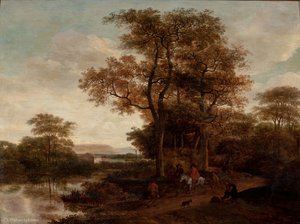
بورتريه لـ Pieter van Asch

أشهر 19 لوحات لـ Pieter van Asch، مختارات من المعرض

تحديث نوفمبر 2026 · مُرتبة حسب مؤشر شعبيتنا (عمليات البحث، والزيارات، والطلبات لكل عمل فني) · 21 أعمال لـ Pieter van Asch في كتالوجنا

باختصار

من بين جميع الأعمال الأصلية التي تركها Pieter van Asch، تُعد rest of horsemen at an inn (1649) هي الأكثر شهرة. تأتي بعدهما مباشرة كل من Wooded Landscape, Pieter Jansz. van Asch, 1640 - 1678 (1678) و Village Landscape (1640). يضم كتالوجنا 21 من أعمال Pieter van Asch؛ حيث احتفظ المعرض بـ 19 من أكثر الأعمال التي يعجب بها العالم، مع عرض كل منها مع تاريخها ومتحفها وقصتها.

1603 – 1678, Delft Dutch golden age أكبر مجموعة أعمال: المتحف الوطني

أفضل 10 لوحات لـ Pieter van Asch: مختارات المعرض

1
rest of horsemen at an inn (1649) للفنان Pieter van Asch

rest of horsemen at an inn

1649 · Oil On Panel

The composition of this 1649 oil on panel painting centers on a group of travelers and horsemen gathered near an inn. Tall, dense trees frame the scene, their dark green foliage and twisting branches reaching toward a sky filled with soft white and blue clouds. In the foreground, dogs and horses occupy the immediate space, leading the eye toward the central figures. A white horse stands out against the earthy…

2
Wooded Landscape, Pieter Jansz. van Asch, 1640 - 1678 (1678) للفنان Pieter van Asch

Wooded Landscape, Pieter Jansz. van Asch, 1640 - 1678

1678 · Oil On Canvas · Rijksmuseum, أمستردام

The air feels heavy with the scent of damp earth and moss as the eye wanders through this lush, wooded expanse. A waterfall spills its contents with a gentle, rhythmic energy, feeding into a landscape where nature holds sway. Travelers move along a winding road, their small figures providing a sense of scale against the towering presence of the trees. There is a profound stillness here, even amidst the movement…

6
View of the Country House Oversteen (1648) للفنان Pieter van Asch

View of the Country House Oversteen

1648 · Oil · Statens Museum For Kunst, كوبنهاغن

The scene unfolds in a soft, monochrome stillness, as if the world has held its breath to watch the light settle over the Dutch countryside. In the foreground, livestock graze with a slow, rhythmic grace, their forms defined by deep shadows and the subtle textures of their fur. A reflective body of water stretches across the middle ground, acting as a mirror for the sky and the grand, multi-gabled manor…

7
Landscape with Cottages and a Rider (1648) للفنان Pieter van Asch

Landscape with Cottages and a Rider

1648 · Ink On Paper · المتحف الوطني, ستوكهولم

In this monochromatic study from 1648, we find ourselves observing a tranquil moment of rural life, rendered with a delicate, almost whispered precision. The scene unfolds through a winding path that draws the eye from the immediate foreground toward a middle ground where a rider on horseback and two pedestrians navigate the terrain. To the left, a cluster of thatched-roof cottages rests among mature, heavy-limbed trees, their branches reaching into…

8
River Landscape with Cattle (1648) للفنان Pieter van Asch

River Landscape with Cattle

1648 · Etching · المتحف الوطني, ستوكهولم

A serene river scene unfolds through a monochromatic lens, capturing a quiet moment of pastoral life. The composition relies on a strong verticality, anchored by large, detailed trees in the mid-ground that rise against a bright, atmospheric sky. A deep landscape view directs the eye from a shaded, rocky foreground along a path toward a misty, distant horizon where the faint outlines of structures emerge through the haze. The palette…

9
Landscape with Covered Wagon (1649) للفنان Pieter van Asch

Landscape with Covered Wagon

1649 · Oil On Canvas

The air feels heavy and still, as if the sky itself is holding its breath over the vast, open expanse of the Netherlands. A low horizon line pushes the heavens upward, claiming two-thirds of the view with a pale, overcast light that softens every edge. Below this immense canopy, a dirt path winds its way through the fields, acting as a silent guide for the eye as it travels into…

تستمر مجموعة Pieter van Asch، من 11 إلى 19

المواضيع التي استأثرت باهتمام Pieter van Asch

المواضيع الأربعة التي تتكرر باستمرار في هذه الأعمال الأصلية، مع تقديم أروع مثال لكل منها.

المتاحف التي تحتفظ بالأعمال الأصلية لـ Pieter van Asch

المتاحف الـ 6 التي تضم أكبر عدد من اللوحات الموجودة في هذه الصفحة.

المتحف المدينة أعمال Pieter van Asch لوحات من هذه القائمة
المتحف الوطني, ستوكهولمالمتحف الوطني ستوكهولم 2 Landscape with Cottages and a Rider, River Landscape with Cattle
Rijksmuseum, أمستردامRijksmuseum أمستردام 1 Wooded Landscape, Pieter Jansz. van Asch, 1640 - 1678
مجموعات بافاريا الحكومية للرسم, ميونخمجموعات بافاريا الحكومية للرسم ميونخ 1 Village Landscape
متحف بويجمانس فان بيونينغن, روترداممتحف بويجمانس فان بيونينغن روتردام 1 Landscape with Farmhouses
متحف فيلادلفيا للفنون, فيلادلفيامتحف فيلادلفيا للفنون فيلادلفيا 1 Houses beside a Canal
Statens Museum For Kunst, كوبنهاغنStatens Museum For Kunst كوبنهاغن 1 View of the Country House Oversteen

Pieter van Asch عقداً بعد عقد: الأعمال الأصلية التي ميزت كل حقبة

الأعمال حسب العقد

اختر عقداً لتشاهد العمل الأصلي الذي يجسده.

أسئلة المقتنين حول لوحات Pieter van Asch

ما هو العمل الأكثر شهرة لـ Pieter van Asch؟اكتشف الإجابة

rest of horsemen at an inn (1649). يليه Wooded Landscape, Pieter Jansz. van Asch, 1640 - 1678 (1678) و Village Landscape (1640).

كم كان عمر Pieter van Asch عندما تم إنجاز rest of horsemen at an inn؟اكتشف الإجابة

عمر 46 عاماً: يعود تاريخ rest of horsemen at an inn إلى 1649، وقد وُلد Pieter van Asch في 1603.

ما هي أشهر عشر لوحات لـ Pieter van Asch؟اكتشف الإجابة

rest of horsemen at an inn, Wooded Landscape, Pieter Jansz. van Asch, 1640 - 1678, Village Landscape, Landscape with Farmhouses, Houses beside a Canal, View of the Country House Oversteen, Landscape with Cottages and a Rider, River Landscape with Cattle, Landscape with Covered Wagon و A Mountainous Landscape with Goats. يوضح التصنيف أعلاه سنة كل لوحة والمتحف التابعة له.

كم عدد اللوحات التي تركها Pieter van Asch؟اكتشف الإجابة

يضم كتالوجنا 21 من أعمال Pieter van Asch، التي يعود تاريخها من 1640 إلى 1678.

في أي متاحف تُعرض روائع Pieter van Asch؟اكتشف الإجابة

توجد غالبيتها في المتحف الوطني (ستوكهولم), Rijksmuseum (أمستردام) و مجموعات بافاريا الحكومية للرسم (ميونخ). يدرج جدول المتاحف أعلاه جميعها.

في أي سنوات رسم Pieter van Asch أشهر أعماله؟اكتشف الإجابة

في 1640s: تم إنجاز 8 من أصل 19 من الأعمال في هذه الصفحة خلال تلك الفترة، من بينها rest of horsemen at an inn.

ما هي أول وآخر الأعمال الأصلية الشهيرة لـ Pieter van Asch؟اكتشف الإجابة

في هذه الصفحة، أقدم الأعمال يعود إلى Village Landscape (1640) وأحدثها يعود إلى Wooded Landscape, Pieter Jansz. van Asch, 1640 - 1678 (1678).

ما هي المواضيع التي اختارها Pieter van Asch بشكل متكرر؟اكتشف الإجابة

Sky (7), Landscape (7) و Trees (7)، عبر 19 من الأعمال في هذه الصفحة.

ما هي التقنية التي استخدمها Pieter van Asch بشكل أكبر؟اكتشف الإجابة

Oil On Panel، لـ 3 من أصل 19 من الأعمال في هذه الصفحة.

إلى أي حركة فنية ينتمي Pieter van Asch؟اكتشف الإجابة

Dutch golden age، بناءً على الأعمال الأصلية في هذه الصفحة.

ما هي أعمال Pieter van Asch المعروضة في المتحف الوطني؟اكتشف الإجابة

Landscape with Cottages and a Rider و River Landscape with Cattle: يضم المتحف الوطني, ستوكهولم 2 من الأعمال المعروضة في هذه الصفحة.

Pieter van Asch: حياته وأعماله

The Quiet Master of Delft: The Life and Legacy of Pieter Jansz van Asch

Pieter Jansz van Asch stands as a profound, if understated, testament to the luminous beauty of the Dutch Golden Age. Born in 1603 within the storied city of Delft, he was immersed in an environment of unparalleled artistic excellence from his very first breath. As the son of the esteemed portrait painter Jan van Asch, the language of light and shadow was his inheritance. By 1623, he had formally entered the Guild of St. Luke, a milestone that signaled his arrival into the vibrant, competitive artistic milieu of the Netherlands. While history often remembers the grand, sweeping gestures of the Baroque era, van Asch found his true calling in the intimate and the meticulous, specializing in small-scale landscapes that captured the fleeting, quiet moments of the natural world with an almost poetic precision. The trajectory of his career was not without its personal shadows. The biographer Arnold Houbraken noted that while van Asch possessed a remarkable talent for capturing natural grandeur, his creative output was frequently tempered by the heavy responsibilities of domestic life. The artist devoted much of his energy to caring for his aging parents, a duty that undoubtedly slowed the pace of his brush but perhaps deepened the soulful, contemplative quality found within his compositions. This sense of devotion and quiet observation allowed him to master the art of the small-scale landscape, where every blade of grass and distant mountain peak was rendered with a devotion that mirrored his own disciplined life.

Atmospheric Mastery and the Art of Perspective

To gaze upon a work by van Asch is to step into a world defined by atmospheric realism and a sophisticated command of depth. He was a master of aerial perspective, a technique in which he utilized subtle gradations of color and tone to simulate the way moisture and light in the air soften distant objects. Through this method, he could transform a simple rural scene into an expansive vista, leading the viewer’s eye from the detailed textures of a foreground path toward the hazy, ethereal silhouettes of far-off horizons. His landscapes often breathe with a sense of stillness, yet they are never static; there is a rhythmic movement found in his depictions of wooded paths, flowing rivers, and the gentle presence of travelers navigating the terrain. His technical repertoire extended beyond the oil on canvas to include delicate works on paper and vellum, showcasing a versatility that allowed him to explore both monochrome simplicity and rich, tonal complexity. Whether he was painting a Schoorsteenstuk—a monumental overmantel piece commissioned for the Prinsenhof City Hall in Delft—or a small, intimate study of a mountain landscape with goats, his commitment to meticulous observation remained constant. This ability to scale his vision from the grand architectural requirements of civic patrons to the delicate intimacy of private collections is what defines his unique position in the Dutch canon.

A Lineage of Influence and Enduring Significance

The artistic identity of Pieter Jansz van Asch was shaped by a constellation of contemporary masters, creating a stylistic dialogue that enriched his work. He drew profound inspiration from the atmospheric landscapes of Jan Both and the detailed compositions of Pieter de Bloot and Joachim Govertsz Camphuysen. His works resonate with the tonal sensibilities of Jan Josefsz van Goyen, reflecting a shared preoccupation with the interplay of light, water, and earth that defined the era. This interconnectedness of talent ensured that his work was not merely an isolated achievement but part of a larger, cohesive movement that sought to find the divine within the terrestrial. Beyond what he absorbed from his predecessors, van Asch left his own mark on the subsequent generation of painters. His influence can be traced through artists such as Jacobus Coert, ensuring that his particular brand of serene, realistic landscape artistry would persist long after his death in 1678. Today, his legacy survives in the quiet power of his surviving works—pieces that continue to invite viewers into a state of peaceful reflection. Through his mastery of perspective and his ability to find grandeur in the small and the overlooked, Pieter Jansz van Asch remains a vital figure in understanding the profound emotional depth achievable through the Dutch landscape tradition.