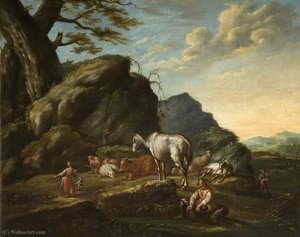
Goats and Flock of Sheep
Goats and Flock of Sheep is an oil painting by Philipp Peter Roos. The artist, who was also known by the moniker Rosa di Tivoli, produced this work about 1681. He was a German Baroque painter born in Sankt Goar, Germany.
باختصار
من بين جميع الأعمال الأصلية التي تركها فيليب بيتر روس، تُعد Goats and Flock of Sheep (1681) هي الأشهر، وهي ضمن مجموعة مجموعات بافاريا الحكومية للرسم في ميونخ. تأتي بعدهما مباشرة كل من Piece of Livestock (1681) و Landscape with Cattle and Shepherd (1681). يضم كتالوجنا 93 من أعمال فيليب بيتر روس؛ حيث احتفظ المعرض بـ 92 من أكثر الأعمال التي يعجب بها العالم، مع عرض كل منها مع تاريخها ومتحفها وقصتها.
Goats and Flock of Sheep is an oil painting by Philipp Peter Roos. The artist, who was also known by the moniker Rosa di Tivoli, produced this work about 1681. He was a German Baroque painter born in Sankt Goar, Germany.
Piece of Livestock is an oil painting by Philipp Peter Roos, executed in 1681. The work originates from the Baroque period, a time when the artist was establishing his presence within the Italianate landscape tradition.
Landscape with Cattle and Shepherd is a work by the German Baroque painter Philipp Peter Roos. Created about 1681, the painting reflects the artist's specialized focus on pastoral scenes and animal subjects. Roos was a significant figure in the development of Italianate landscapes, often characterized by his intimate study of livestock and the natural environment.
In Piece of Livestock, Philipp Peter Roos organizes a pastoral scene through a close-up, ground-level perspective that establishes an immediate intimacy with the subjects. The composition is dominated by a large, seated cow positioned slightly to the right of the center. To the left, a smaller lamb or calf provides a sense of scale, while a woman interacts with a dog in the space behind the primary subject. This arrangement…
Resting Flock with Shepherds is an oil painting by the German Baroque artist Philipp Peter Roos. Created about 1681, this work captures a quiet moment within a rugged landscape. The composition focuses on a group of livestock and a shepherd, rendered with a sense of immediate presence that draws the viewer into the scene.
Resting Flock with Shepherds is an oil painting by Philipp Peter Roos. The canvas captures a heavy stillness among livestock and their guardian. This work was created about 1681. It presents a scene of animals and men gathered in a quiet, layered space under a turbulent sky.
In this Baroque-style oil painting, the mythological drama of the Liberation of Io unfolds with a sudden, heavy intensity. Created by Philipp Peter Roos about 1681, the scene captures a moment of profound tension between the divine and the mortal. A massive, powerful bull dominates the foreground, its muscular form rendered with a weight that feels almost tangible. This central figure looms over the landscape, its presence commanding the space…
This oil on canvas painting, dated 1681, presents a monochromatic scene rendered in various shades of gray. In the foreground, a young woman is positioned amidst a group of livestock, including sheep or goats. The composition is a medium shot, placing the human subject and the animals in the immediate front and middle ground. The terrain is undulating, forming rolling hills that recede into a background of hazy mountains and…
Returning Flock with Shepherds is an oil painting by Philipp Peter Roos. Created about 1681, the work captures a quiet moment of pastoral movement. The artist, a German Baroque painter, was born in Sankt Goar. He would later become known by the moniker Rosa di Tivoli.
The scene unfolds in Shepherd with Cow, Sheep and Goats in Italian Mountain Landscape, a work that captures a quiet moment of pastoral life. This painting, created about 1680, brings together a shepherd and his diverse herd amidst a rugged, mountainous setting. The figures and animals exist within a landscape that feels both immediate and deeply rooted in the natural world.
المواضيع الأربعة التي تتكرر باستمرار في هذه الأعمال الأصلية، مع تقديم أروع مثال لكل منها.
المتاحف الـ 8 التي تضم أكبر عدد من اللوحات الموجودة في هذه الصفحة.
| المتحف | المدينة | أعمال فيليب بيتر روس | لوحات من هذه القائمة |
|---|---|---|---|
| ميونخ | 15 | Goats and Flock of Sheep, Piece of Livestock, Landscape with Cattle and Shepherd | |
| كوبنهاغن | 5 | Cattle Piece, Landscape with a Bull, Sheep and Goats, A Shepherd with his Herd | |
| بوينس آيرس | 4 | Landscape with shepherd and animals, Landscape with figures and animals, Shepherd and animals in a landscape | |
| براتيسلافا | 3 | Goat Herd with a Goatherd, Shepherd's Idyl in a Romantic Landscape with Ruins, Herd by an Ancient Well | |
| Prague | 3 | Ravine with a Stream, a Shepherd and His Herd, Horse and Goats Grazing, Shepherd with a Herd of Sheep and Goats | |
| فيينا | 3 | Herd with Sleeping Shepherds, Rider Meeting, Landscape with Flock of Sheep | |
| سانت بطرسبرغ | 3 | Landscape with a Grotto, Landscape with a Waterfall, Landscape with a Herd | |
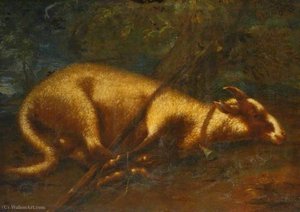
| ستوكهولم | 3 | Dead Hare, Landskap med hjord, A Goat Resting |
اختر عقداً لتشاهد العمل الأصلي الذي يجسده.
This large-scale oil painting, dated 1669, presents a crowded, maximalist composition of diverse animal species. The arrangement is packed, with various animals overlapping to create a sense of density and movement. The color palette relies on deep, earthy tones, including rich browns, blacks, and dark ochres. These dark shades are interrupted by specific highlights of white and cream, alongside splashes of red from a rooster and parrots. The lighting follows…
Goats and Flock of Sheep is an oil painting by Philipp Peter Roos. The artist, who was also known by the moniker Rosa di Tivoli, produced this work about 1681. He was a German Baroque painter born in Sankt Goar, Germany.
A heavy, dark-colored cow anchors the center of this scene, its presence felt in the weight of its silhouette. To the left, two goats rest upon the ground, one a pale contrast of white and light tan against the shadows. A man sits nearby, leaning back in a moment of stillness, his gaze directed toward the animals or perhaps the viewer. The air in the enclosure feels thick and dim,…
In this work, titled Shepherd's Idyl in a Romantic Landscape with Ruins, the artist Philipp Peter Roos presents a quiet moment of rural existence. Created about 1700, the painting captures a shepherd tending to his flock amidst a landscape of rolling hills and weathered stone structures. There is a sense of stillness in the way the figures and animals occupy the space, suggesting a life governed by the rhythms of…
Goats and Flock of Sheep (1681)، مجموعات بافاريا الحكومية للرسم, ميونخ. ويليها Piece of Livestock (1681) وLandscape with Cattle and Shepherd (1681).
عمر 24 عاماً: يعود تاريخ Goats and Flock of Sheep إلى 1681، وقد وُلد فيليب بيتر روس في 1657.
Goats and Flock of Sheep, Piece of Livestock, Landscape with Cattle and Shepherd, Piece of Livestock, Resting Flock with Shepherds, Resting Flock with Shepherds, Liberation of Io, Piece of Cattle, Returning Flock with Shepherds و Shepherd with Cow, Sheep and Goats in Italian Mountain Landscape. يوضح التصنيف أعلاه سنة كل لوحة والمتحف التابعة له.
يضم كتالوجنا 93 من أعمال فيليب بيتر روس، التي يعود تاريخها من 1669 إلى 1700.
توجد غالبيتها في مجموعات بافاريا الحكومية للرسم (ميونخ), Statens Museum For Kunst (كوبنهاغن) و المتحف الوطني للفنون الجميلة (بوينس آيرس). يدرج جدول المتاحف أعلاه جميعها.
في 1680s: تم إنجاز 21 من أصل 92 من الأعمال في هذه الصفحة خلال تلك الفترة، من بينها Goats and Flock of Sheep.
في هذه الصفحة، أقدم الأعمال يعود إلى Various animals gathered before Noah's Ark (1669) وأحدثها يعود إلى Shepherd's Idyl in a Romantic Landscape with Ruins (1700).
Landscape (33), Animals (29) و Goats (19)، عبر 92 من الأعمال في هذه الصفحة.
Oil On Canvas، لـ 18 من أصل 92 من الأعمال في هذه الصفحة.
Baroque، بناءً على الأعمال الأصلية في هذه الصفحة.
Goats and Flock of Sheep, Piece of Livestock و Landscape with Cattle and Shepherd: يضم مجموعات بافاريا الحكومية للرسم, ميونخ 15 من الأعمال المعروضة في هذه الصفحة.
في الضوء الذهبي لعصر الباروك الإيطالي، قلة من الأسماء تستحضر السكينة الريفية كما يفعل فيليب بيتر روس. عُرف في التاريخ بلقبه المثير للخيال، روزا دي تيفولي، هذا المبدع المولود في ألمانيا أحدث تحولاً جذرياً في فن المناظر الطبيعية من خلال اتصال عميق، يكاد يكون غريزياً، بالعالم الطبيعي. وُلد روس في عام 1655 في منطقة راينلاند، وتحديداً بالقرب من سانت غوار، وكان مقدراً له أن يمسك بالفرشاة منذ سنواته الأولى. كان ابن يوهان هاينريش روس، رسام المناظر الطبيعية المرموق الذي قدم له الدروس التأسيسية في التناغم اللوني والتوازن التركيبي، وهي الأسس التي ستحدد لاحقاً أسلوب الفنان في مرحلة نضجه. لم تكن هذه التلمذة المبكرة مجرد تعلم للتقنيات، بل كانت انغماساً في طريقة لرؤية العالم من خلال عدسة الضوء، والظل، والوقار الهادئ للأرض.
تغير مسار حياة روس بشكل دراماتيكي في عام 1677، في لحظة حاسمة بفضل كرم شارل الأول، لاندغريف هس-كاسل. فبإدراكه للموهبة المتنامية لدى هذا الرسام الشاب، وفر اللاندغريف الوسائل المالية لروس ليبدأ رحلة تحولية إلى روما. سمح هذا الانتقال من التقاليد الجرمانية إلى قلب الباروك الإيطالي لروس باستيعاب الطاقة الحيوية للفن الروماني. وهناك، سعى للحصول على الإرشاد تحت إشراف الفنان الشهير جياشينتو براندي، الذي ساعد تأثيره في صقل قدرة روس على مزج البنية الكلاسيكية بواقعية جوية أكثر عفوية. كانت هذه الفترة في روما شخصية للغاية أيضاً؛ فخلال هذه السنوات وقع روس في حب إيزابيلا براندي، ابنة معلمه. وقد قاده هذا الاتحاد في النهاية إلى الاستقرار في تيفولي، وهي الخطوة التي ربطت هويته إلى الأبد بالمناظر الطبيعية التي أحبها بشغف.
إن ما يميز أعمال "روزا دي تيفولي" حقاً هو الأصالة التي لا تضاهى في تصويره للكائنات الحية. فخلافاً للعديد من معاصريه الذين استخدموا الحيوانات كمجرد عناصر زخرفية ثانوية في المناظر الطبيعية، تعامل روس مع كل مخلوق — من الثور الضخم إلى الماعز الرشيق — بقدسية رسامي البورتريه. وقد صُمم مسكنه في تيفولي بشكل شهير ليكون أشبه بمرسم حي؛ حيث احتفظ بمجموعة واسعة من الحيوانات الغريبة والمستأنسة، محولاً محيطه بفعالية إلى دراسة مستمرة للحركة، والتشريح، والطباع. هذا القرب الحميم سمح له بالتقاط الارتعاشة الطفيفة للأذن أو التوتر العضلي للوحش تحت الضغط، مما أضفى على لوحاته حيوية تحبس الأنفاس.
تتجلى براعته التقنية في الطريقة التي خاض بها تعقيدات الجمالية الباروكية. وبينما تستمد تكويناته غالباً من الخصائص الهادئة والجوية للعصر الذهبي الهولندي، إلا أنها مشبعة بكثافة درامية تميز المدرسة الإيطالية. وتتميز أعماله غالباً بـ:
تكمن الأهمية التاريخية لفيليب بيتر روس في قدرته على جسر الفجوة بين تقاليد المناظر الطبيعية المنظمة في شمال أوروبا والدراما العاطفية المليئة بالضوء في إيطاليا. لقد ظهر في وقت بدأ فيه الاستقصاء العلمي في ذلك العصر يطالب بملاحظات أكثر دقة للعالم الطبيعي، حتى في الوقت الذي كانت فيه الموضوعات الدينية والأسطورية لا تزال تهيمن على الوعي الفني. وفي لوحاته، نجد تفاصيل دقيقة كعالم طبيعي وروحاً شاعرية كفنان رومانسي. ومن خلال توثيق النباتات والحيوانات في الريف الروماني بهذا التفاني، خلق سجلاً بصرياً يعبر عن روح العصر بقدر ما يعبر عن الموضوعات نفسها.
وعلى الرغم من وفاته في عام 1706، تاركاً وراءه إرثاً محفوراً في تربة تيفولي نفسها، إلا أن تأثيره استمر. سيظل شخصية محورية لكل من يدرس تطور فن رسم الحيوانات وتطور المناظر الطبيعية ذات الطابع الإيطالي. فمن خلال عينيه، نحن لا نرى مجرد مجموعة من الماشية؛ بل نشهد احتفالاً عميقاً بالحياة في أكثر أشكالها جوهرية وبساطة. إن عمله يستمر في الصدى كشهادة على قوة الملاحظة والجمال الخالد للمثال الرعوي.