بورتريه لـ مين أوكوبو

لوحات مين أوكوبو: أشهر 72 لوحة، بعيون معرض فني

تحديث نوفمبر 2026 · مُرتبة حسب مؤشر شعبيتنا (عمليات البحث، والزيارات، والطلبات لكل عمل فني) · 72 أعمال لـ مين أوكوبو في كتالوجنا

باختصار

من وجهة نظر المعرض، تُعد (3 Women Going to Church) (1948) أشهر لوحات مين أوكوبو، والتي تُعرض لوحتها الأصلية في Japanese American National Museum، لوس أنجلوس. Walking over muddy ground, Central Utah Relocation Project, Topaz, Utah, 1942-1944 (1944) و Teaching art classes, Tanforan Assembly Center, San Bruno, California, 1942 (1944) يكملان الثلاثية التي تدركها كل عين. من بين 72 من أعمال مين أوكوبو في كتالوجنا، يعرض المعرض أدناه 72 من أشهرها، كل منها عمل أصلي مع سنة إنتاجه، والمتحف الذي يضمها، وما يجعلها فريدة من نوعها.

1912 – 2001, ريفرسايد Social realism أكبر مجموعة أعمال: Japanese American National Museum

أفضل 10 لوحات لـ مين أوكوبو في المعرض

1
(3 Women Going to Church) (1948) للفنان مين أوكوبو

(3 Women Going to Church)

1948 · Gouache · Japanese American National Museum, لوس أنجلوس

Three women move toward the viewer, their bodies rendered as simplified, rectangular forms. They walk in a somber line, heads bowed under the weight of a quiet gravity. In their hands, they hold books, small anchors of faith against the surrounding bleakness. The figures are heavy with a sense of shared purpose, their rounded features catching subtle highlights amidst a landscape of muted blues and browns.

2
Walking over muddy ground, Central Utah Relocation Project, Topaz, Utah, 1942-1944 (1944) للفنان مين أوكوبو

Walking over muddy ground, Central Utah Relocation Project, Topaz, Utah, 1942-1944

1944 · Drawing · Japanese American National Museum, لوس أنجلوس

Miné Okubo’s “Walking Over Muddy Ground, Central Utah Relocation Project, Topaz, Utah, 1942-1944” isn't merely a depiction of a landscape; it’s a distilled essence of hardship, determination, and the quiet dignity of a people displaced. Rendered in stark black and white, the drawing captures a pivotal moment within the Topaz War Relocation Center—a microcosm of the larger narrative of Japanese American internment during World War II. The image immediately draws…

3
Teaching art classes, Tanforan Assembly Center, San Bruno, California, 1942 (1944) للفنان مين أوكوبو

Teaching art classes, Tanforan Assembly Center, San Bruno, California, 1942

1944 · Ink On Paper · Japanese American National Museum, لوس أنجلوس

In this work, titled Teaching art classes, Tanforan Assembly Center, San Bruno, California, 1942, the artist Miné Okubo captures a quiet, instructional moment within the confines of a relocation center. Created in 1944, the piece offers a view into the daily life of Japanese Americans during the wartime era. It is a document of a specific time and place, recorded through the eyes of someone who lived through the experience…

4
Posting of Civilian Exclusion Order/Evacuation Order No. 19, Berkeley, California, 1942 (1944) للفنان مين أوكوبو

Posting of Civilian Exclusion Order/Evacuation Order No. 19, Berkeley, California, 1942

1944 · Acrylic On Canvas · Japanese American National Museum, لوس أنجلوس

Miné Okubo's "Posting of Civilian Exclusion Order/Evacuation Order No. 19, Berkeley, California, 1942" isn’t merely a historical document rendered in ink and paper; it’s a visceral embodiment of fear, uncertainty, and the profound disruption inflicted upon Japanese Americans during World War II. Created in 1942, amidst the escalating anxieties of wartime America, this powerful black-and-white drawing captures a pivotal moment – the public announcement of an evacuation order that would…

5
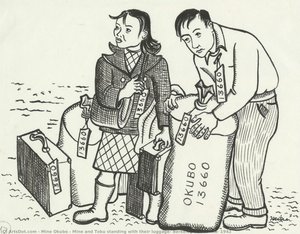
Mine and Toku standing with their luggage, Berkeley, California, 1942 (1944) للفنان مين أوكوبو

Mine and Toku standing with their luggage, Berkeley, California, 1942

1944 · Acrylic On Paper · Japanese American National Museum, لوس أنجلوس

Miné Okubo's "Mine and Toku Standing with Their Luggage, Berkeley, California, 1942" isn’t merely a photograph; it’s a distilled essence of experience, a poignant snapshot frozen in time during a profoundly unsettling chapter of American history. Created in 1944, shortly after the internment of Japanese Americans following Pearl Harbor, this deceptively simple drawing offers an intimate and deeply affecting glimpse into the lives of two individuals – Miné and her…

6
Community toilets, Tanforan Assembly Center, San Bruno, California, 1942 (1944) للفنان مين أوكوبو

Community toilets, Tanforan Assembly Center, San Bruno, California, 1942

1944 · Ink On Paper · Japanese American National Museum, لوس أنجلوس

Miné Okubo's "Community Toilets, Tanforan Assembly Center, San Bruno, California, 1942" is far more than a simple depiction of a utilitarian space. It’s a poignant and profoundly moving testament to the everyday realities faced by Japanese Americans unjustly incarcerated during World War II. Rendered in stark black ink on white paper, the artwork transcends its subject matter to become a powerful symbol of loss, dignity, and quiet resilience within a…

7
Mine and Toku arrive in their barrack, Central Utah Relocation Project, Topaz, Utah, 1942 (1944) للفنان مين أوكوبو

Mine and Toku arrive in their barrack, Central Utah Relocation Project, Topaz, Utah, 1942

1944 · Acrylic On Canvas · Japanese American National Museum, لوس أنجلوس

Miné Okubo's "Mine and Toku arrive in their barrack, Central Utah Relocation Project, Topaz, Utah, 1942" isn’t merely a drawing; it’s a distilled essence of trauma, displacement, and the quiet dignity of survival. Created during her forced incarceration at the Topaz War Relocation Center in 1942, this stark black-and-white image offers an intimate glimpse into a profoundly unsettling chapter of American history – the unjust internment of Japanese Americans during…

8
Eating lunch while awaiting departure inside the Civil Control Station, Berkeley, California, 1942 (1944) للفنان مين أوكوبو

Eating lunch while awaiting departure inside the Civil Control Station, Berkeley, California, 1942

1944 · Acrylic On Canvas · Japanese American National Museum, لوس أنجلوس

Miné Okubo's "Eating Lunch while awaiting departure inside the Civil Control Station, Berkeley, California, 1942" isn't merely a depiction of a scene; it’s a distilled essence of wartime anxiety and the profound human cost of forced displacement. Created during a period of immense upheaval – the incarceration of Japanese Americans following Pearl Harbor – this black-and-white pen and ink drawing transcends its documentary origins to become a poignant meditation on…

9
Medical exam in laundry building, Central Utah Relocation Project, Topaz, Utah, 1942 (1944) للفنان مين أوكوبو

Medical exam in laundry building, Central Utah Relocation Project, Topaz, Utah, 1942

1944 · Ink · Japanese American National Museum, لوس أنجلوس

The scene unfolds within the stark confines of a laundry building at the Topaz War Relocation Center. Here, in "Medical exam in laundry building, Central Utah Relocation Project, Topaz, Utah, 1942," the artist Miné Okubo captures a moment of quiet, clinical scrutiny. The air feels heavy with the weight of the surrounding enclosure, a space where the routine of a medical examination meets the lived reality of the Topaz camp.…

10
New bachelor dorms at Barrack 14, Tanforan Assembly Center, San Bruno, California, 1942 (1944) للفنان مين أوكوبو

New bachelor dorms at Barrack 14, Tanforan Assembly Center, San Bruno, California, 1942

1944 · Acrylic On Canvas · Japanese American National Museum, لوس أنجلوس

Within the stark, geometric confines of the Tanforan Assembly Center during World War II, Miné Okubo captured a poignant and enduring moment – “New Bachelor Dorms at Barrack 14.” This deceptively simple ink-on-paper illustration transcends mere documentation; it’s a testament to human dignity amidst displacement, a quiet observation of daily life within the shadow of internment. Created in 1942-1944, during a period of immense upheaval for Japanese Americans, Okubo's work…

لوحات مين أوكوبو، مرتبة من 11 إلى 72

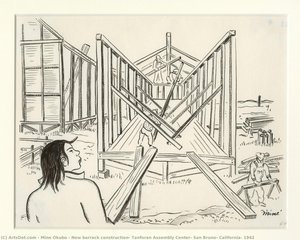
11Army blanket distribution, Central Utah Relocation Project, Topaz, Utah, 1942 (1944) للفنان مين أوكوبوArmy blanket distribution, Central Utah Relocation Project, Topaz, Utah, 19421944 · Japanese American National Museum 12Obtaining drinking water, Central Utah Relocation Project, Topaz, Utah, 1942-1944 (1944) للفنان مين أوكوبوObtaining drinking water, Central Utah Relocation Project, Topaz, Utah, 1942-19441944 · Japanese American National Museum 13Working at the Topaz Times, Central Utah Relocation Project, Topaz, Utah, 1942 (1944) للفنان مين أوكوبوWorking at the Topaz Times, Central Utah Relocation Project, Topaz, Utah, 19421944 · Japanese American National Museum 14Teacher and students in classroom, Central Utah Relocation Project, Topaz, Utah, 1942-1944 (1944) للفنان مين أوكوبوTeacher and students in classroom, Central Utah Relocation Project, Topaz, Utah, 1942-19441944 · Japanese American National Museum 15Waiting in line to receive vaccinations, Tanforan Assembly Center, San Bruno, California, 1942 (1944) للفنان مين أوكوبوWaiting in line to receive vaccinations, Tanforan Assembly Center, San Bruno, California, 19421944 · Japanese American National Museum 16Mosquitos and flies in the barracks, Central Utah Relocation Project, Topaz, Utah, 1942-1944 (1944) للفنان مين أوكوبوMosquitos and flies in the barracks, Central Utah Relocation Project, Topaz, Utah, 1942-19441944 · Japanese American National Museum 17Observing camp activities from a rooftop, Tanforan Assembly Center, San Bruno, California, 1942 (1944) للفنان مين أوكوبوObserving camp activities from a rooftop, Tanforan Assembly Center, San Bruno, California, 19421944 · Japanese American National Museum 18Bus ride to Central Utah Relocation Project, Topaz, Utah, 1942 (1944) للفنان مين أوكوبوBus ride to Central Utah Relocation Project, Topaz, Utah, 19421944 · Japanese American National Museum 19Listening to radio announcement of bombing of Pearl Harbor, with brother Toku, Berkeley, California, 1941 (1944) للفنان مين أوكوبوListening to radio announcement of bombing of Pearl Harbor, with brother Toku, Berkeley, California, 19411944 · Japanese American National Museum 20Registering at the Civil Control Station at Pilgrim Hall of the First Congregational Church, Berkeley, California, 1942 (1944) للفنان مين أوكوبوRegistering at the Civil Control Station at Pilgrim Hall of the First Congregational Church, Berkeley, California, 19421944 · Japanese American National Museum 21Arrival at Tanforan Assembly Center, San Bruno, California, 1942 (1944) للفنان مين أوكوبوArrival at Tanforan Assembly Center, San Bruno, California, 19421944 · Japanese American National Museum 22Waiting in line for supper, Tanforan Assembly Center, San Bruno, California, 1942 (1944) للفنان مين أوكوبوWaiting in line for supper, Tanforan Assembly Center, San Bruno, California, 19421944 · Japanese American National Museum 23Induction at Central Utah Relocation Project, Topaz, Utah, 1942 (1944) للفنان مين أوكوبوInduction at Central Utah Relocation Project, Topaz, Utah, 19421944 · Japanese American National Museum 24[Untitled] (1977) للفنان مين أوكوبو[Untitled]1977 · Japanese American National Museum 25New barrack construction, Tanforan Assembly Center, San Bruno, California, 1942 (1944) للفنان مين أوكوبوNew barrack construction, Tanforan Assembly Center, San Bruno, California, 19421944 · Japanese American National Museum 26Arrival of evacuees from Hawaii, Central Utah Relocation Project, Topaz, Utah, 1942-1944 (1944) للفنان مين أوكوبوArrival of evacuees from Hawaii, Central Utah Relocation Project, Topaz, Utah, 1942-19441944 · Japanese American National Museum 27Carrying mattresses to the barrack, Central Utah Relocation Project, Topaz, Utah, 1942 (1944) للفنان مين أوكوبوCarrying mattresses to the barrack, Central Utah Relocation Project, Topaz, Utah, 19421944 · Japanese American National Museum 28Eating in the mess hall, Central Utah Relocation Project, Topaz, Utah, 1942-1944 (1944) للفنان مين أوكوبوEating in the mess hall, Central Utah Relocation Project, Topaz, Utah, 1942-19441944 · Japanese American National Museum 29Mine with open newspaper, surrounded by anti-Japanese slogans, Berkeley, California, 1941 (1944) للفنان مين أوكوبوMine with open newspaper, surrounded by anti-Japanese slogans, Berkeley, California, 19411944 · Japanese American National Museum 30Scavenging lumber to build furniture, Central Utah Relocation Project, Topaz, Utah, 1942 (1944) للفنان مين أوكوبوScavenging lumber to build furniture, Central Utah Relocation Project, Topaz, Utah, 19421944 · Japanese American National Museum 31Landscaping with trees, Central Utah Relocation Project, Topaz, Utah, 1942-1944 (1944) للفنان مين أوكوبوLandscaping with trees, Central Utah Relocation Project, Topaz, Utah, 1942-19441944 · Japanese American National Museum 32Snowball fight, Central Utah Relocation Project, Topaz, Utah, 1942-1944 (1944) للفنان مين أوكوبوSnowball fight, Central Utah Relocation Project, Topaz, Utah, 1942-19441944 · Japanese American National Museum 33Families preparing for evacuation, Berkeley, California, 1942 (1944) للفنان مين أوكوبوFamilies preparing for evacuation, Berkeley, California, 19421944 · Japanese American National Museum 34First night at Tanforan Assembly Center, San Bruno, California, 1942 (1944) للفنان مين أوكوبوFirst night at Tanforan Assembly Center, San Bruno, California, 19421944 · Japanese American National Museum 35Mine and Toku assemble cots, Tanforan Assembly Center, San Bruno, California, 1942 (1944) للفنان مين أوكوبوMine and Toku assemble cots, Tanforan Assembly Center, San Bruno, California, 19421944 · Japanese American National Museum 36Awaiting registration at the Civil Control Station at Pilgrim Hall of the First Congregational Church, Berkeley, California, 1942 (1944) للفنان مين أوكوبوAwaiting registration at the Civil Control Station at Pilgrim Hall of the First Congregational Church, Berkeley, California, 19421944 · Japanese American National Museum 37Waiting to disembark from the bus at Tanforan Assembly Center, San Bruno, California, 1942 (1944) للفنان مين أوكوبوWaiting to disembark from the bus at Tanforan Assembly Center, San Bruno, California, 19421944 · Japanese American National Museum 38Dining with friends in Berkeley, California, ca.1939-1941 (1944) للفنان مين أوكوبوDining with friends in Berkeley, California, ca.1939-19411944 · Japanese American National Museum 39Mine at train station in Berne, Switzerland, 1939 (1944) للفنان مين أوكوبوMine at train station in Berne, Switzerland, 19391944 · Japanese American National Museum 40Arrival at Central Utah Relocation Project, Topaz, Utah, 1942 (1944) للفنان مين أوكوبوArrival at Central Utah Relocation Project, Topaz, Utah, 19421944 · Japanese American National Museum 41[Untitled] (1978) للفنان مين أوكوبو[Untitled]1978 · Japanese American National Museum 42Interior view of Mine and Toku (1944) للفنان مين أوكوبوInterior view of Mine and Toku1944 · Japanese American National Museum 43Luggage delivery truck, Tanforan Assembly Center, San Bruno, California, 1942 (1944) للفنان مين أوكوبوLuggage delivery truck, Tanforan Assembly Center, San Bruno, California, 19421944 · Japanese American National Museum 44Mine and Toku are shown to their barrack, Tanforan Assembly Center, San Bruno, California, 1942 (1944) للفنان مين أوكوبوMine and Toku are shown to their barrack, Tanforan Assembly Center, San Bruno, California, 19421944 · Japanese American National Museum 45Unfinished camp construction, Central Utah Relocation Project, Topaz, Utah, 1942 (1944) للفنان مين أوكوبوUnfinished camp construction, Central Utah Relocation Project, Topaz, Utah, 19421944 · Japanese American National Museum 46Mine reads newspaper announcing war declaration against Japan, Berkeley, California, 1941 (1944) للفنان مين أوكوبوMine reads newspaper announcing war declaration against Japan, Berkeley, California, 19411944 · Japanese American National Museum 47Walking with guide to Barrack 16, Room 50, Tanforan Assembly Center, San Bruno, California, 1942 (1944) للفنان مين أوكوبوWalking with guide to Barrack 16, Room 50, Tanforan Assembly Center, San Bruno, California, 19421944 · Japanese American National Museum 48[Untitled] (1978) للفنان مين أوكوبو[Untitled]1978 · Japanese American National Museum 49Interior of Mine and Toku (1944) للفنان مين أوكوبوInterior of Mine and Toku1944 · Japanese American National Museum 50[Untitled] (1970) للفنان مين أوكوبو[Untitled]1970 · Japanese American National Museum 51Receiving hostile looks while traveling by bus, Berkeley, California, 1941-42 (1944) للفنان مين أوكوبوReceiving hostile looks while traveling by bus, Berkeley, California, 1941-421944 · Japanese American National Museum 52Mine and Toku preparing for departure, Berkeley, California, 1942 (1944) للفنان مين أوكوبوMine and Toku preparing for departure, Berkeley, California, 19421944 · Japanese American National Museum 53Returning home for curfew, Berkeley, California, 1942 (1944) للفنان مين أوكوبوReturning home for curfew, Berkeley, California, 19421944 · Japanese American National Museum 54Mail-order clothing from Sears Roebuck, Central Utah Relocation Project, Topaz, Utah, 1942-1944 (1944) للفنان مين أوكوبوMail-order clothing from Sears Roebuck, Central Utah Relocation Project, Topaz, Utah, 1942-19441944 · Japanese American National Museum 55[Untitled] (1969) للفنان مين أوكوبو[Untitled]1969 · Japanese American National Museum 56[Untitled] (1968) للفنان مين أوكوبو[Untitled]1968 · Japanese American National Museum 57Rocky Ladies ? (1977) للفنان مين أوكوبوRocky Ladies ?1977 · Japanese American National Museum 58Bachelor (1944) للفنان مين أوكوبوBachelor1944 · Japanese American National Museum 59[Untitled] (1969) للفنان مين أوكوبو[Untitled]1969 · Japanese American National Museum 60[Untitled] (1974) للفنان مين أوكوبو[Untitled]1974 · Japanese American National Museum 61Victory gardens, Central Utah Relocation Project, Topaz, Utah, 1942-1944 (1944) للفنان مين أوكوبوVictory gardens, Central Utah Relocation Project, Topaz, Utah, 1942-19441944 · Japanese American National Museum 62Trimming grass inside living quarters, Tanforan Assembly Center, San Bruno, California, 1942 (1944) للفنان مين أوكوبوTrimming grass inside living quarters, Tanforan Assembly Center, San Bruno, California, 19421944 · Japanese American National Museum 63Departure postings at the Civil Control Station, Berkeley, California, 1942 (1944) للفنان مين أوكوبوDeparture postings at the Civil Control Station, Berkeley, California, 19421944 · Japanese American National Museum 64Medical exam at Tanforan Assembly Center, San Bruno, California, 1942 (1944) للفنان مين أوكوبوMedical exam at Tanforan Assembly Center, San Bruno, California, 19421944 · Japanese American National Museum 65Mine and Toku sweep the stall, Tanforan Assembly Center, San Bruno, California, 1942 (1944) للفنان مين أوكوبوMine and Toku sweep the stall, Tanforan Assembly Center, San Bruno, California, 19421944 · Japanese American National Museum 66Inspection of evacuees for contraband, Tanforan Assembly Center, San Bruno, California, 1942 (1944) للفنان مين أوكوبوInspection of evacuees for contraband, Tanforan Assembly Center, San Bruno, California, 19421944 · Japanese American National Museum 67Relocation notification, Tanforan Assembly Center, San Bruno, California, 1942 (1944) للفنان مين أوكوبوRelocation notification, Tanforan Assembly Center, San Bruno, California, 19421944 · Japanese American National Museum 68Receiving room assignments at Tanforan Assembly Center, San Bruno, California, 1942 (1944) للفنان مين أوكوبوReceiving room assignments at Tanforan Assembly Center, San Bruno, California, 19421944 · Japanese American National Museum 69Waiting to use the washrooms, Central Utah Relocation Project, Topaz, Utah, 1942-1944 (1944) للفنان مين أوكوبوWaiting to use the washrooms, Central Utah Relocation Project, Topaz, Utah, 1942-19441944 · Japanese American National Museum 70Rest stop with military police, Nevada, 1942 (1944) للفنان مين أوكوبوRest stop with military police, Nevada, 19421944 · Japanese American National Museum 71اللوحة غير مُحددة (1978) للفنان مين أوكوبواللوحة غير مُحددة1978 · Japanese American National Museum 72Shopping at the canteen, Tanforan Assembly Center, San Bruno, California, 1942 (1944) للفنان مين أوكوبوShopping at the canteen, Tanforan Assembly Center, San Bruno, California, 19421944 · Japanese American National Museum

لوحات مين أوكوبو الشهيرة، حسب الفترات الزمنية

المواضيع التي استأثرت باهتمام مين أوكوبو

المواضيع الأربعة التي تتكرر باستمرار في هذه الأعمال الأصلية، مع تقديم أروع مثال لكل منها.

المتاحف التي تحتفظ بالأعمال الأصلية لـ مين أوكوبو

المتاحف 1 التي تضم أكبر عدد من اللوحات الموجودة في هذه الصفحة.

المتحف المدينة أعمال مين أوكوبو لوحات من هذه القائمة
Japanese American National Museum, لوس أنجلوسJapanese American National Museum لوس أنجلوس 72 (3 Women Going to Church), Walking over muddy ground, Central Utah Relocation Project, Topaz, Utah, 1942-1944, Teaching art classes, Tanforan Assembly Center, San Bruno, California, 1942

مين أوكوبو، لوحة أيقونية واحدة لكل عقد

الأعمال حسب العقد

اختر عقداً لتشاهد العمل الأصلي الذي يجسده.

لوحات مين أوكوبو: إجابات المعرض

ما هي اللوحة الأكثر شهرة لـ مين أوكوبو على الإطلاق؟اكتشف الإجابة

(3 Women Going to Church) (1948)، Japanese American National Museum, لوس أنجلوس. ويليها Walking over muddy ground, Central Utah Relocation Project, Topaz, Utah, 1942-1944 (1944) وTeaching art classes, Tanforan Assembly Center, San Bruno, California, 1942 (1944).

كم كان عمر مين أوكوبو عند إكمال (3 Women Going to Church)؟اكتشف الإجابة

عمر 36 عاماً: يعود تاريخ (3 Women Going to Church) إلى 1948، وقد وُلد مين أوكوبو في 1912.

ما هي أفضل 10 لوحات لـ مين أوكوبو؟اكتشف الإجابة

(3 Women Going to Church), Walking over muddy ground, Central Utah Relocation Project, Topaz, Utah, 1942-1944, Teaching art classes, Tanforan Assembly Center, San Bruno, California, 1942, Posting of Civilian Exclusion Order/Evacuation Order No. 19, Berkeley, California, 1942, Mine and Toku standing with their luggage, Berkeley, California, 1942, Community toilets, Tanforan Assembly Center, San Bruno, California, 1942, Mine and Toku arrive in their barrack, Central Utah Relocation Project, Topaz, Utah, 1942, Eating lunch while awaiting departure inside the Civil Control Station, Berkeley, California, 1942, Medical exam in laundry building, Central Utah Relocation Project, Topaz, Utah, 1942 و New bachelor dorms at Barrack 14, Tanforan Assembly Center, San Bruno, California, 1942. يوضح التصنيف أعلاه سنة كل لوحة والمتحف التابعة له.

كم عدد الأعمال التي أبدعها مين أوكوبو؟اكتشف الإجابة

يضم كتالوجنا 72 من أعمال مين أوكوبو، التي يعود تاريخها من 1944 إلى 1978.

أين تُعرض أشهر الأعمال الأصلية لـ مين أوكوبو؟اكتشف الإجابة

توجد غالبيتها في Japanese American National Museum (لوس أنجلوس). يدرج جدول المتاحف أعلاه جميعها.

متى أبدع مين أوكوبو أشهر لوحاته؟اكتشف الإجابة

في 1940s: تم إنجاز 62 من أصل 72 من الأعمال في هذه الصفحة خلال تلك الفترة، من بينها (3 Women Going to Church).

ما هي أشهر أعمال مين أوكوبو المبكرة والأخيرة؟اكتشف الإجابة

في هذه الصفحة، أقدم الأعمال يعود إلى Walking over muddy ground, Central Utah Relocation Project, Topaz, Utah, 1942-1944 (1944) وأحدثها يعود إلى [Untitled] (1978).

ما هي المواضيع التي عاد إليها مين أوكوبو أكثر من غيرها؟اكتشف الإجابة

Resilience (37), Observation (21) و Japanese american (16)، عبر 72 من الأعمال في هذه الصفحة.

ما هو الوسيط الفني الذي استخدمه مين أوكوبو بشكل أكبر؟اكتشف الإجابة

Acrylic On Canvas، لـ 34 من أصل 72 من الأعمال في هذه الصفحة.

ما هي المدرسة الفنية التي ينتمي إليها مين أوكوبو؟اكتشف الإجابة

Social realism، بناءً على الأعمال الأصلية في هذه الصفحة.

ما هي الأعمال الأصلية لـ مين أوكوبو التي تمتلكها Japanese American National Museum؟اكتشف الإجابة

(3 Women Going to Church), Walking over muddy ground, Central Utah Relocation Project, Topaz, Utah, 1942-1944 و Teaching art classes, Tanforan Assembly Center, San Bruno, California, 1942: يضم Japanese American National Museum, لوس أنجلوس 72 من الأعمال المعروضة في هذه الصفحة.

مين أوكوبو: الفنان

حياة نُقشت بالصمود: فن ميني أوكوبو

ولدت ميني أوكوبو في ريفرسايد بكاليفورنيا عام 1912، وكانت فنانة ارتبطت حياتها ارتباطاً وثيقاً بفصل محوري ومؤلم من تاريخ أمريكا. لم تكن قصتها مجرد قصة موهبة فنية، بل كانت تجسيداً للشجاعة العميقة، والملاحظة الثاقبة، وقوة الفن كشاهد على العصر. ومنذ بداياتها المحفوفة بالتشجيع داخل عائلة تقدّر الإبداع – حيث كانت والدتها خطاطة ماهرة ووالدها عالماً – سلكت أوكوبو طريق التدريب الرسمي، فدرست في جامعة كاليفورنيا ببيركلي، ثم غامرت بالذهاب إلى أوروبا عام 1938 لتوسيع آفاقها الفنية. غير أن هذه الفترة الدراسية انقطعت فجأة تحت ظلال الحرب العالمية الثانية التي بدأت تلوح في الأفق، مما أجبرها على العودة إلى أمريكا في اللحظة التي وصلت فيها التوترات العالمية إلى ذروتها. ولم تكن تعلم حينها أن هذا العودة لن تؤدي إلى استمرار استكشافاتها الفنية، بل إلى اعتقال قسري وتجربة ستصيغ ملامح حياتها وفنها إلى الأبد.

شهادة حية: فن خلف الأسوار

لقد غير الهجوم على بيرل هاربور مسار حياة أوكوبو بشكل لا رجعة فيه، كما فعل مع عدد لا يحصى من الأمريكيين من أصل ياباني. ففي عام 1942، انتُزعت هي وشقيقها بنجي من منزلهما وحُبسا ظلماً في مركز تانفوران للتجميع، وهو مضمار سباق تم تحويله إلى مرفق احتجاز مؤقت قبل نقلهما إلى مركز توباز لإعادة التوطين الحربي الأكثر ديمومة في يوتا. وداخل تلك الأسوار الشائكة، وبين غبار اليأس، شرعت أوكوبو في أهم مشروع فني لها؛ فمدفوعة بحاجة ملحة لتوثيق الواقع المحيط بها، بدأت في إنشاء سجل بصري مذهل لحياة المعسكر، شمل أكثر من 2000 رسم وتخطيط نُفذت بدقة متناهية باستخدام الحبر والماء والفحم. لم تكن هذه لوحات تاريخية ضخمة أو صوراً مثالية، بل كانت تصويرات خام وصادقة للوجود اليومي: أماكن المعيشة المزدحمة، والإجراءات البيروقراطية، والوجوه التي حفر عليها القلق والاستسلام، ولحظات الكرامة الهادئة وسط المشقات العميقة. لقد التقطت التفاصيل العادية – الغسيل المتدلي على الحبال، والأطفال الذين يلعبون في التراب، والوجبات المقدمة في قاعات الطعام – محولةً إياها إلى بيانات قوية حول الصمود وتآكل الحريات المدنية. لم يكن فن أوكوبو مجرد استجابة شخصية، بل كان فعل تحدٍ، ورفضاً لأن يتم إسكات صوتها أو محوه.

المواطنة 13660: شهادة على تجريد الإنسانية والأمل

عند إطلاق سراحها من توباز عام 1944، صبت أوكوبو خبراتها في عمل فني وأدبي رائد بعنوان: Citizen 13660. نُشر الكتاب في عام 1946، وتضمن 198 من رسوماتها مصحوبة بنصوص مؤثرة. يحمل العنوان في طياته رمزية عميقة، إذ يشير إلى الرقم الذي خُصص لها داخل نظام الاعتقال – وهو تذكير صارخ بعملية تجريد الإنسان من إنسانيته التي عانت منها هي وكثيرون غيرها. لم يكن كتاب Citizen 13مو مجرد تأريخ للمعاناة، بل كان تصويراً دقيقاً للروح البشرية في مواجهة الشدائد. لم تتردد أوكوبو في تصوير المهانة والظلم، لكنها التقطت أيضاً لحظات المجتمع، والفكاهة، والقوة الهادئة. وتتميز رسوماتها بالمباشرة، والعمق العاطفي، والاستخدام المتقن للخط والظل. وسرعان ما أصبح الكتاب عملاً تأسيسياً يوثق تجربة اعتقال الأمريكيين اليابانيين، مقدماً نظرة ثاقبة لفصل مظلم من التاريخ الأمريكي كان الكثيرون يفضلون تجاهله.

إرث مستمر: الفن كتعليق اجتماعي

بعد الحرب، انتقلت أوكوبو إلى مدينة نيويورك وواصلت مسيرتها الفنية، حيث عملت كرسامة توضيحية مستقلة للمجلات والكتب، وقامت بمشاريع جداريات. ورغم أنها لم تتخلَّ أبداً عن موضوعات العدالة الاجتماعية والكرامة الإنسانية التي ميزت أعمالها في زمن الحرب، إلا أن أسلوبها تطور بمرور الوقت؛ فاستكشفت وسائط وتقنيات مختلفة، لكنها حافظت دائماً على التزامها بالواقعية والملاحظة الصادقة. كانت المؤثرات الفنية لأوكوبو متنوعة، حيث استلهمت من حركة الواقعية الاجتماعية – التي ركزت على تصوير القضايا الاجتماعية والحياة اليومية بدقة متناهية – ومن فنانين مثل كاثي كولفيتز، المشهورة بتصويراتها القوية للمعاناة الإنسانية. وطوال مسيرتها، نالت العديد من الجوائز والتقديرات، بما في ذلك منح من المؤسسة الوطنية للفنون، تقديراً لأهمية إسهاماتها في الفن والثقافة الأمريكية. رحلت ميني أوكوبو عن عالمنا في عام 2001، تاركة وراءها إرثاً لا يزال يتردد صداه حتى اليوم؛ فأعمالها تعمل كتذكير قوي بهشاشة الحريات المدنية، وأهمية اليقظة ضد التحيز والتمييز، والقوة الخالدة للفن في الشهادة على الحق، وتحدي الظلم، وإلهام الأمل. إن رسوماتها ليست مجرد وثائق تاريخية، بل هي قصص إنسانية عميقة نُقشت بالحبر والألوان المائية، تطالبنا بأن نتذكر، وأن نتعلم، وألا نكرر أخطاء الماضي أبداً.