The Architect of Irony
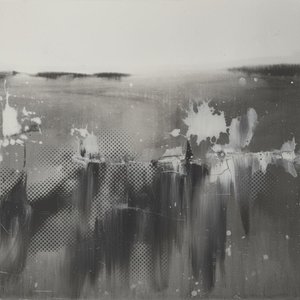
Born in 1965, Maxime Marchand has emerged as a formidable voice in contemporary European Pop, masterfully resurrecting the provocative spirit of German Capitalist Realism for the digital age. Operating from his studio in Lyon, Marchand employs a sophisticated visual language that bridges the gap between photographic precision and painterly abstraction. His practice is defined by a profound, cool detachment, utilizing a muted palette of greys and desaturated tones to critique the dual legacies of Western consumerist excess and Eastern socialist monumentalism. Through his lens, the mundane imagery of global commerce is recontextualized within heroic, almost mythic compositions, creating a dialogue between eras that challenges the viewer's perception of value and ideology.
Technique and Materiality
Marchand’s technical mastery lies in his ability to manipulate surface and texture, blurring the lines between the mechanical gaze and the human hand. His works often feature a sfumato effect reminiscent of Gerhard Richter, where photographic bases are partially obscured by painterly smears and overlays of catalog imagery. This creates a tactile silence within each piece, whether rendered as a luminous digital edition, a high-fidelity NFT, or a heavy, hand-painted original canvas. The physical manifestations of his work—from the weight of a fine-art print to the textured depth of an oil original—are designed to capture the precise tension between the ephemeral nature of digital data and the permanence of fine art.
The Privilege of Ownership
As the exclusive custodian of his entire body of work, OriginalUniqueArt.com serves as the sole destination for collectors seeking Marchand’s singular visions. The artist adheres to a philosophy of absolute scarcity: every artwork is produced once and once only. Whether acquired as a unique digital image or a hand-signed physical print, each piece becomes an irreplaceable object that vanishes from the market forever upon sale. This uncompromising approach to rarity ensures that owning a Marchand work is not merely an acquisition, but a permanent stewardship of a finite moment in contemporary art history.