بورتريه لـ James Aumonier

لوحات James Aumonier: أشهر 44 لوحة، بعيون معرض فني

تحديث نوفمبر 2026 · مُرتبة حسب مؤشر شعبيتنا (عمليات البحث، والزيارات، والطلبات لكل عمل فني) · 48 أعمال لـ James Aumonier في كتالوجنا

باختصار

من وجهة نظر المعرض، فإن أشهر لوحة للفنان James Aumonier هي Gathering Bait (1878). An Easter Holiday, the Children of Bloomsbury Parochial School in a Wood at Watford (1874) و The Labourer's Home (1879) يكملان الثلاثية التي تدركها كل عين. من بين 48 من أعمال James Aumonier في كتالوجنا، يعرض المعرض أدناه 44 من أشهرها، كل منها عمل أصلي مع سنة إنتاجه، والمتحف الذي يضمها، وما يجعلها فريدة من نوعها.

1832 – 1911, Camberwell Realism أكبر مجموعة أعمال: Sheffield City Art Galleries

أفضل 10 لوحات لـ James Aumonier في المعرض

1
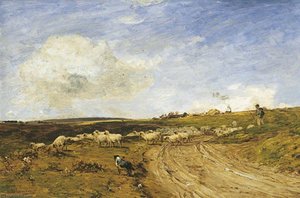
Gathering Bait (1878) للفنان James Aumonier

Gathering Bait

1878 · Oil

In Gathering Bait, James Aumonier presents a quiet, observational study of coastal life. Painted about 1878, the work captures a group of individuals on the beach, each absorbed in the specific labors of their fishing endeavors. Some figures stand near the water's edge, while others are positioned further back on the shore, creating a sense of natural, unforced movement across the landscape. There is a rhythmic quality to their presence,…

2
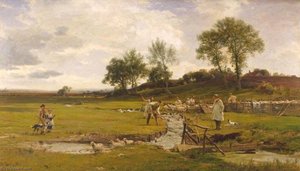
An Easter Holiday, the Children of Bloomsbury Parochial School in a Wood at Watford (1874) للفنان James Aumonier

An Easter Holiday, the Children of Bloomsbury Parochial School in a Wood at Watford

1874 · Oil On Canvas · Touchstones Rochdale, روشديل

In the dappled light of a woodland setting, a quiet moment unfolds within An Easter Holiday, the Children of Bloomsbury Parochial School in a Wood at Watford. Painted by James Aumonier about 1874, the scene captures a sense of seasonal transition as a group gathers amidst the lush vegetation. The air feels heavy with the stillness of the forest, where large, imposing trees frame the figures and create a deep…

3
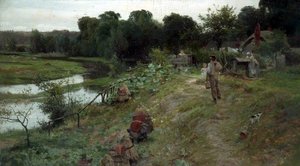
The Labourer's Home (1879) للفنان James Aumonier

The Labourer's Home

1879 · Oil On Canvas

The Labourer's Home is an oil painting by James Aumonier. Created about 1879, the work captures a quiet moment in a rural landscape. It focuses on the daily existence of working-class individuals within a countryside setting. A man and a young girl move along a path toward a modest dwelling near the water's edge.

5
When the Tide is Out (1895) للفنان James Aumonier

When the Tide is Out

1895 · Oil On Canvas

The canvas presents a wide coastal scene viewed from a slightly elevated vantage point. In the foreground, a muddy tidal flat extends toward the viewer, its surface marked by irregular forms and the textures of wet silt. Small boats are positioned within this landscape, their shapes defined by loose, expressive lines. In the distance, a town sits along the horizon, its rooftops appearing as simplified geometric shapes. The composition is…

7
Landscape للفنان James Aumonier

Landscape

Oil On Canvas

The painting titled Landscape is a work by the British artist James Aumonier. It captures a quiet moment of the natural world, rendered in oil on canvas. The scene focuses on a single tree standing in a grassy field, set against a backdrop of distant mountains and a sky scattered with clouds.

لوحات James Aumonier، مرتبة من 11 إلى 44

لوحات James Aumonier الشهيرة، حسب الفترات الزمنية

Late Medieval

1879 · 3 أعمال في هذه القائمة

المواضيع التي استأثرت باهتمام James Aumonier

المواضيع الأربعة التي تتكرر باستمرار في هذه الأعمال الأصلية، مع تقديم أروع مثال لكل منها.

المتاحف التي تحتفظ بالأعمال الأصلية لـ James Aumonier

المتاحف الـ 8 التي تضم أكبر عدد من اللوحات الموجودة في هذه الصفحة.

المتحف المدينة أعمال James Aumonier لوحات من هذه القائمة
Sheffield City Art Galleries, شيفيلدSheffield City Art Galleries شيفيلد 2 Lancing Mill, Sussex, An English Cottage Home
الترست الوطني, إيСт غرينСтеدالترست الوطني إيСт غرينСтеد 2 Misty Sunrise, A Misty Morning
Touchstones Rochdale, روشديلTouchstones Rochdale روشديل 1 An Easter Holiday, the Children of Bloomsbury Parochial School in a Wood at Watford
Birmingham Museum and Art Gallery, برمنغهامBirmingham Museum and Art Gallery برمنغهام 1 A Nook in Nature's Garden
Victoria Art Gallery, باثVictoria Art Gallery باث 1 In the West Country
Walker Art Gallery, ليفربولWalker Art Gallery ليفربول 1 Gathering Bait
Touchstones Rochdale Arts And Heritage Centre, RochdaleTouchstones Rochdale Arts And Heritage Centre Rochdale 1 An Easter Holiday, the Children of Bloomsbury Parochial School in a Wood at Watford
Grundy Art Gallery, BlackpoolGrundy Art Gallery Blackpool 1 The Thames at Great Marlowe

James Aumonier، لوحة أيقونية واحدة لكل عقد

الأعمال حسب العقد

اختر عقداً لتشاهد العمل الأصلي الذي يجسده.

لوحات James Aumonier: إجابات المعرض

ما هي اللوحة الأكثر شهرة لـ James Aumonier على الإطلاق؟اكتشف الإجابة

Gathering Bait (1878). يليه An Easter Holiday, the Children of Bloomsbury Parochial School in a Wood at Watford (1874) و The Labourer's Home (1879).

كم كان عمر James Aumonier عند إكمال Gathering Bait؟اكتشف الإجابة

عمر 46 عاماً: يعود تاريخ Gathering Bait إلى 1878، وقد وُلد James Aumonier في 1832.

ما هي أفضل 10 لوحات لـ James Aumonier؟اكتشف الإجابة

Gathering Bait, An Easter Holiday, the Children of Bloomsbury Parochial School in a Wood at Watford, The Labourer's Home, A Nook in Nature's Garden, When the Tide is Out, In the West Country, Landscape, Gathering Bait, An Easter Holiday, the Children of Bloomsbury Parochial School in a Wood at Watford و Hampshire Landscape. يوضح التصنيف أعلاه سنة كل لوحة والمتحف التابعة له.

كم عدد الأعمال التي أبدعها James Aumonier؟اكتشف الإجابة

يضم كتالوجنا 48 من أعمال James Aumonier، التي يعود تاريخها من 1850 إلى 1911.

أين تُعرض أشهر الأعمال الأصلية لـ James Aumonier؟اكتشف الإجابة

توجد غالبيتها في Sheffield City Art Galleries (شيفيلد), الترست الوطني (إيСт غرينСтеد) و Touchstones Rochdale (روشديل). يدرج جدول المتاحف أعلاه جميعها.

متى أبدع James Aumonier أشهر لوحاته؟اكتشف الإجابة

في 1870s: تم إنجاز 10 من أصل 44 من الأعمال في هذه الصفحة خلال تلك الفترة، من بينها Gathering Bait.

ما هي أشهر أعمال James Aumonier المبكرة والأخيرة؟اكتشف الإجابة

في هذه الصفحة، أقدم الأعمال يعود إلى In the West Country (1850) وأحدثها يعود إلى A Lonely Heath (1911).

ما هي المواضيع التي عاد إليها James Aumonier أكثر من غيرها؟اكتشف الإجابة

English countryside (4), Rural landscape (3) و Victorian era (3)، عبر 44 من الأعمال في هذه الصفحة.

ما هو الوسيط الفني الذي استخدمه James Aumonier بشكل أكبر؟اكتشف الإجابة

Oil On Canvas، لـ 6 من أصل 44 من الأعمال في هذه الصفحة.

ما هي المدرسة الفنية التي ينتمي إليها James Aumonier؟اكتشف الإجابة

Realism، بناءً على الأعمال الأصلية في هذه الصفحة.

ما هي الأعمال الأصلية لـ James Aumonier التي تمتلكها Sheffield City Art Galleries؟اكتشف الإجابة

Lancing Mill, Sussex و An English Cottage Home: يضم Sheffield City Art Galleries, شيفيلد 2 من الأعمال المعروضة في هذه الصفحة.

James Aumonier: الفنان

The Serene Vision of James Aumonier

James Aumonier (1832–1911) stands as a profound voice within the tradition of British landscape painting, a master whose brush captured the quiet, breathing soul of the English countryside. Born in Camberwell, London, Aumonier was shaped by a lineage of meticulous craftsmanship; as the son of a jeweller and the brother of an engraver, he possessed an innate sensitivity to detail and precision. This foundational appreciation for fine line and texture would later manifest in his ability to render the subtle shifts of light across a meadow or the heavy, moisture-laden atmosphere of a misty morning. His early years were defined by a rigorous pursuit of knowledge, attending evening classes at the Birkbeck Institution and South Keensington, where he honed his skills in design—a period that bridged the gap between decorative artistry and the grander ambitions of fine art.

The trajectory of Aumonier’s career is a beautiful study in artistic evolution. Before establishing himself as a celebrated painter of landscapes, he worked as a designer of calicoes, a role that required an intimate understanding of pattern and tonal harmony. However, the call of the natural world proved irresistible. Drawing inspiration from the picturesque vistas of Hampshire and Worcestershire, he transitioned into oil and watercolour painting, channeling the spirit of Victorian Romanticism. His work was deeply informed by the intellectual currents of his time, finding resonance in the poetic nature-worship of Tennyson and the aesthetic philosophies of Ruskin. Through these influences, Aumonier sought to do more than merely document topography; he aimed to capture a spiritual resonance, imbuing his landscapes with a sense of moral contemplation and emotional depth.

Mastery of Light and Atmosphere

Aumonier’s technical prowess is most evident in his command of atmospheric perspective and tonal balance. He possessed a rare ability to evoke the specific "feeling" of a season, particularly through his use of autumn tints and the soft, golden hues of late afternoon. His canvases often feature a delicate interplay between light and shadow, where the sun might struggle through a breaking cloud—a technique reminiscent of the great masters Turner and Constable. Whether depicting the rugged beauty of the Black Mountains or the tranquil, water-soaked plains of the Fen Country, his work maintains a consistent sense of peace and stillness.

His repertoire of subjects reflects a deep devotion to the rhythms of rural life and the changing English climate:

  • The Pastoral Ideal: Works such as Sheep Washing in Sussex demonstrate his ability to blend Realist detail with Impressionistic touches, capturing the labor and grace of country life.
  • Atmospheric Landscapes: In paintings like Misty Sunrise, he explores the ethereal qualities of twilight, using textured brushwork to create a sense of movement within the stillness.
  • Seasonal Narratives: His depictions of the English countryside often focus on specific moments in time, such as the warmth of an Easter Holiday or the quietude of Sunday Evening.

Legacy and Recognition

Throughout his long and productive career, Aumonier earned significant acclaim both in Britain and abroad. He was a prominent figure in the London art scene, exhibiting regularly at the Royal Academy from 1871 onwards. His contributions to the medium of watercolour were particularly noted, leading to his appointment as an associate of the Royal Institute of Painters in Water-colours in 1876. His talent garnered international honors, including a gold medal for watercolour in Paris and a bronze medal for oil painting in Adelaide, proving that his vision of the English landscape possessed a universal, emotive power.

The historical significance of James Aumonier lies in his ability to bridge the gap between the meticulousness of the decorative arts and the emotional expansiveness of Romanticism. By studying geological formations and topographical maps with the same intensity as he studied light, he created a body of work that is both scientifically grounded and poetically transcendent. Today, his paintings remain cherished for their ability to transport the viewer to a lost era of pastoral tranquility, serving as a timeless window into the heart of the Victorian landscape.