
1


تحديث نوفمبر 2026 · مُرتبة حسب مؤشر شعبيتنا (عمليات البحث، والزيارات، والطلبات لكل عمل فني) · 2 أعمال لـ Jacob van Staverden في كتالوجنا
باختصار
من بين جميع الأعمال الأصلية التي تركها Jacob van Staverden، تُعد Return from the hunt (1674) هي الأشهر، وهي ضمن مجموعة المتاحف الملكية للفنون الجميلة في بلجيكا في بروكسل. يضم كتالوجنا 2 من أعمال Jacob van Staverden؛ حيث احتفظ المعرض بـ 2 من أكثر الأعمال التي يعجب بها العالم، مع عرض كل منها مع تاريخها ومتحفها وقصتها.
المتاحف 2 التي تضم أكبر عدد من اللوحات الموجودة في هذه الصفحة.
| المتحف | المدينة | أعمال Jacob van Staverden | لوحات من هذه القائمة |
|---|---|---|---|
 المتاحف الملكية للفنون الجميلة في بلجيكا |
بروكسل | 1 | Return from the hunt |
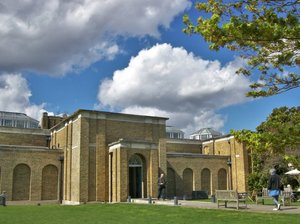 Dulwich Picture Gallery |
لندن | 1 | Landscape with Figure |
1674 هو العام لكل عمل من أعمال Jacob van Staverden المؤرخة في هذه المجموعة: إليكم إياها، مرتبة حسب الشهرة.
اختر سنة لعرض أعمالها الأصلية.
Return from the hunt (1674)
عمر 18 عاماً: يعود تاريخ Return from the hunt إلى 1674، وقد وُلد Jacob van Staverden في 1656.
يضم دليلنا 2 من أعمال Jacob van Staverden.
توجد غالبيتها في المتاحف الملكية للفنون الجميلة في بلجيكا (بروكسل) و Dulwich Picture Gallery (لندن). يدرج جدول المتاحف أعلاه جميعها.
Jacob van Staverden was born in Amersfoort in 1656. His early years in the Netherlands provided the technical foundation for a career that would eventually shift toward the Italianate style. He remained active in Amersfoort until 1674, a period defined by rigorous instruction under Matthias Withoos. This training was not merely local; Withoos was a specialist in still life and cityscape painting who had previously lived and worked in Rome, providing a direct link to the Mediterranean influences that would later define the region's genre painting.
The apprenticeship under Withoos likely lasted until 1672. This period of study focused on the precision required for still life and the structural demands of cityscapes. Such training is evident in the way Van Staverden approached his later subjects. He did not simply observe; he learned to construct scenes with a specific Dutch sensibility before moving toward the more casual compositions favored in Italy. His departure from the Netherlands in 1674 marked the end of this formative Dutch period.
In 1674, Jacob van Staverden left the Netherlands for Italy, traveling alongside his fellow pupil Caspar van Wittel. By January 3, 1675, he was firmly established in Rome. His presence in the city was marked by his entry into the Bentvueghels, an association of Dutch and Flemish artists working in Rome. Within this group, he adopted the bent name Ijver, meaning diligence. This was not merely a social formality; it was a way of carving out an identity within the competitive Roman art scene.
His professional circle included the Bamboccianti, a loose group of Dutch and Flemish genre painters. These artists focused on the everyday life of the lower classes in Rome and its surrounding countryside. Staverden’s work aligned with this preference for street scenes and common subjects. While some contemporaries suggested he struggled to find success as a painter in Rome, his involvement in these circles placed him at the center of a specific, gritty movement in Italian genre painting.
His time in Rome was not a single continuous stay. He returned to Amersfoort in 1686 and 1687 before returning to the city in 1689. During his later years in Rome, he shared a residence with Caspar van Wittel, living there through 1693 and 1694. By 1694, his career as a painter had shifted significantly when he entered the service of the Papal Guard. This move away from the canvas suggests a pragmatic response to the realities of life in the city.
Staverden’s connection to his native Amersfoort was intermittent. He was documented in the city in March 1686 and again in January 1687, marking a brief period of activity back in the Netherlands. These appearances suggest a life split between his origins and the professional pull of Italy. He did not remain in the Dutch Republic for long. By 1689, he had returned to Rome, where he would remain for the rest of his life.
His later years in Rome were marked by a shift in occupation. In 1694, he entered the service of the Papal Guard. This move suggests a departure from his earlier career as a painter. He lived in the same house as Caspar Van Wittel during the years 1689 and 1693–94. The final records of his existence date to 1716. While his exact place of death remains unconfirmed, the evidence points to Rome as his final residence.
Van Staverden’s output is defined by his alignment with the Bamboccianti, a group of painters who rejected idealized subjects in favor of the gritty, everyday realities of the lower classes in Rome and its surrounding countryside. His surviving works consist of a few bambocciate scenes, often characterized by the inclusion of a still life alongside a figure, such as a woman holding a stringed instrument. These compositions focus on the mundane rather than the monumental. While historical accounts suggest he also produced flower and fruit still lifes, no confirmed examples of these works exist today.
The scarcity of his documented oeuvre makes specific dating difficult. His only dated painting is Return from the hunt, which dates to 1674. Beyond this single certain reference, his artistic legacy relies heavily on attributions. The few surviving scenes provide a direct look at the genre painting style he adopted during his time in Italy. His work remains a specific, if limited, example of the Dutch influence on Roman street life and casual social interaction.
