بورتريه لـ هيربرت باير

أشهر 23 لوحات لـ هيربرت باير، مختارات من المعرض

تحديث نوفمبر 2026 · مُرتبة حسب مؤشر شعبيتنا (عمليات البحث، والزيارات، والطلبات لكل عمل فني) · 33 من أعمال هيربرت باير في كتالوجنا

باختصار

من بين جميع الأعمال الأصلية التي تركها هيربرت باير، تُعد The News That's Never Read, from the Early Series (1939) هي الأكثر شهرة. تأتي بعدهما مباشرة كل من Iron Winding Stair (1928) و The limits of my language mean the limits of my world. Ludwig Wittgenstein, Tractatus logigo philosphicus, 1922. From the series Great Ideas of Western Man (1979). يضم كتالوجنا 33 من أعمال هيربرت باير؛ حيث احتفظ المعرض بـ 23 من أكثر الأعمال التي يعجب بها العالم، مع عرض كل منها مع تاريخها ومتحفها وقصتها.

1900 – 1985, لاهاي أكبر مجموعة أعمال: Städel Museum

أفضل 10 لوحات لـ هيربرت باير: مختارات المعرض

1
The News That's Never Read, from the Early Series (1939) للفنان هيربرت باير

The News That's Never Read, from the Early Series

1939 · Painting

In this 1939 work from the early series, we find ourselves looking at a scene of profound stillness. The composition centers on a stack of newspapers, their headlines declaring "The News That's Never Read." It is a heavy, physical presence of paper, piled haphazardly, accompanied by a simple box of tissues. The monochromatic palette strips away the distractions of color, leaving us with a stark, almost clinical view of domestic…

2
Iron Winding Stair (1928) للفنان هيربرت باير

Iron Winding Stair

1928 · Gelatin Silver Print

In this work, titled Iron Winding Stair, we encounter a precise study of form and structure created by Herbert Bayer. The piece dates from about 1928, a period when the artist was deeply engaged with the principles of modern design. It captures a functional architectural element, transforming a simple winding staircase into a subject of geometric investigation.

3
The limits of my language mean the limits of my world. Ludwig Wittgenstein, Tractatus logigo philosphicus, 1922. From the series Great Ideas of Western Man (1979) للفنان هيربرت باير

The limits of my language mean the limits of my world. Ludwig Wittgenstein, Tractatus logigo philosphicus, 1922. From the series Great Ideas of Western Man

1979 · Painting

The work titled The limits of my language mean the limits of my world. Ludwig Wittgenstein, Tractatus logigo philosphicus, 1922. From the series Great Ideas of Western Man is a creation by the artist Herbert Bayer. It emerged from the Great Ideas of Western Man advertising campaign, a project spanning the years 1950 to 1975. This specific piece was created about 1979.

4
Paperboard Packs a Mighty Wallop, from the Early Series (1942) للفنان هيربرت باير

Paperboard Packs a Mighty Wallop, from the Early Series

1942 · Pencil

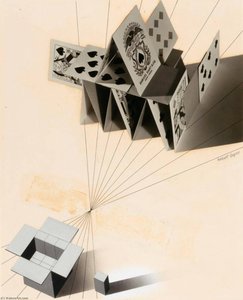
The scene unfolds within the lines of Paperboard Packs a Mighty Wallop, from the Early Series. This work emerges from the hand of Herbert Bayer, an artist whose origins trace back to Haag am Hausruck, Austria, in 1900. The image captures a moment of tension and logistical urgency, frozen in time as the world experiences the shifts of the early 1940s. It dates to about 1942, a period when the…

تستمر مجموعة هيربرت باير، من 11 إلى 23

11Ugly Duckling of the Office, from the Early Series (1939) للفنان هيربرت بايرUgly Duckling of the Office, from the Early Series1939 12Weakness into Strength, from the Early Series (1941) للفنان هيربرت بايرWeakness into Strength, from the Early Series1941 13Destiny of an Old Directory, from the Early Series (1939) للفنان هيربرت بايرDestiny of an Old Directory, from the Early Series1939 14Paperboard that goes to war is paper that wasn't burned. From the Early Series (1942) للفنان هيربرت بايرPaperboard that goes to war is paper that wasn't burned. From the Early Series1942 15Fire Steals Too Much of an Important Resource, from the Early Series (1942) للفنان هيربرت بايرFire Steals Too Much of an Important Resource, from the Early Series1942 16(Seven Convolutions, portfolio) (1948) للفنان هيربرت باير(Seven Convolutions, portfolio)1948 17I hold that while man exists it is his duty to improve not only his own condition but to assist in ameliorating mankind. Abraham Lincoln on Man's Responsibility. From the series Great Ideas of Western Man (1956) للفنان هيربرت بايرI hold that while man exists it is his duty to improve not only his own condition but to assist in ameliorating mankind. Abraham Lincoln on Man's Responsibility. From the series Great Ideas of Western Man1956 18Every new opinion, at its starting, is precisely in a minority of one. Thomas Carlyle, Heroes and Hero Worship, II, 1840, lecture in London, May 8. From the series Great Ideas of Western Man (1961) للفنان هيربرت بايرEvery new opinion, at its starting, is precisely in a minority of one. Thomas Carlyle, Heroes and Hero Worship, II, 1840, lecture in London, May 8. From the series Great Ideas of Western Man1961 19God made the world and all things therein.and has made of one blood all nations of men for to dwell on the face of the earth. St. Paul. Fromthe series Great Ideas of Western Man (1958) للفنان هيربرت بايرGod made the world and all things therein.and has made of one blood all nations of men for to dwell on the face of the earth. St. Paul. Fromthe series Great Ideas of Western Man1958 20The art of progress is to preserve order amid change and to preserve change amid order. Alfred North Whitehead (1861 1947). From the series Great Ideas of Western Man (1964) للفنان هيربرت بايرThe art of progress is to preserve order amid change and to preserve change amid order. Alfred North Whitehead (1861 1947). From the series Great Ideas of Western Man1964 21Reason Is Language, Logos. Johann Georg Hamann (1730 1738). From the series Great Ideas (1966) للفنان هيربرت بايرReason Is Language, Logos. Johann Georg Hamann (1730 1738). From the series Great Ideas1966 22Articulated Wall للفنان هيربرت بايرArticulated WallRuta de la Amistad Patronato Ruta de la Amistad A.C. 23The things that will destroy America are prosperity at any price, peace at any price, safety first instead of duty first, and love of soft living and the get rich quick theory of life. Theodore Roosevelt. From the series Great Ideas of Western Man (1959) للفنان هيربرت بايرThe things that will destroy America are prosperity at any price, peace at any price, safety first instead of duty first, and love of soft living and the get rich quick theory of life. Theodore Roosevelt. From the series Great Ideas of Western Man1959

المواضيع التي استأثرت باهتمام هيربرت باير

المواضيع الأربعة التي تتكرر باستمرار في هذه الأعمال الأصلية، مع تقديم أروع مثال لكل منها.

المتاحف التي تحتفظ بالأعمال الأصلية لـ هيربرت باير

المتاحف الـ 3 التي تضم أكبر عدد من اللوحات الموجودة في هذه الصفحة.

المتاحف المدينة أعمال هيربرت باير لوحات من هذه القائمة
Städel Museum, فرانكفورتStädel Museum فرانكفورت 1 Sundeck
Lentos Kunstmuseum Linz, لينزLentos Kunstmuseum Linz لينز 1 Selfportrait
Ruta de la Amistad Patronato Ruta de la Amistad A.C., مدينة مكسيكوRuta de la Amistad Patronato Ruta de la Amistad A.C. مدينة مكسيكو 1 Articulated Wall

هيربرت باير عقداً بعد عقد: الأعمال الأصلية التي ميزت كل حقبة

الأعمال حسب العقد

اختر عقداً لتشاهد العمل الأصلي الذي يجسده.

أسئلة المقتنين حول لوحات هيربرت باير

ما هو العمل الأكثر شهرة لـ هيربرت باير؟اكتشف الإجابة

The News That's Never Read, from the Early Series (1939). يليه Iron Winding Stair (1928) و The limits of my language mean the limits of my world. Ludwig Wittgenstein, Tractatus logigo philosphicus, 1922. From the series Great Ideas of Western Man (1979).

كم كان عمر هيربرت باير عندما تم إنجاز The News That's Never Read, from the Early Series؟اكتشف الإجابة

عمر 39 عاماً: يعود تاريخ The News That's Never Read, from the Early Series إلى 1939، وقد وُلد هيربرت باير في 1900.

ما هي أشهر عشر لوحات لـ هيربرت باير؟اكتشف الإجابة

The News That's Never Read, from the Early Series, Iron Winding Stair, The limits of my language mean the limits of my world. Ludwig Wittgenstein, Tractatus logigo philosphicus, 1922. From the series Great Ideas of Western Man, Paperboard Packs a Mighty Wallop, from the Early Series, Sundeck, Selfportrait, Billions of Powdered Eggs, from the Early Series, Strength Out of Straw, from the Early Series, Waste Paper to Package, from the Early Series و Aim High from the Early Series. يوضح التصنيف أعلاه سنة كل لوحة والمتحف التابعة له.

كم عدد اللوحات التي تركها هيربرت باير؟اكتشف الإجابة

يضم كتالوجنا 33 من أعمال هيربرت باير، التي يعود تاريخها من 1928 إلى 1979.

في أي متاحف تُعرض روائع هيربرت باير؟اكتشف الإجابة

توجد غالبيتها في Städel Museum (فرانكفورت), Lentos Kunstmuseum Linz (لينز) و Ruta de la Amistad Patronato Ruta de la Amistad A.C. (مدينة مكسيكو). يدرج جدول المتاحف أعلاه جميعها.

في أي سنوات رسم هيربرت باير أشهر أعماله؟اكتشف الإجابة

في 1940s: تم إنجاز 8 من أصل 23 من الأعمال في هذه الصفحة خلال تلك الفترة، من بينها Paperboard Packs a Mighty Wallop, from the Early Series.

ما هي أول وآخر الأعمال الأصلية الشهيرة لـ هيربرت باير؟اكتشف الإجابة

في هذه الصفحة، أقدم الأعمال يعود إلى Iron Winding Stair (1928) وأحدثها يعود إلى The limits of my language mean the limits of my world. Ludwig Wittgenstein, Tractatus logigo philosphicus, 1922. From the series Great Ideas of Western Man (1979).

ما هي المواضيع التي اختارها هيربرت باير بشكل متكرر؟اكتشف الإجابة

Black and white (3), Abstract composition (2) و Men (2)، عبر 23 من الأعمال في هذه الصفحة.

ما هي التقنية التي استخدمها هيربرت باير بشكل أكبر؟اكتشف الإجابة

Painting، لـ 2 من أصل 23 من الأعمال في هذه الصفحة.

هيربرت باير: حياته وأعماله

هيربرت باير: مهندس الرؤية التبسيطية

يبرز هيربرت باير (1900-1985) كشخصية استثنائية في عالم الفن والتصميم في القرن العشرين، حيث كان بمثابة الجسر المحوري الذي ربط بين التجارب الراديكالية لمدرسة الباوهاوس وبين الحداثة المتنامية التي شكلت الثقافة الأمريكية. وُلد باير في لاهاي، كرواتيا (رغم أنه انتمى لاحقاً إلى النمسا بشكل أساسي)، وكانت حياته بمثابة تجسيد لإعادة الابتكار الفني، تميزت بسعي دؤوب نحو التبسيط وترك أثراً عميقاً في مجالات الطباعة، والعمارة، والهوية المؤسسية. إن رحلته، التي بدأت من كونه متدرباً تحت إشراف جورج شميدت هامر وصولاً إلى منصب مدير الطباعة في مدرسة الباوهاوس، ثم مدير فني لمجلة Vogue، وانتهاءً بدوره كشخصية رئيسية في صياغة اللغة البصرية لشركة أتلانتيك ريتشفيلد (ARCO)، تكشف عن فنان كان في حالة تكيف مستمر، دافعاً دائماً بحدود حرفته نحو آفاق جديدة.

كان تدريبه المبكر في مدرسة الباوهاوس في فايمار حجر الزاوية في مسيرته؛ فمن خلال انغماسه في فلسفة المدرسة القائمة على مبدأ "الشكل يتبع الوظيفة"، استوعب سريعاً مبادئ التصميم الاختزالي التي نادى بها والتر غروبيوس. ومع ذلك، لم يكن مجرد الالتزام بالعقيدة الفنية الراسخة هو ما حدد نهجه؛ بل امتلك باير حساً حدسياً فريداً في التواصل البصري. لقد خاض تجارب جريئة في فن الطباعة، رافضاً التسلسلات الهرمية التقليدية، ومتبنياً أسلوباً جريئاً يعتمد على الخطوط الخالية من الزوائد (sans-serif) وبأحرف صغيرة فقط، في خروج متعمد عن أعراف ذلك العصر. هذا "الأبجدية العالمية"، التي وُضعت فكرتها في عام 1925 ولكن لم تتحقق بالكامل كخط تجاري، تظل حجر الزاوية في إرثه، حيث ألهمت مصممي الخطوط اللاحقين مثل ITC Bauhaus و Architype Bayer.

إرث الباوهاوس: فن الطباعة وما وراءها

اتسمت أعمال هيربرت باير في مدرسة الباوهاوس بالتزام راسخ بمبدأي الوضوح والكفاءة؛ حيث عكف بدقة متناهية على إعادة تصميم منشورات المدرسة، مستخدماً خطوطاً هندسية من نوع "سان سيريف" (sans-serif) تتسم بالحدة والنقاء، تضع سهولة القراءة في مقدمة أولوياتها وتعمل على تقليل الفوضى البصرية. ولم يتوقف هذا النهج عند حدود فن الطباعة فحسب، بل امتد ليشمل استكشاف مبادئ التصميم الغرافيكي، حيث نادى بجمالية تبسيطية متجذرة في التجريد الهندسي. فلم تكن تصاميمه مجرد عناصر زخرفية، بل كانت بمثابة أدوات فعالة للتواصل البصري، وهي الفلسفة التي كانت متأصلة بعمق في جوهر فكر الباوهاوس.

ومع اضطراره لمغادرة ألمانيا عام 1937 بسبب صعود النازية، وجد باير آفاقاً جديدة في برلين، ثم في أمريكا لاحقاً. انضم إلى مكتب مجلة Vogue في برلين، مواصلاً رحلة استكشافه لمبادئ التصميم الحديثة. وقد مثلت فترة إقامته في الولايات المتحدة تحولاً نحو الإدارة الفنية للمؤسسات، وهو ما توج بدوره المؤثر في شركة ARCO. شهدت هذه الحقبة تحوله الجذري للهوية البصرية للشركة، حيث نجح في تأسيس علامة تجارية راقية وسهلة التمييز من خلال مزيج متناغم من الخطوط البارزة، والتصاميم المعمارية، والشعارات التي لا تُنسى.

شركة ARCO ومجموعة الفن المؤسسي

تمثل فترة عمل هيربرت باير كمدير فني لشركة أتلانتيك ريتشفيلد (ARCO) ربما الإنجاز الأكثر أهمية واستدامة في مسيرته المهنية؛ فمن خلال إدراكه العميق لقوة التواصل البصري في صياغة الثقافة المؤسسية، نجح في تجميع واحدة من أكبر وأكثر مجموعات الفن المؤسسي تأثيراً في العالم. لم يكن الأمر بالنسبة له مجرد عملية شراء للأعمال الفنية، بل كان بمثابة تنسيق فني دقيق لبيئة تعكس قيم الشركة الجوهرية، من ابتكار وديناميكية ونظرة استشرافية للمستقبل.

ولم يتوقف تأثيره عند حدود الاختيار الفني فحسب، بل امتد ليشمل التصميم المعماري، حيث صمم المقر الرئيسي لشركة ARCO في لوس أنجلوس، مدمجاً جمالياته التبسيطية الفريدة في صلب عمارة المبنى. كما أبدع عناصر بصرية أيقونية للشركة، شملت شعارها وموادها الترويجية. وتظل نافورة "الصعود المزدوج" (Double Ascension) القائمة بين البرجين التوأمين لساحة ARCO شاهداً حياً على رؤيته الإبداعية وإرثه الخالد في عالم الشركات.

تأثير خالد: التبسيط وما وراءه

إن بصمة هيربرت باير في عالم التصميم خلال القرن العشرين هي حقيقة لا يمكن إنكارها؛ فقد تركت أعماله الرائدة في فن الطباعة، ولا سيما ابتكاره لنمط الخطوط "سان سيريف" التي تعتمد على الحروف الصغيرة فقط، أثراً مستمراً يغذي إلهام المصممين حتى يومنا هذا. لقد أرست جمالياته التبسيطية — التي اتسمت بالبساطة والوضوح والتجريد الهندسي — القواعد الأساسية لظهور حركات فنية كبرى مثل المدرسة التبسيطية (Minimalism) والأسلوب السويسري.

وبعيداً عن التقنيات المحددة، يظل نهج باير في التصميم — المرتكز على الوظيفة، والتواصل، والتأثير البصري — ذا صلة وثيقة بواقعنا المعاصر الذي يزداد تعقيداً. لقد أثبت باير أن التصميم الجيد لا يكمن في الزخرفة والترف، بل في خلق روابط ذات مغزى بين الأفكار والجمهور. إن إرثه لا يتجسد فقط من خلال تصاميمه الأيقونية، بل يمتد ليكون منارة إلهام لأجيال من الفنانين والمصممين الذين يسعون جاهدين لصياغة مستقبل أكثر جاذبية وتأثيراً من الناحية البصرية.