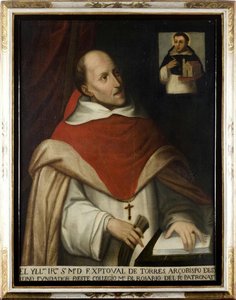
A Legacy of Devotion: The Life and Art of Gaspar de Figueroa Saucedo
In the heart of the Spanish colonial era, amidst the burgeoning spiritual fervor of New Granada, the name Gaspar de Figueroa Saucedo emerged as a beacon of artistic mastery. Born in the lush landscapes of Manique, Colombia, around 1594, Figueroa was more than just a painter; he was a visual storyteller who translated the profound mysteries of the Catholic faith into tangible, breathtaking imagery. His journey from the privileged surroundings of his upbringing in Mariquita to the heights of colonial artistic prestige represents a singular chapter in Colombian art history, marked by an unwavering commitment to the dramatic and the divine.
The foundations of Figueroa’s talent were likely laid under the watchful eye of Friar Cristólam de Torres, a master of the Baroque tradition. This early mentorship instilled in him a profound understanding of how light and shadow could be manipulated to evoke the human soul. Through this influence, Figueroa adopted the chiaroscuro technique, a method that would become his signature. By casting deep, velvety shadows against brilliant, piercing highlights, he created a sense of three-dimensional presence that made his subjects appear to emerge from the very canvas, inviting the viewer into a shared space of prayer and contemplation.
The Theater of Martyrdom and Baroque Grandeur
To gaze upon a work by Figueroa is to witness a carefully choreographed drama. His oeuvre is almost entirely dedicated to the sacred, with a particular focus on the harrowing yet heroic narratives of saintly martyrdom. He did not merely document these historical religious accounts; he reinterpreted them through a lens of intense emotional realism. In his hands, the agony of the persecuted saint becomes a study in dignity and spiritual triumph. Every muscle tension, every tear, and every drop of blood is rendered with a meticulousness that serves to heighten the viewer's empathy and religious fervor.
His mastery of the Baroque style allowed him to infuse his religious portraits with a theatrical flair that was both captivating and unsettling. The compositions are often dynamic, filled with movement and tension, reflecting the turbulent spiritual landscape of 17th-century New Granada. His ability to balance the visceral reality of physical suffering with the ethereal beauty of divine grace is what truly distinguishes his work. Through these canvases, Figueroa achieved a rare feat: he made the celestial realm feel intimately connected to the earthly struggle.
Historical Significance and Artistic Endurance
The historical importance of Gaspar de Figueroa Saucedo cannot be overstated. As a pioneer of Colombian portraiture, he helped establish a visual language for the colonial era that would influence generations of artists in the region. His work served as a vital tool for the Church, providing the faithful with powerful icons that reinforced the doctrines of the Counter-Reformation. By bringing such high levels of technical sophistication to the New World, he elevated the status of local art, proving that the colonies were not merely recipients of European culture, but active participants in its evolution.
Though his life ended in Santafé in 1658, his artistic spirit remains undiminished. The enduring power of his paintings lies in their ability to transcend time and geography, speaking to the universal human experiences of suffering, faith, and transcendence. Today, his legacy is preserved as a cornerstone of Colombian heritage, reminding us of a period when art was the primary bridge between the mortal and the eternal.