Charles Nègre: A Pioneer of French Photography
Born in Grasse, France, in 1820, Charles Nègre’s life was a fascinating confluence of artistic pursuits and technological innovation. His early years were steeped in the traditions of painting, nurtured under the tutelage of renowned artists like Paul Delaroche, Ingres, and Drolling – masters who shaped his initial understanding of composition, light, and form. Yet, as the nascent field of photography emerged in the 1830s, Nègre’s keen eye recognized its potential not merely as a mechanical reproduction, but as a powerful tool for artistic exploration and documentation. This dual commitment—a foundation in painting combined with an unwavering fascination with the new medium—would define his unique contribution to the history of photography.
Nègre established his photographic studio at 21 Quai Bourbon on the Île Saint-Louis, Paris, a strategic location that placed him within the heart of artistic and intellectual life. Initially experimenting with the daguerreotype process – known for its exquisite detail but limited reproducibility – he soon transitioned to calotypes, a technique pioneered by William Henry Fox Talbot that utilized paper negatives, allowing for multiple prints. This shift marked a crucial turning point, opening up possibilities for experimentation and artistic manipulation previously unavailable. It’s believed that Delaroche encouraged Nègre to explore photography as a means of research for his paintings, a suggestion that profoundly influenced the artist's approach.
Early Photographic Innovations
Nègre’s early work is characterized by a remarkable sensitivity to movement and an innovative use of perspective. His 1851 photograph, “Chimney-Sweeps Walking,” exemplifies this talent. Often interpreted as a staged study for a painting – a theory supported by the composition's deliberate arrangement – it nonetheless stands as a landmark achievement in capturing fleeting moments with unprecedented realism. The image’s dynamic energy and detailed depiction of everyday life were revolutionary for their time, demonstrating Nègre’s ability to translate the visual experience into a photographic record.
Beyond his technical prowess, Nègre possessed an acute eye for architectural detail and a deep appreciation for the beauty of the French landscape. His 1861 gravure of “La Porte Royale de la Cathédrale de Chartres” showcases this skill with remarkable precision, capturing the cathedral’s intricate façade in stunning clarity. Similarly, his commission to photograph the Imperial Asylum in Bois de Vincennes for Empress Eugénie highlighted his ability to document significant institutions and convey their grandeur through a photographic lens. These commissions weren't merely exercises in documentation; they were opportunities for Nègre to refine his artistic vision and explore new techniques.
A Photographic Survey of Provence
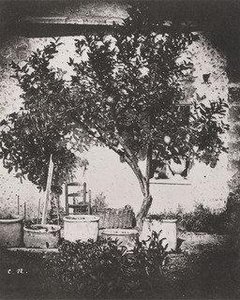
Perhaps the most ambitious undertaking of Nègre’s career was his independent photographic survey of the Midi region of France, undertaken between 1852 and 1854. Driven by a desire to capture the essence of his native land – its landscapes, architecture, and people – he produced nearly two hundred negatives, documenting everything from bustling marketplaces to serene countryside scenes. This project, largely self-funded, stands as a testament to Nègre’s dedication and artistic vision. The resulting images, particularly those depicting the buildings of Grasse, are considered precursors to art photography, demonstrating his innovative approach to composition, lighting, and subject matter.
The series “Le Midi de la France” (over 100 views) became a significant publication, offering a visual record of the region’s diverse landscapes and architectural heritage. Nègre's meticulous attention to detail and his ability to capture the nuances of light and shadow were particularly noteworthy. His work wasn’t simply about recording reality; it was about interpreting it through the lens of an artist.
Technological Advancement and Legacy
Nègre’s photographic journey extended beyond mere documentation, encompassing a relentless pursuit of technical refinement. He mastered both albumen and salt print processes, experimenting with techniques like photogravure – a method he developed independently – to achieve greater tonal range and detail in his prints. His innovations were not merely aesthetic; they represented a significant advancement in the field of photographic printing.
Charles Nègre’s legacy is profound. He was a pioneer who bridged the gap between painting and photography, demonstrating that both mediums could be used to explore similar artistic concerns. His work influenced generations of photographers, and his images continue to captivate viewers with their beauty, detail, and evocative power. Today, his photographs are housed in museums across France and beyond, ensuring that his contributions to the history of art photography will be remembered for centuries to come. He died in Grasse in 1880, leaving behind a remarkable body of work that continues to inspire and challenge us.