بورتريه لـ Benjamin Duterrau

لوحات Benjamin Duterrau: أشهر 5 لوحة، بعيون معرض فني

تحديث نوفمبر 2026 · مُرتبة حسب مؤشر شعبيتنا (عمليات البحث، والزيارات، والطلبات لكل عمل فني) · 6 أعمال لـ Benjamin Duterrau في كتالوجنا

باختصار

من وجهة نظر المعرض، تُعد Woureddy, a wild native of Brune Island (1835) أشهر لوحات Benjamin Duterrau، والتي تُعرض لوحتها الأصلية في National Portrait Gallery، كانبرا. Truggernana, a native of southern part of V.D. Land (1835) و Mr Robinson's first interview with Timmy (1840) يكملان الثلاثية التي تدركها كل عين. من بين 6 من أعمال Benjamin Duterrau في كتالوجنا، يعرض المعرض أدناه 5 من أشهرها، كل منها عمل أصلي مع سنة إنتاجه، والمتحف الذي يضمها، وما يجعلها فريدة من نوعها.

1768 – 1851, London أكبر مجموعة أعمال: National Portrait Gallery

أفضل 10 لوحات لـ Benjamin Duterrau في المعرض

2
Truggernana, a native of southern part of V.D. Land (1835) للفنان Benjamin Duterrau

Truggernana, a native of southern part of V.D. Land

1835 · Ink On Paper · National Portrait Gallery, كانبرا

The ink meets the paper with a quiet, deliberate precision, capturing a moment of profound stillness. A figure emerges from the pale expanse of the page, rendered in the meticulous lines of a pen and ink drawing. This is Truggernana, a woman of the Nuennone people, her presence felt through the delicate hatching and the careful weight of every stroke. She exists in a space that feels both intimate and…

3
Mr Robinson's first interview with Timmy (1840) للفنان Benjamin Duterrau

Mr Robinson's first interview with Timmy

1840 · Oil On Canvas · المعرض الوطني الأسترالي, كانبرا

The painting depicts a formal meeting between a European man and several Indigenous men under a heavy, overcast sky. In the foreground, the two primary figures are engaged in a handshake, a gesture that anchors the composition. The European man wears a dark, heavy coat over a shirt with white and blue stripes. His skin tone and the skin of the Indigenous men are rendered in deep browns and earthy…

5
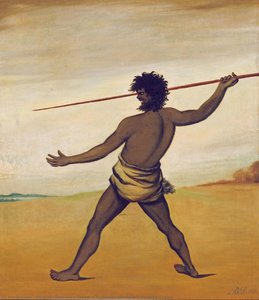
Timmy, a Tasmanian Aboriginal, throwing a spear (1838) للفنان Benjamin Duterrau

Timmy, a Tasmanian Aboriginal, throwing a spear

1838 · Oil On Canvas · Art Gallery of South Australia, أديليد

In this 1838 oil painting, titled Timmy, a Tasmanian Aboriginal, throwing a spear, we encounter a singular moment of focused intensity. The artist, Benjamin Duterrau, captures a solitary Tasmanian Aboriginal man at the precise instant of action. There is a palpable sense of muscular tension in the figure, frozen in the middle of a throw. It is a quiet, heavy moment that speaks to the skill and survival required by…

المواضيع التي استأثرت باهتمام Benjamin Duterrau

المواضيع الأربعة التي تتكرر باستمرار في هذه الأعمال الأصلية، مع تقديم أروع مثال لكل منها.

المتاحف التي تحتفظ بالأعمال الأصلية لـ Benjamin Duterrau

المتاحف الـ 3 التي تضم أكبر عدد من اللوحات الموجودة في هذه الصفحة.

المتحف المدينة أعمال Benjamin Duterrau لوحات من هذه القائمة
National Portrait Gallery, كانبراNational Portrait Gallery كانبرا 2 Woureddy, a wild native of Brune Island, Truggernana, a native of southern part of V.D. Land
Art Gallery of South Australia, أديليدArt Gallery of South Australia أديليد 2 Jack, a Tasmanian Aboriginal, holding a club, Timmy, a Tasmanian Aboriginal, throwing a spear
المعرض الوطني الأسترالي, كانبراالمعرض الوطني الأسترالي كانبرا 1 Mr Robinson's first interview with Timmy

Benjamin Duterrau، اللوحات المميزة لكل عام

7 عاماً، من 1835 إلى 1841، تستعرض هذه الصفحة المسيرة المهنية الكاملة لـ Benjamin Duterrau عبر تاريخها: مسيرة قصيرة، نراها هنا عاماً تلو الآخر من خلال أشهر أعمالها الأصلية.

الأعمال حسب السنة

اختر سنة لعرض أعمالها الأصلية.

لوحات Benjamin Duterrau: إجابات المعرض

ما هي اللوحة الأكثر شهرة لـ Benjamin Duterrau على الإطلاق؟اكتشف الإجابة

Woureddy, a wild native of Brune Island (1835)، National Portrait Gallery, كانبرا. ويليها Truggernana, a native of southern part of V.D. Land (1835) وMr Robinson's first interview with Timmy (1840).

كم كان عمر Benjamin Duterrau عند إكمال Woureddy, a wild native of Brune Island؟اكتشف الإجابة

عمر 67 عاماً: يعود تاريخ Woureddy, a wild native of Brune Island إلى 1835، وقد وُلد Benjamin Duterrau في 1768.

كم عدد الأعمال التي أبدعها Benjamin Duterrau؟اكتشف الإجابة

يضم كتالوجنا 6 من أعمال Benjamin Duterrau، التي يعود تاريخها من 1835 إلى 1841.

أين تُعرض أشهر الأعمال الأصلية لـ Benjamin Duterrau؟اكتشف الإجابة

توجد غالبيتها في National Portrait Gallery (كانبرا), Art Gallery of South Australia (أديليد) و المعرض الوطني الأسترالي (كانبرا). يدرج جدول المتاحف أعلاه جميعها.

متى أبدع Benjamin Duterrau أشهر لوحاته؟اكتشف الإجابة

في 1835: تم إنجاز 2 من أصل 5 من الأعمال في هذه الصفحة خلال تلك الفترة، من بينها Woureddy, a wild native of Brune Island.

ما هي أشهر أعمال Benjamin Duterrau المبكرة والأخيرة؟اكتشف الإجابة

في هذه الصفحة، أقدم الأعمال يعود إلى Woureddy, a wild native of Brune Island (1835) وأحدثها يعود إلى Jack, a Tasmanian Aboriginal, holding a club (1841).

ما هي المواضيع التي عاد إليها Benjamin Duterrau أكثر من غيرها؟اكتشف الإجابة

Man (3), Indigenous australia (2) و Cloudy sky (2)، عبر 5 من الأعمال في هذه الصفحة.

ما هو الوسيط الفني الذي استخدمه Benjamin Duterrau بشكل أكبر؟اكتشف الإجابة

Oil On Canvas، لـ 3 من أصل 5 من الأعمال في هذه الصفحة.

ما هي الأعمال الأصلية لـ Benjamin Duterrau التي تمتلكها National Portrait Gallery؟اكتشف الإجابة

Woureddy, a wild native of Brune Island و Truggernana, a native of southern part of V.D. Land: يضم National Portrait Gallery, كانبرا 2 من الأعمال المعروضة في هذه الصفحة.

Benjamin Duterrau: الفنان

A Life Between Two Hemispheres

Benjamin Duterrau arrived in Van Diemen's Land in August 1832, a man of sixty-five years who had already seen the bustling streets of London and the rigorous training of an English apprenticeship. Born in Soho to Anglo-French parents, his early life was shaped by the precision of an engraver’s craft and the artistic shadows of masters like Thomas Gainsborough and William Hogarth. He did not seek a quiet retirement in the colonies; instead, he brought with him a drive to lecture on the civilizing influence of art at the Hobart Mechanics' Hall only months after his arrival.

His transition from the established art circles of England to the rugged landscape of Tasmania was marked by a singular purpose. While many migrants sought fortune through trade, Duterrau sought to document a world in flux. He settled in Hobart, establishing a studio where he could apply the meticulous observation learned in London to the faces and environments of a new territory. His work as a painter, etcher, and sculptor allowed him to capture the nuances of a society undergoing profound colonial shifts.

The Documentation of a Vanishing People

Duterrau’s most significant contribution lies in his sensitive treatment of the Indigenous Tasmanian population. Working alongside figures such as George Augustus Robinson, he found himself positioned at the intersection of colonial expansion and the survival of Aboriginal culture. He did not merely paint subjects; he recorded individuals with a level of dignity that was rare for the 1830s. His etchings and portraits of Aboriginal men and women provided a visual record of people whose lives were being irrevocably altered by settlement.

His technical approach often relied on a realistic style, prioritizing ethnographic accuracy. In works such as his depiction of "Timmy, a Tasmanian Aboriginal, throwing a spear," he utilized layered brushstrokes to build physical presence and texture. He possessed a particular skill for capturing the tension of a moment, such as the muscular focus of a hunter or the quiet strength in a sitter's expression. These portraits remain vital historical documents for those studying the Nuennone and other tribes of the region.

Historical Weight and Artistic Legacy

The scale of Duterrau’s ambition is perhaps best seen in his larger-scale historical compositions. His painting "The Conciliation" (1840) depicts a formal meeting between European colonists and Aboriginal chiefs, utilizing light and color to convey the gravity of the encounter. This work was intended as a study for an even more expansive project titled "A National Picture," an epic canvas that remains lost to history. Despite the disappearance of his largest intended works, his presence in the Tasmanian colonial narrative is firmly established through his surviving sketches and etchings.

Duterrau’s life ended in Hobart in 1851, leaving behind a body of work that functions as both art and archive. His legacy is found in the collections of the Tasmanian Museum and Art Gallery, where his depictions of the landscape and its original inhabitants continue to provide insight into the nineteenth century. He remains a figure who used the tools of an engraver and painter to illuminate the human dimension of Australian colonization.