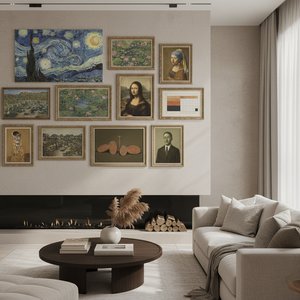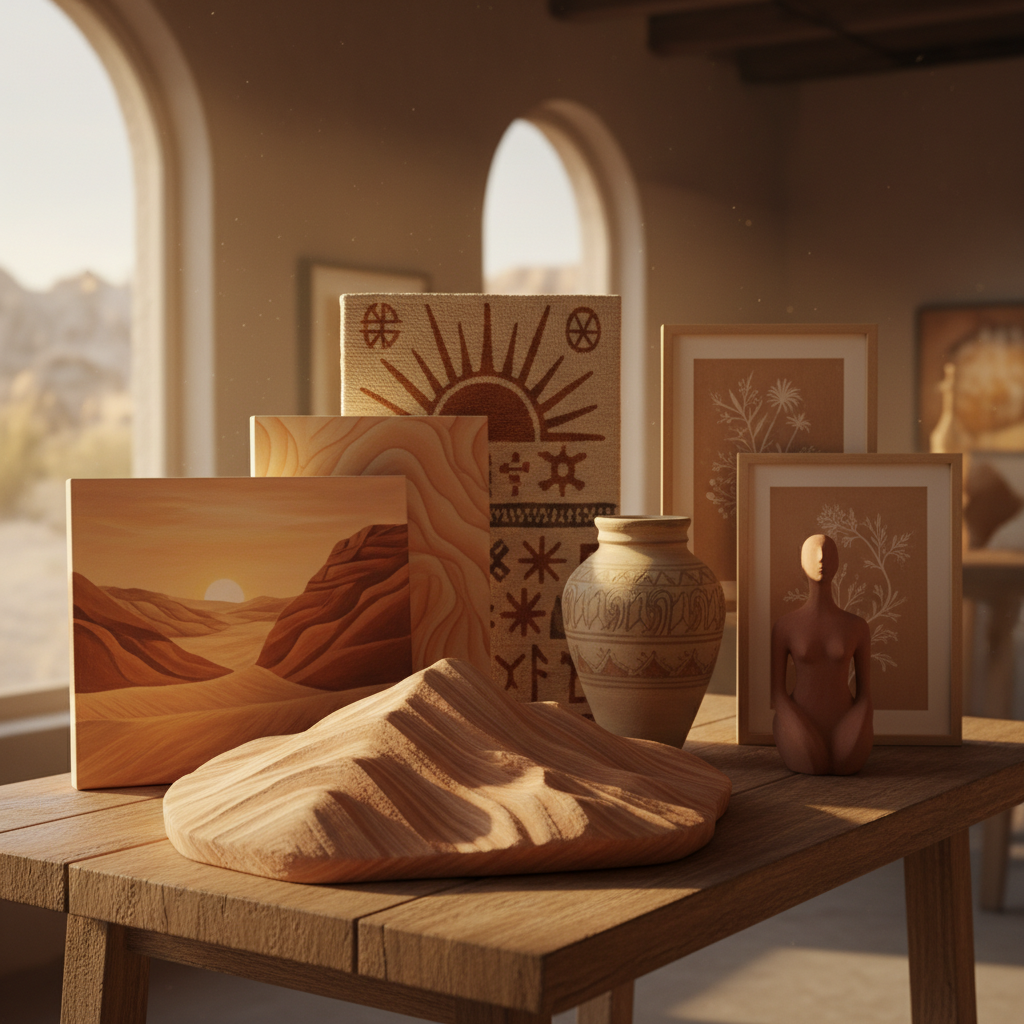
Introduction
Close your eyes and imagine a sun-drenched desert landscape, the warm embrace of a golden beach, or the weathered facade of an ancient ruin. These visions evoke a sense of timelessness, tranquility, and perhaps even melancholy – emotions often captured in artworks dominated by 'sand' tones. For centuries, artists have harnessed the power of ochre, umber, sienna, and beige to create paintings that resonate with profound depth and enduring beauty.
The use of earthy pigments dates back to prehistoric cave paintings, where early humans utilized naturally occurring minerals to depict their world. Throughout history, these tones have been intrinsically linked to the land – representing fertility, spirituality, and the passage of time. The Renaissance masters employed subtle sand hues in depicting flesh tones and backgrounds, creating a sense of realism and warmth. Later, Impressionists and Post-Impressionists embraced these colors to capture the fleeting effects of light and atmosphere, particularly in landscapes. The cultural significance is vast; from the sun-baked palettes of Mediterranean art to the muted shades found in traditional Eastern paintings, 'sand' tones speak to a universal human connection with nature and our place within it.
But why do these artworks continue to captivate us today? Beyond their aesthetic appeal, they offer a refuge from the increasingly frenetic pace of modern life. They invite contemplation, evoke nostalgia, and remind us of the enduring power of simplicity. The warmth of these palettes can feel deeply comforting, while their subtle variations hint at hidden complexities. These paintings aren’t merely representations of scenes; they are emotional landscapes that tap into our collective memory and shared human experience.
In this article, we will embark on a journey through ten iconic paintings where 'sand' tones take center stage. From masterpieces renowned for their historical importance to lesser-known gems brimming with quiet beauty, each artwork offers a unique perspective on the evocative power of these earthy hues. Prepare to be transported by the subtle magic and timeless allure of color.
The City - Fernand Léger
 The City - Fernand Léger
A city rendered not as a place of life, but as a symphony of form and steel – that is the captivating essence of Fernand Léger’s The City (1919). This monumental work isn't simply a painting; it’s a declaration of modernity, a bold embrace of the industrial age that irrevocably altered the course of art history.
Léger’s “Tubism,” a unique offshoot of Cubism, breaks down urban structures into their most fundamental geometric elements. Buildings become stacks of cylinders and rectangles, imbued with a powerful sense of dynamism. The palette, dominated by earthy ochres, siennas, and muted beiges – those evocative 'sand' tones – grounds the composition while simultaneously highlighting the mechanical precision of his vision. It’s a visual language that speaks to both the optimism and alienation inherent in post-war society.
What sets The City apart is its ability to capture the rhythm and energy of urban life without resorting to traditional representation. It's an abstraction that feels profoundly real, resonating with the pulse of a world undergoing rapid transformation. Today, this aesthetic continues to inspire interior design – think clean lines, geometric patterns, and a sophisticated use of neutral palettes to create spaces that feel both modern and timeless. The painting’s influence can be seen in everything from Art Deco motifs to contemporary minimalist aesthetics, proving its enduring power as a cornerstone of 20th-century visual culture. For those seeking famous paintings dominated by 'sand' tones , this is an essential masterpiece.
Madonna and Child (The Tempi Madonna) - Raphael
 Madonna and Child (The Tempi Madonna) - Raphael
A quiet reverence emanates from Raphael’s Madonna and Child (The Tempi Madonna) , a painting that transcends religious iconography to become a universal symbol of maternal love. Completed in 1508, this masterpiece isn't merely observed; it is *felt* – a tender embrace captured for eternity.
Raphael’s genius lies in his ability to imbue classical form with profound human emotion. The composition, bathed in the warm glow of 'sand' tones—rich ochres, earthy reds, and subtle siennas—creates an atmosphere of serene intimacy. The pyramidal structure draws our gaze to the delicate interaction between Mary and Jesus, while the soft sfumato technique lends a lifelike quality to their features. This is a painting that speaks not through grand gestures but through quiet details – the gentle curve of Mary’s hand, the innocent gaze of the Christ Child.
The Tempi Madonna remains an irreplaceable part of art history for its harmonious balance and idealized beauty. It exemplifies the High Renaissance pursuit of perfection, influencing generations of artists to come. Today, this aesthetic translates into interiors that prioritize warmth, comfort, and a sense of timeless elegance – spaces where soft textures, natural light, and muted palettes create havens of tranquility. For those captivated by famous paintings dominated by 'sand' tones , Raphael’s Madonna and Child offers an enduring source of inspiration and emotional resonance.
Girl with Cat - Balthus
 Girl with Cat - Balthus
A stillness hangs in the air, a quiet intimacy captured forever in Balthus’s Girl with Cat (1937). This isn't simply a portrait; it’s an invitation into a private world, a moment of serene companionship that resonates with a timeless quality.
Balthus masterfully blends realism and subtle surrealism in this iconic work. The girl, rendered with meticulous detail, reclines with a feline grace mirroring her companion. The palette—a symphony of muted pastels and warm 'sand' tones – creates an atmosphere of nostalgic tranquility. These earthy hues aren’t merely decorative; they evoke the warmth of childhood memories and the comfort of domestic life.
What sets Girl with Cat apart is its psychological depth, a quality that has captivated viewers for generations. The painting isn't about what is *shown* but what is *felt*. Today, this aesthetic inspires interiors that prioritize quiet contemplation and personal expression – spaces where soft textures, natural light, and carefully chosen objects create havens of calm. For those seeking famous paintings dominated by 'sand' tones , Balthus’s Girl with Cat offers a rare glimpse into the beauty of stillness and the enduring power of connection.
Water Serpents II (Bewegtes Wasser sfondo) - Gustav Klimt
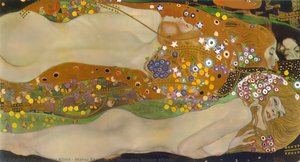 Water Serpents II (Bewegtes Wasser sfondo) - Gustav Klimt
Gustav Klimt’s Water Serpents II (Bewegtes Wasser sfondo) isn't merely a painting; it’s an immersion into the subconscious, a shimmering exploration of life’s primal energies. Created between 1904 and 1907, this work embodies the height of Art Nouveau elegance and Klimt’s unique ability to blend symbolism with breathtaking decorative beauty.
The painting features a reclining figure enveloped in swirling forms and lush floral motifs, all rendered in a palette dominated by golden hues and warm 'sand' tones. These earthy shades aren’t accidental; they evoke the sensuality of nature, the fluidity of water, and the hidden depths of the human psyche. The intricate details and flowing lines are characteristic of Klimt’s style, creating a dreamlike atmosphere that invites contemplation.
Its place among the Top 10 Famous Paintings Dominated by 'Sand' Tones is secured not only through its artistic mastery but also its philosophical depth. The painting speaks to our connection with nature, the power of feminine energy, and the mysteries that lie beneath the surface of reality. Today, this aesthetic continues to inspire interiors that prioritize organic forms, luxurious textures, and a sense of serene escape – spaces where art becomes an invitation to dream.
Harlequin's Carnival - Joan Miró
 Harlequin's Carnival - Joan Miró
A dreamscape unfolds—a carnival of the subconscious captured on canvas in Joan Miró’s Harlequin's Carnival (1925). This isn’t simply a painting; it’s an invitation to lose yourself in a world where fantasy and reality blur, a celebration of imagination that continues to captivate generations.
The composition bursts with whimsical figures and abstract forms, all rendered in a palette dominated by warm 'sand' tones—earthy browns and beiges punctuated by vibrant splashes of color. These muted hues create a sense of grounding amidst the playful chaos, allowing the eye to wander through the intricate details and discover hidden meanings. Miró’s signature biomorphic shapes dance across the canvas, evoking a feeling of spontaneous joy.
Its inclusion among the Top 10 Famous Paintings Dominated by 'Sand' Tones is testament to its enduring power as a surrealist masterpiece. The painting’s ability to tap into our collective unconscious—to evoke feelings of wonder, anxiety, and playfulness—remains profoundly relevant today. In modern interiors, this aesthetic translates into spaces that prioritize creativity, individuality, and a sense of lighthearted escape – rooms where art becomes a catalyst for imagination.
The Apotheosis of Homer, 1944-45 - Salvador Dalí
 The Apotheosis of Homer, 1944-45 - Salvador Dalí
Salvador Dalí’s The Apotheosis of Homer (1945) is a portal into the artist's boundless imagination, a testament to the power of myth and the subconscious. More than just a painting, it’s a visual poem that explores the very nature of artistic inspiration.
This complex composition, rendered in a palette dominated by warm 'sand' tones—muted yellows, browns, and grays—depicts a chaotic yet meticulously detailed scene of gods, historical figures, and dreamlike forms descending from the sky. The painting’s inclusion among the Top 10 Famous Paintings Dominated by 'Sand' Tones is earned through its masterful technique and profound symbolism. Dalí doesn’t simply *show* us Homer’s apotheosis; he invites us to experience it—a swirling vortex of creativity, suffering, and existential struggle.
Today, this aesthetic translates into interiors that prioritize individuality, intellectual curiosity, and a touch of the unexpected. Imagine this artwork as a focal point in a study or living room – a conversation starter that sparks contemplation and invites viewers to explore their own inner worlds. Dalí’s vision reminds us that beauty can be found even within chaos, and that true inspiration often lies just beyond the realm of reason.
Baby Map of the World - Salvador Dalí
 Baby Map of the World - Salvador Dalí
Imagine a sleeping infant, serene and unknowing, cradling the weight of the world upon its face—this is the arresting vision of Salvador Dalí’s Baby Map of the World (1939). More than just a surrealist image, it's a poignant meditation on innocence, potential, and the anxieties of a world teetering on the brink of change.
The painting’s power lies in its masterful juxtaposition: meticulous detail—each continent rendered with astonishing accuracy—integrated into the soft contours of a baby’s features. This creates a disorienting yet captivating effect, inviting us to question our perception of reality and the fragility of existence. The palette, dominated by warm 'sand' tones – earthy browns, muted blues, and subtle greens – evokes a sense of both vulnerability and hope.
Its place among the Top 10 Famous Paintings Dominated by 'Sand' Tones is secured through its unique emotional resonance. Today, this artwork inspires interiors that prioritize contemplation and individuality—spaces where art becomes a catalyst for reflection on our shared humanity and the delicate balance of our world.
Hecate - William Blake
 Hecate - William Blake
A haunting stillness emanates from William Blake’s Hecate —a vision of the mystical rendered with breathtaking detail and symbolic complexity. This isn't merely a painting; it’s an invitation into the realm of ancient archetypes, where knowledge, temptation, and hidden power converge.
Blake presents Hecate as a three-faced goddess embodying the lunar cycles, surrounded by creatures steeped in symbolism—a watchful wolf, a prophetic owl, and a serpentine form hinting at primordial energy. The palette, dominated by warm 'sand' tones – earthy browns and muted ochres – creates an atmosphere of both reverence and unease.
Its place among the Top 10 Famous Paintings Dominated by 'Sand' Tones is secured through its enduring power as a Romantic masterpiece. Today, this aesthetic inspires interiors that prioritize introspection and individuality—spaces where art becomes a catalyst for contemplation and connection to something deeper.
Liseuse en robe violette Huile sur Toile Reims, Musée St Denis - Henri Matisse
 Liseuse en robe violette Huile sur Toile Reims, Musée St Denis - Henri Matisse
Imagine a quiet moment bathed in diffused light—a woman lost in contemplation, surrounded by the simple pleasures of life. This is the essence captured in Henri Matisse’s Liseuse en robe violette Huile sur Toile Reims, Musée St Denis .
This painting isn't merely a portrait; it embodies the spirit of Fauvism—a revolutionary movement that liberated color from its descriptive role and embraced subjective experience. The woman’s dress, rendered in vibrant shades of pink, pulsates with energy against the muted backdrop, creating a visual sensation that is both captivating and serene. Its inclusion among the Top 10 Famous Paintings Dominated by 'Sand' Tones speaks to Matisse’s masterful use of color harmony—a delicate balance between warmth and vibrancy.
Today, this artwork inspires interiors that prioritize tranquility and individuality—spaces where art becomes a catalyst for contemplation and connection. The painting’s timeless presence reminds us of the power of color to transform our emotions and elevate the everyday.
Portrait of Giovanni Arnolfini and his Wife (detail) (23) - Jan van Eyck
 Portrait of Giovanni Arnolfini and his Wife (detail) (23) - Jan van Eyck
Step into a world of quiet prestige—a 15th-century Bruges interior bathed in the warm glow of diffused light. Jan van Eyck’s Portrait of Giovanni Arnolfini and his Wife (1434) isn't merely a painting; it’s an immersive experience, a testament to wealth, faith, and the burgeoning customs of marriage.
Van Eyck’s genius lies in his manipulation of light and texture. He employed innovative glazing techniques to build up layers of translucent oil paint, creating astonishing depth and richness—notice the heavy fur trim on the man’s doublet, the luxurious velvet lining of the woman’s dress. The palette, dominated by warm 'sand' tones – rich browns, muted golds, and subtle creams – evokes a sense of intimacy and reverence.
Its inclusion among the Top 10 Famous Paintings Dominated by 'Sand' Tones speaks to Van Eyck’s mastery of atmosphere. Today, this artwork inspires interiors that prioritize texture, warmth, and quiet elegance—spaces where art becomes a catalyst for contemplation and connection.
Conclusion
As the light fades on these ten masterpieces, we’re reminded that their enduring power lies not simply in their historical significance, but in their ability to transcend time and speak directly to the human heart. These ‘sand-toned’ visions—from Van Eyck’s intimate interiors to Blake’s mystical realms—are more than just paintings; they are windows into other worlds, reflections of our deepest emotions, and testaments to the enduring power of artistic expression.
At , we believe that art should be accessible to all, transforming spaces and enriching lives. We’re honored to partner with interior designers, architects, and collectors in bringing these timeless treasures—and countless others—into hotels, villas, and refined interiors around the globe.
Whether you envision a custom collection tailored to your unique aesthetic, require art mockups to visualize your project, or seek museum-quality reproductions that capture every nuance of the original, our team is dedicated to turning your artistic vision into reality. Explore our full collection and discover how these ‘sand’ tones—and a world of other palettes—can elevate your space and inspire a sense of wonder.