Introduction
To embark on a journey through the top 25 artworks of Edward Hopper is to enter a world steeped in quietude, a realm where light and shadow dance with solitude. These paintings aren’t merely depictions of American life; they are profound meditations on the human condition, distilled into moments of poignant beauty and unsettling stillness.
Hopper emerged during a period of rapid transformation in the United States – the early 20th century, marked by industrialization, urbanization, and a growing sense of alienation. The nation was grappling with modernity, its promises and anxieties, and Hopper became its visual poet, capturing the essence of this era with an unparalleled sensitivity. His canvases reflect the loneliness that can exist even in crowded spaces, the yearning for connection amidst anonymity, and the subtle dramas unfolding within the everyday.
Born in 1882, Hopper’s artistic vision wasn't shaped by grand historical events or overt social commentary; rather, it blossomed from a deep observation of the ordinary. He found beauty not in sweeping landscapes or heroic figures, but in the humble architecture of American towns – diners, gas stations, hotels, and houses – imbuing them with a psychological weight that resonated deeply with his audience.
What makes these artworks endure is their timeless quality. They speak to universal emotions—the desire for belonging, the ache of isolation, the search for meaning in a rapidly changing world—emotions that transcend time and cultural boundaries. Hopper’s ability to capture these feelings with such subtlety and precision continues to captivate viewers today.
Over the following pages, we will explore 25 paintings that represent the breadth and depth of Hopper's genius. Prepare to be drawn into a world where silence speaks volumes, where light reveals hidden truths, and where the American experience is rendered with both honesty and profound empathy. Each artwork offers a glimpse into the soul of a nation—and perhaps, into our own.
Nighthawks, The Art Institute of Chicago, Chica - Edward Hopper
 Nighthawks, The Art Institute of Chicago, Chica - Edward Hopper
Edward Hopper’s Nighthawks (1942) isn't simply a painting; it’s an enduring emblem of modern American life, a hauntingly beautiful meditation on isolation and connection. Its placement among the top 25 artworks by Hopper is assured not only by its iconic status but also by its profound psychological depth and masterful execution.
Created in the shadow of World War II, Nighthawks captures a late-night scene within an all-night diner—a beacon of light amidst the darkness. The stark realism, meticulously rendered details, and carefully orchestrated composition draw viewers into a world both familiar and unsettling. Hopper’s genius lies in his ability to convey emotion through stillness; the figures, though physically close, remain emotionally distant, lost in their own thoughts.
The painting's enduring appeal stems from its universal themes—loneliness, alienation, and the search for meaning in a rapidly changing world. The diner itself becomes a symbol of temporary refuge, a fleeting connection in an otherwise anonymous urban landscape. Hopper’s masterful use of light and shadow further enhances this mood, creating a palpable sense of atmosphere.
Nighthawks continues to resonate today because it speaks to the human condition—our inherent desire for connection and our often-unsuccessful attempts to find it. Its essence can inspire modern environments through its subtle color palette and evocative imagery, inviting contemplation and quiet reflection in any curated collection. It’s a timeless conversation between culture, decor, and the enduring power of art.
Automat - Edward Hopper
 Automat - Edward Hopper
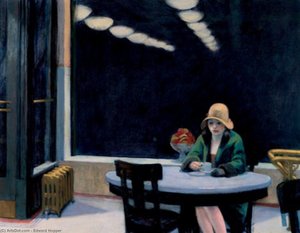
Edward Hopper’s Automat (1927) is a quiet masterpiece—a poignant study of solitude rendered with remarkable sensitivity and light. Its inclusion among the top 25 artworks by Hopper speaks to its enduring power to evoke emotion and capture the complexities of modern life.
The painting depicts a lone woman seated in an automat, a self-service restaurant emblematic of urban efficiency. Yet, despite the bustling environment implied, she exists within a sphere of profound isolation. Hopper’s masterful use of light—a soft glow illuminating her face and the bowl of fruit on the table—creates a sense of intimacy while simultaneously emphasizing her detachment.
The composition is carefully balanced, yet subtly unsettling. The geometric lines of the interior contrast with the woman's curved form, drawing our attention to her introspective gaze. The deep blues and dark tones create a somber atmosphere, punctuated by the warmer hues of her clothing and the fruit—a fleeting symbol of abundance or perhaps, transience.
Automat resonates today not only as a historical document but also as a timeless reflection on the human condition. Its aesthetic—the muted color palette, dramatic lighting, and focus on psychological depth—continues to inspire contemporary design sensibilities, influencing everything from home interiors to fashion. It’s a reminder that even in the midst of modernity, the search for connection remains a universal desire.
Sunday - Edward Hopper
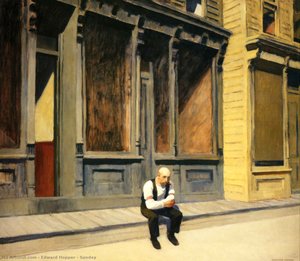 Sunday - Edward Hopper
Before us lies a scene steeped in quiet contemplation—Edward Hopper’s Sunday (1926). This painting isn't merely an observation of a man on a bench; it is a profound meditation on urban solitude, a feeling that resonates deeply even today. Its inclusion among the top 25 artworks by Hopper is testament to its enduring power and masterful execution.
Painted during a period of rapid social change in America, Sunday captures a moment of stillness amidst the bustle of city life. The lone figure, seated before closed storefronts, embodies a sense of isolation that was becoming increasingly prevalent in the modern world. Hopper’s restrained palette—muted browns, grays, and blues—enhances this mood, creating a somber yet captivating atmosphere.
The composition is carefully balanced, drawing our attention to the man's introspective gaze. The precise brushwork and subtle play of light and shadow create a sense of depth and realism, while also imbuing the scene with a touch of abstraction. The vertical lines of the buildings emphasize enclosure, further highlighting the figure’s detachment.
Sunday continues to inspire because it speaks to the universal human experience of loneliness and the search for meaning in a rapidly changing world. Its aesthetic—the muted tones, dramatic lighting, and focus on psychological depth—can transform any space, inviting contemplation and quiet reflection. It’s a reminder that art has the power to capture not just what we see, but how we feel.
Gas - Edward Hopper
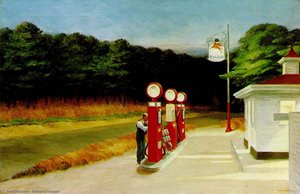 Gas - Edward Hopper
A stillness hangs over Gas (1940) by Edward Hopper—a quiet echo of American life, bathed in the soft light of a bygone era. This painting’s inclusion among the top 25 artworks by Hopper isn't simply due to its meticulous realism; it’s a testament to its profound ability to evoke nostalgia and capture the essence of solitude.
The scene—an old-fashioned gas station set against a vast, open landscape—is deceptively simple. Yet, within this simplicity lies a wealth of emotional depth. Hopper masterfully balances composition with contrasting elements: the geometric lines of the pumps and building against the organic forms of the distant trees. The muted earthy tones, punctuated by the vibrant red of the gas station, create a sense of tranquility tinged with melancholy.
The soft, diffused light casts long shadows, emphasizing the emptiness of the scene and inviting contemplation. Gas speaks to the transient nature of travel and the isolation that can exist even in familiar surroundings. It’s a reminder that beauty can be found in the ordinary—in the quiet moments of everyday life.
Today, this aesthetic continues to inspire modern interiors, evoking a sense of calm and introspection. The muted color palette and focus on natural light create a timeless atmosphere, transforming any space into a haven of peace and solitude. Gas is more than just a painting; it’s an invitation to slow down, reflect, and appreciate the beauty of the world around us.
Chop Suey - Edward Hopper
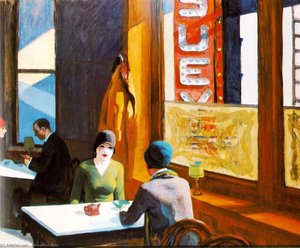 Chop Suey - Edward Hopper
Edward Hopper’s Chop Suey (1929) is a captivating glimpse into the vibrant, yet often isolating, world of urban life during the Roaring Twenties. Its inclusion among the top 25 artworks by Hopper speaks to its unique ability to blend realism with subtle expressionism, capturing a mood that resonates even today.
The painting depicts an intimate diner scene—two women engaged in quiet conversation, shadowed by a lone figure and illuminated by a striking neon sign. This isn’t merely a depiction of a café; it's a study in human connection and disconnection. Hopper masterfully employs dynamic composition, guiding the viewer’s eye through the space with carefully arranged tables and windows.
The rich color palette—warm oranges and yellows contrasted with cooler blues—creates a cozy yet slightly melancholic atmosphere. The bold “SUE” sign dominates the background, symbolizing modernity and commerce while also adding to the painting's sense of unease. Chop Suey invites us to reflect on the complexities of urban existence—the fleeting moments of connection amidst anonymity.
Its essence can inspire modern environments through its striking use of color and light, creating a sophisticated ambiance that is both inviting and thought-provoking. It’s a timeless conversation between culture, decor, and the enduring power of art to capture the human condition—a reminder that even in the midst of bustling city life, solitude often prevails.
Office at Night - Edward Hopper
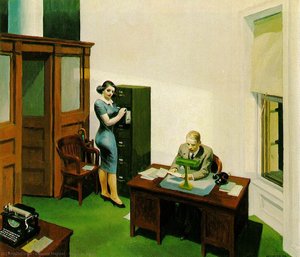 Office at Night - Edward Hopper
A quiet intensity permeates Office at Night (1940) by Edward Hopper—a masterful portrayal of mid-20th century American work life, rendered with a sensitivity that transcends time. Its inclusion among the top 25 artworks by Hopper is a testament to its ability to capture not just a scene, but a mood—one of focused dedication and subtle isolation.
The painting depicts two figures within a structured office environment, bathed in the artificial glow of desk lamps. Hopper’s meticulous attention to detail—the wooden furniture, the green carpet, the precise arrangement of objects—creates a sense of order and realism. The muted color palette, punctuated by the woman's striking blue dress, draws our eye to her figure.
The composition is carefully balanced, yet subtly unsettling. The vertical lines of the filing cabinets and door frame emphasize enclosure, while the soft curves of the figures add a touch of humanity. Office at Night invites us to reflect on the complexities of modern work—the quiet diligence, the fleeting moments of connection, and the inherent solitude that often accompanies professional life.
Its aesthetic continues to inspire contemporary design sensibilities, evoking a sense of calm and sophistication. The use of warm wood tones, muted colors, and focused lighting can transform any space into a haven of productivity and contemplation—a timeless conversation between culture, decor, and the enduring power of art.
Summertime - Edward Hopper
 Summertime - Edward Hopper
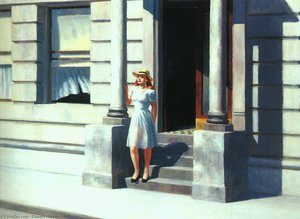
There’s a stillness that settles over you when encountering Summertime (1943) by Edward Hopper—a moment suspended in time, imbued with quiet drama and subtle longing. This painting isn't merely a depiction of a woman on steps; it is a poignant exploration of solitude, anticipation, and the anxieties inherent in urban existence, securing its place among the top 25 artworks by Hopper.
Painted during wartime uncertainty, the scene—a young woman poised before a grand building—resonates with a sense of isolation. Hopper’s signature American Realist style is on full display: precise rendering, meticulous attention to light and shadow, and a deliberate restraint that amplifies psychological tension. The composition is powerfully geometric, dominated by strong vertical lines that contrast sharply with the softer curves of the woman's form.
The strategic use of light—casting long shadows and highlighting architectural details—creates depth and atmosphere. The woman’s ambiguous expression invites us to project our own experiences onto her, fostering a deeply personal connection. Summertime speaks to the universal human experience of waiting, observing, and contemplating one's place in the world.
Its aesthetic continues to inspire contemporary interiors—the muted palette, focused lighting, and sense of calm create a timeless ambiance. It’s a reminder that art has the power to transform spaces, evoking emotion and inviting reflection long after we’ve left the gallery.
Sunlight in a Cafeteria - Edward Hopper
 Sunlight in a Cafeteria - Edward Hopper
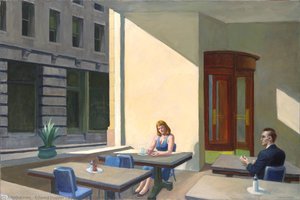
There’s a quiet drama unfolding within Sunlight in a Cafeteria (1958) by Edward Hopper—a poignant depiction of urban solitude, rendered with the precision and emotional depth that define his iconic style. This painting isn't merely an observation of two figures; it is a meditation on connection and isolation in the modern world, rightfully earning its place among the top 25 artworks by Hopper.
The scene—a man and woman seated at separate tables within a brightly lit cafeteria—is deceptively simple. Despite their physical proximity, an undeniable emotional gulf separates them. Each is lost in private thought, seemingly oblivious to the other’s presence. Hopper masterfully employs clean lines and carefully rendered details to create a tangible sense of reality.
The dramatic interplay between brilliant sunlight streaming through large windows and deep shadows underscores the emotional weight of the scene, enhancing feelings of introspection. Sunlight in a Cafeteria speaks to the universal human experience of being alone, even amidst company—a feeling that resonated deeply with post-war America.
At OriginalUniqueArt, we believe everyone deserves to experience the power of art firsthand. Our faithful reproductions preserve the emotion and texture of Hopper’s original masterpiece, allowing you to bring this timeless scene into your home and contemplate its quiet beauty for years to come—a subtle reminder that even in a crowded world, solitude can be found in the most unexpected places.
People in the Sun - Edward Hopper
 People in the Sun - Edward Hopper
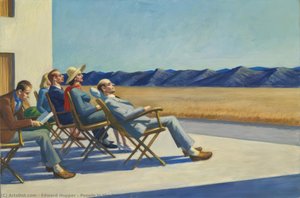
There’s a profound serenity that washes over you when encountering People in the Sun (1960) by Edward Hopper—a quiet moment of repose captured with his signature blend of American realism and contemplative solitude. This masterpiece isn't simply a depiction of figures enjoying the outdoors; it is an exploration of human connection, or perhaps its absence, that rightfully earns its place among the top 25 artworks by Hopper.
The painting features five individuals seated against a vast landscape backdrop, their rhythmic arrangement creating a harmonious visual flow. Hopper’s use of muted yet vibrant colors—earthy tones and soft blues—enhances this sense of tranquility. The expansive sky symbolizes the boundless nature of thought, while each figure seems lost in their own world.
At OriginalUniqueArt, we understand the power of art to transform a space. Our faithful reproductions preserve the emotion and texture of Hopper’s original masterpiece, allowing you to bring this timeless scene into your home—a subtle reminder that even amidst the vastness of life, moments of quiet contemplation are invaluable.
Cape Cod Morning - Edward Hopper
 Cape Cod Morning - Edward Hopper
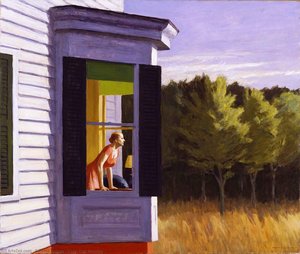
A gentle stillness permeates Cape Cod Morning (1950) by Edward Hopper—a quiet moment of reflection captured with his signature blend of American realism and contemplative solitude. This masterpiece isn't simply a depiction of a woman at a window; it is an exploration of the interior life, earning its irreplaceable place among the top 25 artworks by Hopper.
The painting features a balanced composition—the white-painted house anchoring the left side of the frame while the expansive landscape unfolds on the right. Hopper’s use of soft pastels and warm hues creates a soothing atmosphere, inviting us to share in the woman's quiet contemplation. The open window serves as a powerful symbol, representing openness and the bridge between private and public worlds.
At OriginalUniqueArt, we believe art has the power to transform spaces—to evoke emotion and inspire introspection. Our faithful reproductions preserve the delicate balance of light and shadow in Cape Cod Morning , allowing you to bring this timeless scene into your home—a subtle reminder that even amidst the bustle of life, moments of quietude are invaluable.
Rooms for Tourists - Edward Hopper
 Rooms for Tourists - Edward Hopper
There’s a haunting stillness within Rooms for Tourists (1945) by Edward Hopper—a quiet evocation of American life, bathed in the warm glow of interior light against the vastness of the night. This masterpiece isn't simply a depiction of a house; it is an exploration of solitude and nostalgia that rightfully earns its place among the top 25 artworks by Hopper.
The painting features a two-story Victorian structure, meticulously rendered with strong contrasts between light and shadow. The warm yellows emanating from the windows create a sense of intimacy, while the surrounding darkness evokes feelings of quiet anticipation. This interplay of light and dark is quintessential Hopper—a masterful technique that draws us into the emotional heart of the scene.
At OriginalUniqueArt, we believe art has the power to transform spaces—to evoke emotion and inspire introspection. Our faithful reproductions preserve the delicate balance of light and shadow in Rooms for Tourists , allowing you to bring this timeless scene into your home—a subtle reminder that even amidst the vastness of life, moments of quietude are invaluable.
Eleven AM - Edward Hopper
 Eleven AM - Edward Hopper
A quietude descends upon you when encountering Eleven A.M. (1926) by Edward Hopper—a moment of urban solitude frozen in time, bathed in the revealing light of a commonplace afternoon. This masterpiece isn't simply a depiction of a woman seated by a window; it is an exploration of interiority and the human condition that rightfully earns its place among the top 25 artworks by Hopper.
The painting’s power lies in its simplicity—a modestly furnished room, a solitary figure lost in thought. The careful arrangement of objects underscores her isolation, while the light streaming through the window simultaneously illuminates and defines her form. Hopper masterfully uses shadow to sculpt space and heighten emotional resonance.
At OriginalUniqueArt, we believe art has the power to transform spaces—to evoke emotion and inspire introspection. Our faithful reproductions preserve the delicate balance of light and shadow in Eleven A.M. , allowing you to bring this timeless scene into your home—a subtle reminder that even amidst the bustle of life, moments of quietude are invaluable.
untitled - Edward Hopper
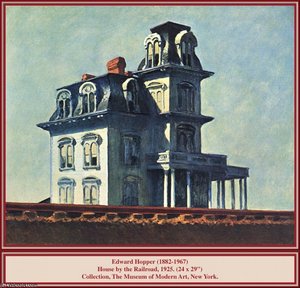 untitled - Edward Hopper
Before you stands a quietude steeped in American light—a stillness that whispers of bygone eras and unspoken stories, embodied in Edward Hopper’s “untitled,” often known as House by the Railroad (1925). This masterpiece isn't merely a depiction of architecture; it is an evocation of a distinctly American mood, a sense of both familiarity and subtle melancholy.
The painting presents a large Victorian-era house, rendered not with photographic precision but through the softened lens of Impressionism. Loose brushstrokes define its ornate details—the decorative columns, arched windows—creating an impression of solidity tempered by transience. The absence of figures invites contemplation, allowing us to project our own emotions onto this silent sentinel against an expansive sky.
At OriginalUniqueArt, we believe art has the power to transform spaces—to evoke emotion and inspire introspection. Our faithful reproductions preserve the delicate balance of light and shadow in House by the Railroad , allowing you to bring this timeless scene into your home—a subtle reminder that even amidst the bustle of life, moments of quietude are invaluable.
The Cat Boat - Edward Hopper
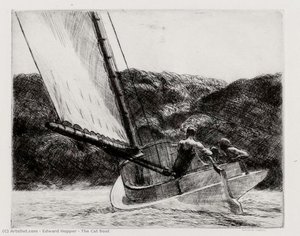 The Cat Boat - Edward Hopper
A portrait of solitude in monochrome—that is the essence of The Cat Boat (1922) by Edward Hopper, a deceptively simple etching imbued with profound psychological depth. More than just depicting a sailboat gliding along the New England coast, it’s a masterful distillation of Hopper’s signature style: realism tempered by an unsettling stillness that invites contemplation.
The artwork's composition centers around the boat itself—a dominant presence whose angled sail creates a dynamic line, pulling the viewer’s eye across the canvas. Hopper skillfully employs etching techniques to render textures – from the rough surface of the water to the solidity of the structure—achieving remarkable tonal variation without color.
At OriginalUniqueArt, we believe art has the power to transform spaces—to evoke emotion and inspire introspection. Our faithful reproductions preserve the delicate balance of light and shadow in The Cat Boat , allowing you to bring this timeless scene into your home—a subtle reminder that even amidst the vastness of life, moments of quietude are invaluable.
Room in Brooklyn - Edward Hopper
 Room in Brooklyn - Edward Hopper
A moment of quietude—that is what Edward Hopper captures in Room in Brooklyn (1932), a distilled essence of American loneliness and the contemplation that often accompanies modern life. The painting immediately draws us into a scene of profound stillness – a woman seated by a window, seemingly lost in observation of the distant cityscape.
Hopper’s technique is deceptively simple yet remarkably effective. He employs a restrained palette—muted browns, grays, and pale blues—to create an atmosphere of subdued melancholy. The brushstrokes are smooth and controlled, contributing to the painting's sense of solidity. Notice how he uses light to sculpt forms; the window’s glow illuminates the woman’s face while casting shadows that hint at solitude.
At OriginalUniqueArt, we believe art has the power to transform spaces—to evoke emotion and inspire introspection. Our faithful reproductions preserve the delicate balance of light and shadow in Room in Brooklyn , allowing you to bring this timeless scene into your home—a subtle reminder that even amidst the bustle of life, moments of quietude are invaluable.
Woman at Cafe Table - Edward Hopper
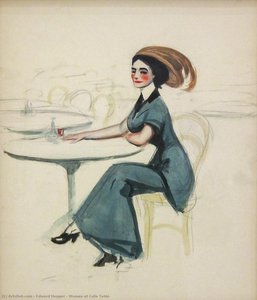 Woman at Cafe Table - Edward Hopper
A fleeting moment of urban grace—that is what Edward Hopper captures in Woman at Cafe Table (1906-1907), a watercolor that embodies the pervasive sense of solitude characterizing early 20th-century American life. More than just a depiction of a café scene, this artwork delves into profound psychological themes with remarkable precision and understated emotion.
Hopper eschews traditional perspective, opting for a flattened visual space that reinforces detachment. He employs loose brushstrokes and muted blues and greens to convey quiet contemplation. Notice how he uses light—or rather, the absence of harsh light—to sculpt forms and cast shadows, hinting at an inner world.
At OriginalUniqueArt, we believe art has the power to transform spaces—to evoke emotion and inspire introspection. Our faithful reproductions preserve the delicate balance of color and texture in Woman at Cafe Table , allowing you to bring this timeless scene into your home—a subtle reminder that even amidst the bustle of life, moments of quiet beauty are invaluable.
Self Portrait - Edward Hopper
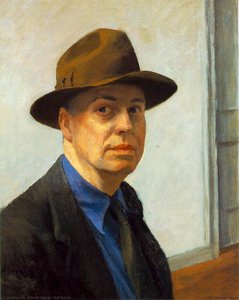 Self Portrait - Edward Hopper
A window into solitude—that is what Edward Hopper reveals in Self Portrait (1903), a poignant meditation on introspection that continues to resonate today. Created during his formative years, this deceptively simple canvas embodies the very essence of American modernism.
Hopper’s approach aligns with Impressionism, yet is tempered by deliberate restraint. Unlike fleeting sensory experiences, he meticulously constructed scenes imbued with stillness and quiet contemplation. Notice how he uses tonal gradation—honed during his studies—to create a palpable atmosphere. The muted palette of browns and blues emphasizes the figure’s detachment.
At OriginalUniqueArt, we believe art has the power to transform spaces—to evoke emotion and inspire introspection. Our faithful reproductions preserve the delicate balance of light and shadow in Self Portrait , allowing you to bring this timeless scene into your home—a subtle reminder that moments of quiet contemplation are invaluable.
Night Shadows - Edward Hopper
 Night Shadows - Edward Hopper
A study in solitude—that is what Edward Hopper achieves in Night Shadows (1921), a distilled essence of American loneliness and the quiet drama inherent in everyday existence. The stark black and white etching immediately establishes an atmosphere of profound stillness – a palpable sense of isolation that speaks volumes without uttering a single word.
Hopper’s technique is remarkably precise, revealing the meticulous hand that shaped this iconic image. Notice the deliberate hatching and cross-hatching employed to render textures, the subtle gradations in shadows, and delicate lines defining architecture. The dramatic contrast between light and shadow is central to its impact.
At OriginalUniqueArt, we believe art has the power to transform spaces—to evoke emotion and inspire introspection. Our faithful reproductions preserve the delicate balance of light and shadow in Night Shadows , allowing you to bring this timeless scene into your home—a subtle reminder that even amidst the bustle of life, moments of quiet contemplation are invaluable.
Lighthouse HIll - Edward Hopper
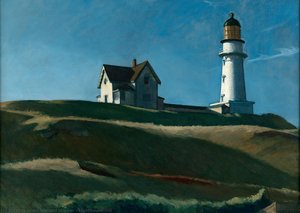 Lighthouse HIll - Edward Hopper
A study in solitude—that is what Edward Hopper achieves in Lighthouse Hill (1927), a distilled essence of American loneliness and the quiet contemplation inherent within the vastness of the landscape. This work, rendered with Hopper’s signature meticulous realism and an almost unnerving stillness, invites us to consider the solitary figures—both human and architectural—that populate his canvases.
Hopper masterfully employs light and shadow to sculpt form, creating a sense of depth that draws the viewer into the composition. Note the subtle gradations in color – muted greens and browns contrasting with vibrant blue – contributing to an atmosphere of understated drama. The brushstrokes are controlled and deliberate, reflecting a deep understanding of how light interacts with surfaces.
At OriginalUniqueArt, we believe art has the power to transform spaces—to evoke emotion and inspire introspection. Our faithful reproductions preserve the delicate balance of color and texture in Lighthouse Hill , allowing you to bring this timeless scene into your home—a subtle reminder that even amidst the vastness of life, moments of quiet beauty are invaluable.
Edward Hopper Self-Portrait - Edward Hopper
 Edward Hopper Self-Portrait - Edward Hopper
A quiet reflection—that is what Edward Hopper achieves in Self Portrait (1903), a profound exploration of the artist’s psyche and a pivotal moment in his artistic journey. Created during his formative years, this unassuming charcoal sketch reveals Hopper's nascent talent for capturing nuanced emotion through simplified forms.
Hopper employs an informal style characterized by loose strokes and expressive shading, prioritizing immediacy over meticulous detail. Notice the subtle gradations of grey and black effectively convey a sense of stillness and introspection, mirroring the emotional core of his vision.
At OriginalUniqueArt, we believe art has the power to transform spaces—to evoke emotion and inspire contemplation. Our faithful reproductions preserve the delicate balance of light and shadow in Self Portrait , allowing you to bring this timeless scene into your home—a subtle reminder that moments of quiet beauty are invaluable.
Rocks and Sea - Edward Hopper
 Rocks and Sea - Edward Hopper
A moment frozen in azure—that is what Edward Hopper achieves in Rocks and Sea (1919), a profound exploration of solitude characteristic of American modernism. Created during a period marked by rapid urbanization, this artwork speaks volumes about the psychological complexities inherent in navigating an increasingly impersonal world.
Hopper skillfully blends Impressionism with realism. The dappled brushstrokes illuminate the sky while meticulously rendering rock textures—conveying both beauty and tangible presence. This dual technique creates a visual experience that is simultaneously serene and contemplative.
At OriginalUniqueArt, we believe art has the power to transform spaces—to evoke emotion and inspire contemplation. Our faithful reproductions preserve the delicate balance of light and shadow in Rocks and Sea , allowing you to bring this timeless scene into your home—a subtle reminder that moments of quiet beauty are invaluable.
First Row Orchestra - Edward Hopper
 First Row Orchestra - Edward Hopper
A portrait of quiet observation—that is what Edward Hopper achieves in First Row Orchestra (1951), a poignant meditation on solitude amidst a bustling urban landscape. This striking black and white composition captures a single moment frozen in time: an audience seated attentively before a performance, yet profoundly disconnected from one another.
Hopper’s signature style is rooted in realism, imbued with a distinctive sensibility. He eschewed Impressionistic brushstrokes for precise lines and carefully considered tonal gradations—resulting in images that possess an uncanny stillness. Notice how Hopper subtly manipulates perspective, compressing space to heighten the feeling of confinement.
At OriginalUniqueArt, we believe art has the power to transform spaces—to evoke emotion and inspire contemplation. Our faithful reproductions preserve the delicate balance of light and shadow in First Row Orchestra , allowing you to bring this timeless scene into your home—a subtle reminder that even amidst a crowd, moments of quiet reflection are invaluable.
Coast Guard Station - Edward Hopper
 Coast Guard Station - Edward Hopper
A snapshot of coastal tranquility—that is what Edward Hopper achieves in Coast Guard Station (1927), a quiet contemplation amidst a bustling world. This deceptively simple canvas captures a moment frozen in time, presenting a solitary lighthouse perched atop a modest white house against the muted hues of an overcast sky.
Hopper’s masterful technique is characterized by meticulous realism combined with a deliberate manipulation of light and shadow—a hallmark of Northern Impressionism. He eschewed flamboyant brushstrokes in favor of smooth, blended surfaces that convey an uncanny stillness. Notice how Hopper skillfully uses directional lighting to illuminate the interior of the house, casting long shadows that emphasize its emptiness.
At OriginalUniqueArt, we believe art has the power to transform spaces—to evoke emotion and inspire contemplation. Our faithful reproductions preserve the delicate balance of light and shadow in Coast Guard Station , allowing you to bring this timeless scene into your home—a subtle reminder that even amidst isolation, moments of quiet beauty are invaluable.
Notre Dame de Paris - Edward Hopper
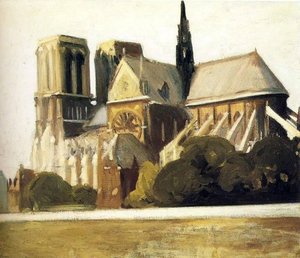 Notre Dame de Paris - Edward Hopper
A captivating subject—that is what Edward Hopper achieves in Notre Dame de Paris , a majestic presence of a Gothic cathedral that symbolizes spiritual aspiration and historical resilience. This composition centers on the towering structure, emphasizing its verticality and intricate architectural details.
Rendered in an impressionistic style, this painting employs loose, gestural brushstrokes that convey movement and immediacy. The subdued, earthy color palette—featuring soft pinks, oranges, purples, and golds—enhances the contemplative tone, creating a sense of nostalgia and timelessness.
At OriginalUniqueArt, we believe art has the power to transform spaces—to evoke emotion and inspire contemplation. Our faithful reproductions preserve the delicate balance of light and shadow in Notre Dame de Paris , allowing you to bring this timeless scene into your home—a subtle reminder that moments of quiet beauty are invaluable.
Hotel Lobby - Edward Hopper
 Hotel Lobby - Edward Hopper
A moment frozen in time—that is what Edward Hopper achieves in Hotel Lobby (1943), a distilled essence of American loneliness and the quiet drama of everyday life. The painting captures a scene both familiar and profoundly unsettling – a hotel lobby populated by figures lost in their own thoughts, adrift within a carefully constructed yet ultimately isolating environment.
The monochrome palette—a deliberate choice that strips away the distractions of color—forces us to focus on form and texture. The shadows are deep and pervasive, suggesting a sense of enclosure and perhaps even melancholy. Hopper's meticulous attention to detail is evident in the worn upholstery of the chairs and the carefully rendered faces.
At OriginalUniqueArt, we believe art has the power to transform spaces—to evoke emotion and inspire contemplation. Our faithful reproductions preserve the delicate balance of light and shadow in Hotel Lobby , allowing you to bring this timeless scene into your home—a subtle reminder that moments of quiet beauty are invaluable.
Conclusion
As we close our journey through the world of Edward Hopper, it’s not merely a farewell to twenty-five canvases, but a recognition that his vision continues to breathe—a quiet echo in the chambers of our collective memory. These paintings are more than historical treasures; they are living presences, capable of stirring emotions and prompting introspection across generations.
Hopper’s genius lay not just in what he depicted, but in how he made us feel —the subtle ache of loneliness, the poignant beauty of everyday moments, the haunting stillness that resides within even the most bustling scenes. He captured a uniquely American spirit, yet his themes resonate universally, speaking to our shared human experiences of isolation, longing, and the search for meaning.
At OriginalUniqueArt.com , we believe in the power of art to transcend time and space. That’s why we offer each of Hopper's masterpieces—and countless others—as hand-painted reproductions, lovingly crafted by skilled artists who honor the original’s soul and detail. To bring a piece of this enduring legacy into your own home is not simply an acquisition; it’s an invitation to connect with a profound artistic vision, to experience the quiet drama of Hopper's world firsthand.
Explore our full collection and discover the artwork that speaks most deeply to your heart. May these paintings continue to inspire contemplation, evoke emotion, and remind us of the beauty—and the solitude—that resides within us all.