
 معاينة الحجم الحقيقي
 مشاركة
 مشاركة
 التفاصيل

 تحميل الملف
 قطع مشابهة
 الأشعة السينية
 عرض شرائح
John Grimes
 Acrylic On Canvas
- WallArt
- Romantic Landscape
 1824
1824 72.0 x 55.0 cm
 المتحف المتروبوليتاني للفنون
 عرض المزيد
نسخة زيتية مصنوعة يدوياً
لوحة زيتية مرسومة يدوياً على الكانفاس بالمقاس والإطار الذي تفضله، تُنفذ حسب الطلب على أيدي فنانينا. ( اشترِ نسخة مطبوعة اشترِ الصورة)




P118B $10

P118H $10

P118W $10

P438Z $10

P508JH $12

P508YH $12

P805H $10

P805Z $10

P919BZ $10

P919G $10

P919XJ $10

P959ZH $10

P968JZ $12

W106C $8

W218G $10

W218JH $8

W218Y $10

W307PJ $10

W316G $10

W316PJ $8

W316Y $10

W398PJ $8

W4111J $10

W500HY $15

W500JH $15

W692G $12

W849H $8

W940BG $15

W953PJ $8




اختر من بين أحجامنا المُعدّة مسبقًا والتي تتطابق مع النسب الأصلية للعمل الفني.

يمكنك إدخال أبعادك الخاصة لتناسب إطارًا معينًا أو مساحة محددة. وإذا لم يتطابق الحجم الذي اخترته مع نسب الصورة الأصلية، فسنقوم إما بقص العمل الفني أو توسيع اللوحة بإضافة عناصر مرسومة يدويًا. سيتم إرسال نموذج رقمي إليك للموافقة عليه قبل بدء الإنتاج.
يرجى ملاحظة أن المعاينة على الشاشة لا تعكس عملية القص أو التوسيع الفعلية؛ حيث إن النموذج الرقمي وحده هو الذي سيوضح التكوين النهائي بدقة.
وعلى الرغم من توفر أحجام مخصصة، إلا أننا نوصي باختيار أبعاد من القائمة المحددة مسبقًا للحفاظ على النسب الأصلية للعمل الفني.
بعد إتمام الطلب، سيرسل فريق OriginalUniqueArt.com بريداً إلكترونياً للعميل لطلب التعليمات وتزويده بمعاينة تجريبية (mockup).
توصيل عالمي إلى خلال 3 إلى 4 أسابيع بدلاً من المدة المعتادة البالغة 5 أسابيع. (18 أغسطس). جودة لا تهاون فيها.

شحن سريع ومجاني لجميع أنحاء العالم

قماش كتان عالي الجودة

تأمين شحن شامل

ضمان استرداد الرسوم الجمركية

ضمان مطابقة الألوان الحقيقية

سياسة الإرجاع خلال 60 يومًا (في حالات العيوب فقط)

ضمان استرداد نقدي بنسبة 100%

خصم عند طلب عدة قطع
 خيار الزجاج متاح فقط للمقاسات التي تقل عن 110 سم

John Grimes
خامة إعادة الإنتاج
مقاس النسخة المطبوعة
-


السعر الإجمالي النهائي
$ 300
وصف العمل الفني
Matthew Harris Jouett’s “John Grimes”: A Portrait Steeped in Victorian Sentiment
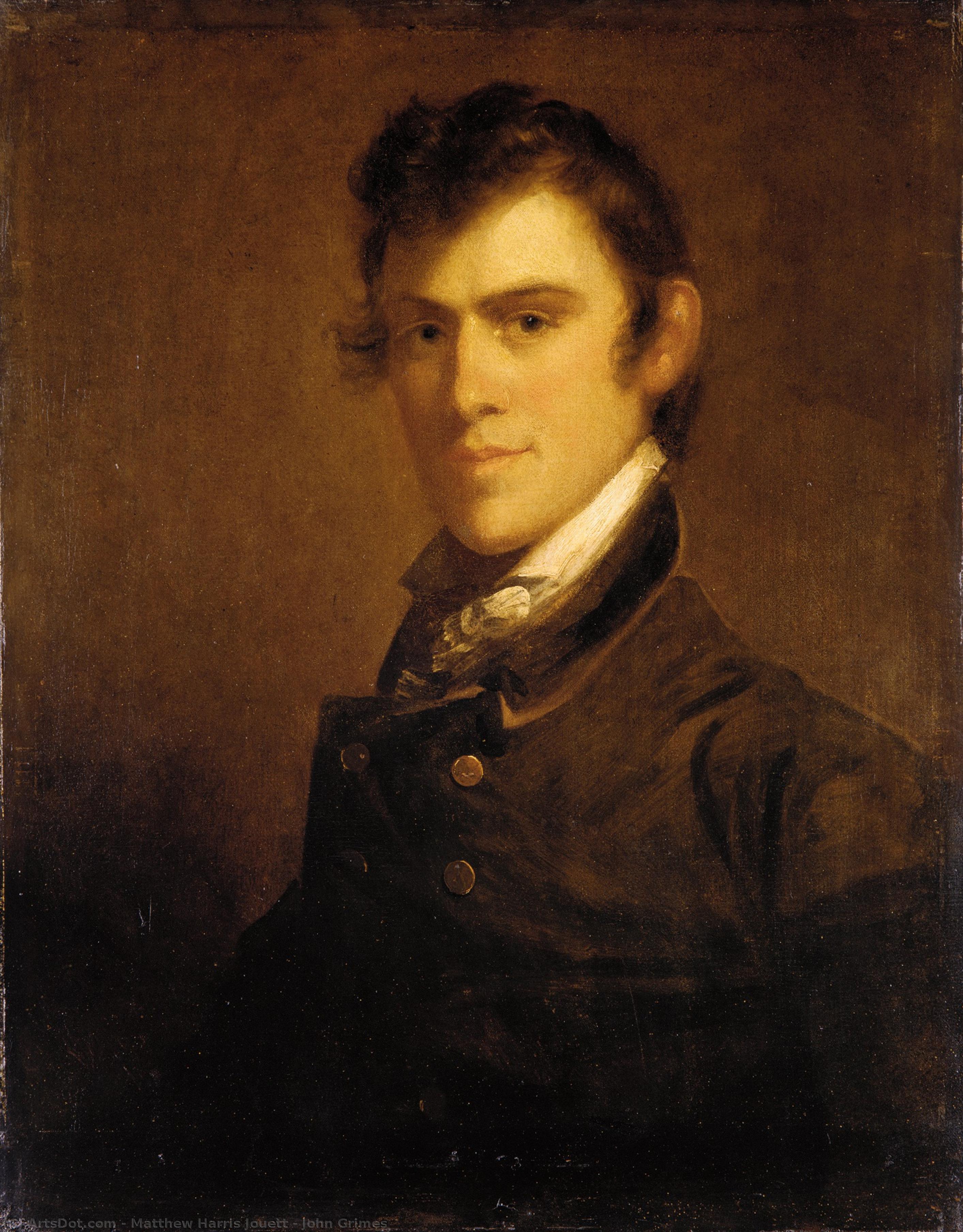
The painting "John Grimes," executed by Matthew Harris Jouett around 1824, stands as a testament to the burgeoning Romantic sensibility within American art during its formative years. More than just a likeness of John Grimes—a prominent Kentucky landowner and figurehead of his era—the portrait embodies a profound exploration of human emotion and psychological depth, characteristic of the artistic currents sweeping across Europe at the time. Jouett’s masterful handling of light and shadow contributes significantly to conveying this emotional resonance.Style and Technique: Neoclassical Influence Meets Romantic Expression
Jouett's style leans heavily toward Neoclassicism, evident in the formal pose of Grimes—a deliberate choice mirroring the idealized figures favored by artists like Jacques-Louis David—yet infused with subtle Romantic undertones. The artist skillfully employs chiaroscuro, a technique popularized by Rembrandt and Caravaggio, to sculpt Grimes’ face and torso, creating dramatic contrasts that heighten the sense of realism while simultaneously conveying inner turmoil. Note the meticulous attention to detail – from the texture of Grimes' waistcoat to the subtle shading around his eyes—reflecting Jouett’s dedication to capturing not merely appearance but also character. The muted palette reinforces this mood, favoring earthy tones that evoke a contemplative atmosphere.Historical Context: Kentucky Landscape and Victorian Portraiture
Kentucky in 1824 was undergoing rapid transformation as it transitioned from frontier territory to settled statehood. Jouett’s depiction of Grimes reflects the anxieties and aspirations of this period—a desire for stability amidst expansion, coupled with an appreciation for tradition and lineage. Simultaneously, portraiture itself was experiencing a revival across Britain and America, driven by a fascination with capturing individual identity and conveying psychological states. The genre prioritized emotional truthfulness over mere physical representation, aligning perfectly with the Romantic movement’s emphasis on subjective experience. Jouett's work speaks to this broader cultural shift, documenting a pivotal moment in Kentucky history while simultaneously engaging with prevailing artistic conventions.Symbolism: Dignity and Reflection
The composition itself is laden with symbolic significance. Grimes gazes directly at the viewer—a convention of portraiture intended to establish intimacy and convey confidence—yet his gaze seems distant, contemplative. This inward focus suggests a preoccupation with moral considerations and perhaps a quiet melancholy. The subdued lighting casts shadows across Grimes’ face, symbolizing hidden emotions and inner struggles. Furthermore, the formal attire—characteristic of Kentucky's elite—represents social status and adherence to established norms. Jouett subtly communicates that Grimes is not merely a man but also an embodiment of virtue and intellect within his societal context.Emotional Impact: A Window into Victorian Soul
Ultimately, “John Grimes” succeeds in capturing the essence of Victorian sentimentality – a preoccupation with honor, duty, and the complexities of human relationships. Jouett’s masterful execution transports us back to Kentucky's formative years, inviting viewers to contemplate themes of introspection and moral responsibility. The painting remains an enduring symbol of dignified contemplation and serves as a poignant reminder that true beauty lies not only in outward appearance but also in the profound depths of inner experience. It is a piece that continues to resonate with audiences today, demonstrating Jouett’s remarkable ability to distill emotion into visual form.السيرة الذاتية للفنان
Thomas Gainsborough: A Painter of Light and Landscape
Thomas Gainsborough, a name synonymous with the quintessential English countryside, was more than just a painter; he was a chronicler of his time, a master of light and atmosphere, and a pivotal figure in establishing landscape painting as a respected art form. Born on May 14th, 1727, in Sudbury, Suffolk, into a family of cloth merchants, Gainsborough’s early life offered little indication of the artistic path he would ultimately forge. His apprenticeship with a London silversmith instilled a foundational understanding of craftsmanship and detail, while his brief association with Hubert Gravelot, a French book illustrator, introduced him to the world of engraving and provided an initial exposure to the techniques that would later inform his painting style. It was this early combination – precision and observation – that proved crucial to his enduring legacy.Early Years and Artistic Development
Gainsborough’s artistic journey began modestly, initially focusing on portraiture in Ipswich around 1752. However, he harbored a deep passion for landscape painting, a desire frequently expressed through poignant letters to his friend William Jackson, lamenting the demands of commissioned portraits and yearning for the tranquility of rural scenes. This inherent conflict – between commercial obligations and artistic inclination – shaped much of his career. His early landscapes, often characterized by loose brushwork and a vibrant palette, were largely experimental, seeking to capture not just the visual appearance of the countryside but also its mood and character. Influenced by artists like William Hogarth and Claude Lorrain, Gainsborough initially adhered to established conventions, yet he quickly developed his own distinctive style – one defined by an intuitive understanding of light, color, and composition. The influence of Dutch Masters, particularly Rembrandt’s masterful use of chiaroscuro (the contrast between light and dark), is subtly evident in the dramatic lighting effects that frequently grace his canvases.The Rise to Prominence: Portraits and Landscapes
By the late 1760s, Gainsborough had firmly established himself as a leading portrait painter in London, attracting a clientele of nobility and gentry eager to commission depictions of themselves and their families. His portraits were notable for their psychological depth and ability to capture not just physical likeness but also personality and mood. Simultaneously, he continued to develop his landscape paintings, gradually shifting towards a looser, more expressive style. He began incorporating elements of the Picturesque – an aesthetic valuing irregularity, spontaneity, and the sublime beauty of nature – into his work, rejecting the idealized landscapes favored by some of his contemporaries. This shift was partly influenced by the writings of William Gilpin and Thomas Pennant, who championed the appreciation of natural scenery. His depictions of figures within these landscapes—often rural laborers or shepherds—added a layer of social commentary to his art, subtly reflecting on the changing relationship between humanity and nature.Royal Patronage and Artistic Independence
Gainsborough’s success as a portraitist brought him into contact with influential figures, including the Duke and Duchess of Cumberland and, later, King George III and Queen Charlotte. These commissions provided financial security but also created tensions, particularly regarding the hanging of his paintings at the Royal Academy, which he felt undervalued his work. Frustrated by the Academy’s rigid adherence to classical principles, Gainsborough ultimately withdrew from their exhibitions in 1773, choosing instead to organize his own annual summer exhibitions in his studio at Schomberg House. This bold move demonstrated his artistic independence and solidified his position as a leading figure in the burgeoning art world of London. His decision to showcase his work independently allowed him greater control over how his paintings were presented and appreciated.Legacy and Lasting Influence
Thomas Gainsborough died on August 2nd, 1788, leaving behind a remarkable body of work that continues to captivate audiences today. His landscapes are celebrated for their atmospheric quality, capturing the essence of the English countryside with breathtaking beauty. His portraits, equally renowned, offer profound insights into the personalities and social contexts of his subjects. Gainsborough’s influence on subsequent generations of artists is undeniable; he helped to elevate landscape painting to a position of equal importance alongside portraiture, paving the way for Romantic painters like John Constable and J.M.W. Turner. His legacy extends beyond the art world, as his paintings have become iconic representations of English identity and rural life. The Tate’s collection, including the poignant self-portrait, stands as a testament to his enduring artistic vision.
matthew harris jouett
1788 - 1827 , United States of America
حقائق سريعة
- Artistic Movement Or Style: Picturesque, Landscape
- Artists Or Movements Influenced By This Artist:
- Reynolds
- Rococo
- Artists Who Influenced This Artist: ['Hubert Gravelot']
- Date Of Birth: May 14, 1727
- Date Of Death: August 2, 1788
- Full Name: Thomas Gainsborough
- Nationality: British
- Notable Artworks:
- Musidora
- The Baillie Family
- Lady Rufford
- Place Of Birth: Sudbury, Suffolk, England
مقالات ذات صلة

Grant Wood & American Regionalism: Identity, Myth & the Rural Landscape
Explore the world of Grant Wood & American Regionalism with OriginalUniqueArt. Discover the symbolism behind 'American Gothic', recurring themes, and the movement's lasting impact on art history. High-quality reproductions available.

American Realism's Defining Works: 10 Masterpieces for Your Home
Explore 10 defining American Realism masterpieces – Hopper, Homer & more. Discover the stories behind these iconic paintings and bring timeless art to your home with OriginalUniqueArt's museum-quality reproductions. Explore the full collection online.

The Enduring Legacy of Oil on Canvas: Technique, History & Aesthetic Impact
Explore the rich history & techniques of oil painting – from Renaissance masters to Impressionism. Discover pigments, layering methods, and why this timeless medium endures. Expert insights for artists & art enthusiasts.

Oil on Canvas: A Historical & Technical Exploration of a Timeless Artistic Medium
Explore the rich history & enduring techniques of oil painting on canvas. Discover the science behind its longevity, conservation practices, and contemporary relevance. Expert insights for art enthusiasts.

American Regionalism: The Soul of the Heartland and the Mastery of Grant Wood
Explore the profound history of American Regionalism. Discover how Grant Wood captured the heart of the Midwest through masterpieces like American Gothic. An expert guide to the movement, its cultural impact, and the enduring beauty of American Realism.

