التبديل إلى نسخة مطبوعة
 عرض المزيد







































 بالنسبة للأعمال الفنية أو النسخ المطبوعة التي يتجاوز طول أي من أضلاعها 105 سم (حوالي 41 بوصة)، سيتم شحن الإطار كمجموعة مفككة؛ حيث تضمن هذه الطريقة سلامة التوصيل وتمنع حدوث أي أضرار أثناء النقل.


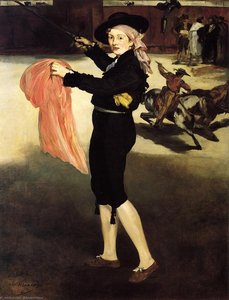
A Stage of Spanish Passion: Unveiling Manet’s ‘Spanish Ballet’
- Subject & Narrative: Édouard Manet's 'Spanish Ballet' (1862) transports us to a vibrant, yet ambiguous, scene from a Parisian performance of the Royal Theater of Madrid’s troupe. It isn’t a literal depiction of a bullfight as initially perceived, but rather an impressionistic rendering of dancers and musicians on stage – a fleeting moment captured with dynamic energy. The composition is deliberately fragmented, presenting overlapping figures that create a sense of bustling activity and theatrical spectacle. Manet skillfully evokes the exotic allure of Spanish culture which captivated Parisian audiences at the time.
- Style & Technique: This work exemplifies Manet’s pivotal role in bridging Realism and Impressionism. He employs loose, expressive brushstrokes and a muted color palette dominated by browns, ochres, and pinks to create an atmospheric effect. Reduced modeling, as noted by Duncan Phillips, and “arbitrary lighting” contribute to the painting's flatness and abstraction – qualities that would become hallmarks of Impressionism. The emphasis is on capturing the *impression* of movement and light rather than precise detail.
Historical Context & Manet’s Fascination with Spain
- The Spanish Craze: In the 1860s, France was experiencing a profound fascination with all things Spanish. This “Spanish craze” stemmed from earlier Romantic interests dating back to the 1830s and manifested in art, music, and literature. Manet’s exploration of Spanish themes reflects this cultural trend, though he wasn't seeking strict realism but rather an interpretation through his own artistic lens.
- Inspired by Camprubi’s Troupe: The painting was directly inspired by a performance of Don Mariano Camprubi’s troupe from the Royal Theater of Madrid at the Paris Hippodrome in 1862. Manet arranged for several dancers to pose for him, resulting in a series of works exploring Spanish performers and themes. This demonstrates his deliberate engagement with contemporary cultural events.
Symbolism & Emotional Resonance
- Fleeting Beauty & Dramatic Tension: While not depicting the brutality of a bullfight directly, the painting hints at underlying tension and drama. The dancers can be seen as symbols of fleeting beauty existing within a context of passionate intensity.
- A Precursor to Modern Art: Duncan Phillips recognized Manet as a “pivotal source of modern art,” appreciating the work’s bold step toward abstraction and its unexpected color accents. ‘Spanish Ballet’ isn't merely a depiction of a performance; it is an exploration of form, light, and emotion that paved the way for future artistic innovations.
الأسئلة والأجوبة
ما هي إعدادات الطباعة المقترحة لـ "Spanish Ballet" للفنان إدوارد مانايه؟
بالنسبة لـ "Spanish Ballet"، يُنصح بالطباعة بحجم Large وبوضعية Landscape.
كم كان عمر إدوارد مانايه عند إبداع العمل "Spanish Ballet"؟
أبدع إدوارد مانايه لوحة "Spanish Ballet" وهو في سن 30. وُلد الفنان في 1832 ويعود تاريخ هذا العمل إلى 1862.
كيف يوازن "Spanish Ballet" بين الضوء والظلال؟
تُسجل درجة سطوع "Spanish Ballet" للفنان إدوارد مانايه عند deep_shadow، مع مستوى لمعان يبلغ Dark.
 معاينة الحجم الواقعي
 مشاركة
 مشاركة
 التفاصيل
 دليل
دليل

 تحميل الملف
 قطع مشابهة
 الأشعة السينية
 عرض شرائح
 الأسئلة والأجوبة
 الإحصائيات