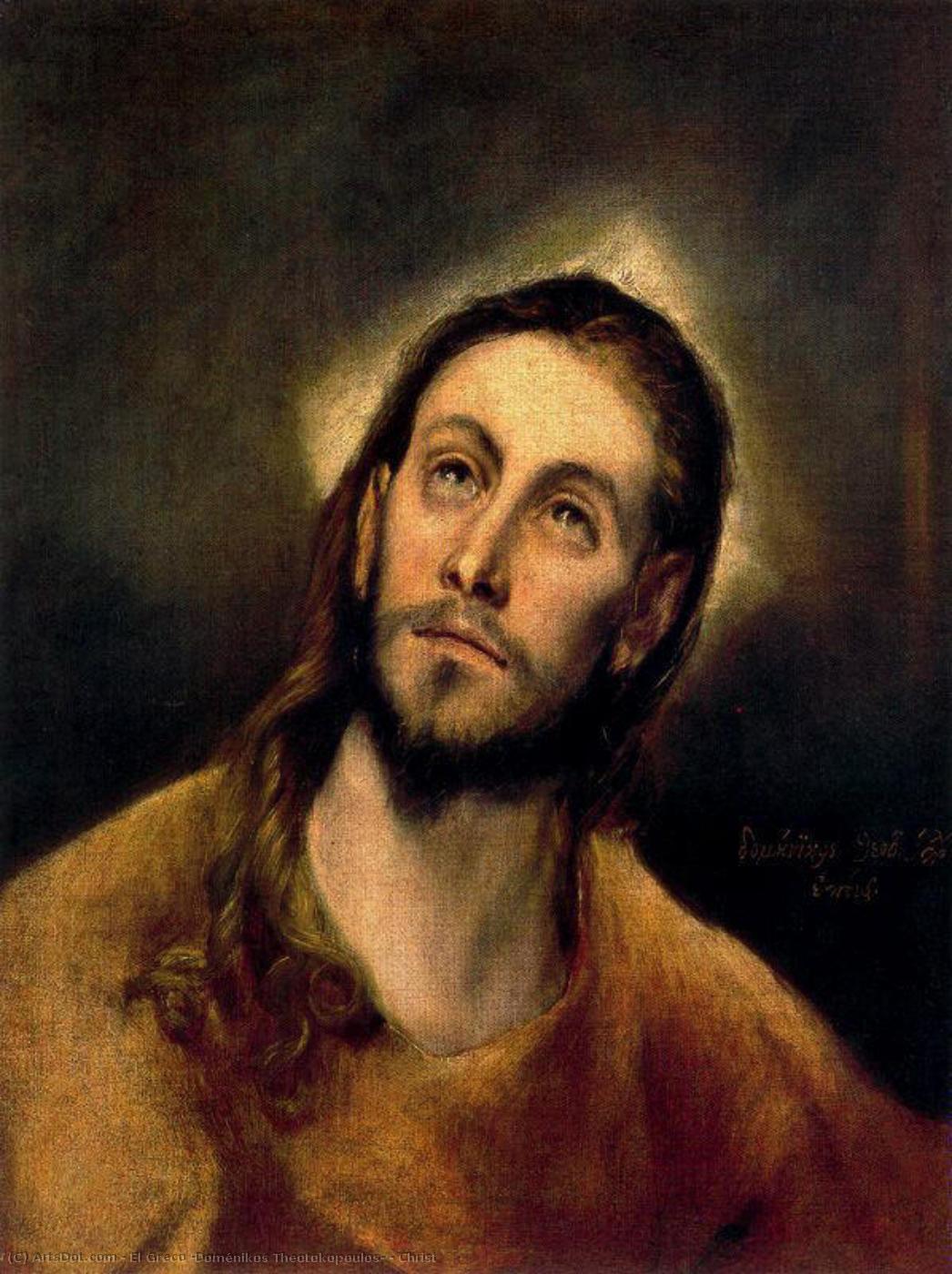
A Vision of Divine Suffering: El Greco’s ‘Christ’ (1585)
This intimate portrait of Jesus Christ, painted in 1585 by Doménikos Theotokópoulos – known as El Greco – is a powerful testament to the artist's unique and emotionally charged style. Measuring 51 x 39 cm, this oil on canvas work draws the viewer into a deeply personal encounter with the divine.
Stylistic Innovation & Technique
El Greco’s ‘Christ’ exemplifies his mature Baroque style, though it stands apart from conventional interpretations of the period. He masterfully employs
chiaroscuro – the dramatic interplay of light and shadow – to sculpt form and heighten emotional intensity. Notice how the focused illumination around Christ's head creates a halo-like effect, drawing attention to his face and emphasizing his spiritual significance. The brushwork is meticulous, with layers of paint building texture and volume, particularly in the depiction of hair and drapery. El Greco’s technique departs from Renaissance ideals of balanced composition; instead, he favors elongated figures and dynamic poses that convey a sense of otherworldly grace and profound emotion.
Historical Context & Artistic Influences
Born in Crete in 1541, El Greco absorbed the traditions of Byzantine icon painting before traveling to Venice and Rome. In Italy, he encountered the works of Titian, Tintoretto, and Michelangelo, which profoundly influenced his artistic development. He ultimately settled in Toledo, Spain, where he produced some of his most celebrated masterpieces. This painting reflects a synthesis of these influences – the spiritual intensity of Byzantine art combined with the dramatic realism and compositional innovations of the Italian Renaissance and Mannerism.
Symbolism & Iconography
The symbolism within ‘Christ’ is both subtle and profound. The halo, a traditional attribute of divinity, immediately identifies the subject. However, it's Christ’s expression that truly captivates – a poignant blend of sorrow, compassion, and acceptance. This isn’t a triumphant depiction of power; rather, it’s an intimate portrayal of suffering and sacrifice.
The warm browns and ochres of the palette, punctuated by highlights of gold and cool blue in the halo, further enhance the painting's spiritual resonance.
Emotional Impact & Interpretation
‘Christ’ is not merely a religious image; it’s an exploration of human emotion and spirituality. The close-up composition and intense gaze create a direct connection between the viewer and the subject, inviting contemplation and empathy. El Greco's masterful use of light and shadow evokes a sense of mystery and transcendence.
Collecting & Interior Design
- For Art Lovers: This piece represents a pivotal moment in art history, showcasing El Greco’s unique vision and enduring legacy.
- For Collectors: A reproduction of ‘Christ’ adds depth and sophistication to any collection, representing a significant investment in artistic heritage.
- For Interior Designers: The painting's rich colors and dramatic composition make it a striking focal point for living rooms, studies, or contemplative spaces. Its spiritual quality lends itself well to creating serene and inspiring environments.
This work is a powerful reminder of El Greco’s ability to convey profound emotion through masterful technique and symbolic imagery – a timeless masterpiece that continues to resonate with audiences today.