Art Nouveau
evestar (ألفونس دس موتشا)
أبدع ألفونس دس موتشا (1860–1939) في evestar. تنتمي إلى حركة Art Nouveau. صُنعت من Giclée Print.
- Giclée Print

 لوحة زيتية مرسومة يدوياً
 مشاركة
 مشاركة
 ورقة الحقائق


 تحميل الملف
 قطع مشابهة
 عرض شرائح
 الأسئلة والأجوبة

 الإحصائيات
evestar باختصار
- العنوان
- evestar
- الفنان
- ألفونس دس موتشا (1860–1939)
- تاريخ ميلاد الفنان
- برنو, جمهورية التشيك
- الوسيط الفني
- Giclée Print
- الحركة
- Art Nouveau
- الحقبة
- 19th Century
- الموضوع
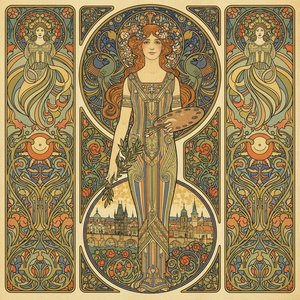
- woman figure, flowing dress, art nouveau, graceful pose, gold frame, allegorical art
ماذا يصور evestar؟
Evostar: A Symphony of Art Nouveau Grace
Alphonse Mucha’s “Evostar,” painted in 1902, is more than just a depiction of a woman; it's an embodiment of the Art Nouveau movement at its zenith. This captivating artwork immediately draws the viewer into a world of flowing lines, organic forms, and a profound sense of movement – hallmarks of Mucha’s distinctive style. The image portrays a figure in a luxurious, billowing dress, arms outstretched as if caught mid-dance or gesture, radiating an aura of serene elegance and poised beauty. The gold frame surrounding the piece isn't merely decorative; it elevates the scene, suggesting a masterpiece worthy of display within a grand salon or private collection.
The Art Nouveau Vision
Mucha’s artistic journey began in Brno, Czech Republic, shaped by early exposure to music and a deep appreciation for nationalistic themes. His time at the Prague Academy of Fine Arts proved formative, though ultimately disillusioning, leading him to Paris in 1887 – a pivotal moment where he forged his own path. “Evostar” exemplifies this self-defined style perfectly. Influenced by artists like Pierre-Auguste Renoir and Gustave Moreau, Mucha masterfully blended classical ideals with a distinctly modern sensibility. The flowing lines of the dress, the delicate rendering of fabric, and the overall composition are all characteristic of Art Nouveau’s fascination with nature's curves and its rejection of rigid academic conventions. The piece speaks to a desire for beauty that transcends mere representation – it seeks to evoke an emotional response through form and color.
Symbolism and Narrative
The woman in “Evostar” embodies the idealized feminine figure so frequently depicted by Mucha. Her posture, with arms outstretched, suggests both grace and invitation, a timeless symbol of beauty and allure. While the precise narrative is open to interpretation, it aligns with Art Nouveau’s penchant for allegorical themes and romanticized depictions of women. The necklace she wears adds an element of opulence and sophistication, further enhancing her captivating presence. The color palette – dominated by golds, creams, and subtle greens – contributes significantly to the artwork's ethereal quality, evoking a sense of twilight or evening, hence the title “Evostar.”
Technical Mastery & Historical Context
Created in 1902, "Evostar" reflects Mucha’s refined technique. He was renowned for his meticulous attention to detail, particularly in rendering fabrics and textures. The layering of paint creates a luminous effect, capturing the play of light on the woman's dress with remarkable skill. This artwork emerged during a period of immense artistic innovation – the Art Nouveau movement was rapidly gaining momentum across Europe. Mucha’s success, largely due to his commissions for Sarah Bernhardt and his innovative poster designs, helped solidify Art Nouveau as a dominant aesthetic. Reproductions like this allow us to appreciate not only Mucha's genius but also the broader cultural context in which he worked, a world captivated by beauty, elegance, and the promise of a new artistic era.
صور عالية الدقة لـ evestar
ألفونس دس موتشا, evestar. ملك عام
أسئلة وإجابات حول evestar
ما هي التقنية المستخدمة في تنفيذ "evestar" للفنان ألفونس دس موتشا؟
نُفذت لوحة "evestar" باستخدام Giclée Print.
ماذا يصور "evestar" للفنان ألفونس دس موتشا؟
تُصور "evestar" للفنان ألفونس دس موتشا: woman figure, flowing dress, art nouveau, graceful pose, gold frame, allegorical art, muchas style.
هل العمل "evestar" ضمن الملكية العامة؟
تندرج لوحة "evestar" للفنان ألفونس دس موتشا ضمن نطاق ملك عام - انتهت مدة حماية حقوق الطبع والنشر الخاصة به، وتحدد هذه الحالة الشروط التي يمكن بموجبها إعادة إنتاج صورة العمل الفني.
من أبدع "evestar"؟
يُنسب العمل "evestar" إلى ألفونس دس موتشا.
إلى أي أسلوب ينتمي "evestar"؟
تنتمي لوحة "evestar" للفنان ألفونس دس موتشا إلى حركة Art Nouveau الفنية، ويضع هذا التصنيف العمل ضمن سياق مجموعة من الفنانين والأعمال الفنية ذات الصلة.
إلى أي مرحلة من مراحل تطور ألفونس دس موتشا ينتمي العمل "evestar"؟
تندرج لوحة "evestar" ضمن مرحلة Mature Period من مسيرة ألفونس دس موتشا المهنية، وهي مرحلة تتيح مقارنة هذا العمل بأعمال الفنان الأخرى.
ما هي الأسباب الكامنة وراء الوضع القانوني لحقوق الطبع والنشر لـ "evestar" للفنان ألفونس دس موتشا؟
يُعد عمل "evestar" للفنان ألفونس دس موتشا من الأعمال التي تندرج ضمن ملك عام - انتهت مدة حماية حقوق الطبع والنشر الخاصة به؛ حيث تُحتسب مدة حماية حقوق الطبع والنشر بدءاً من تاريخ وفاة الفنان في عام 1939.
كيف ينسجم عمل "evestar" مع موضوعات ألفونس دس موتشا وأسلوبه الفني؟
ينتمي العمل "evestar" إلى نتاج ألفونس دس موتشا ضمن مدرسة Art Nouveau، التي تتناول موضوعاتها المسجلة renoir, moreau influences, czech national symbolism, bernhardt’s theatrical style, idealized feminine beauty, signature art nouveau work.
هل تُعد "evestar" نموذجاً لما اعتاد ألفونس دس موتشا على إبداعه عادةً؟
يصور "evestar" موضوعات woman figure, flowing dress, art nouveau, graceful pose, gold frame, allegorical art, muchas style، بينما تتمثل الثيمات المتكررة لدى ألفونس دس موتشا في renoir, moreau influences, czech national symbolism, bernhardt’s theatrical style, idealized feminine beauty, signature art nouveau work. وتُظهر المقارنة بينهما مدى ارتباط هذا العمل بالموضوعات المعتادة للفنان.
عن الفنان، ألفونس دس موتشا

1860–1939, جمهورية التشيك
ألفونس دس موتشا
الحياة المبكرة والتعليم وُلد: في 15 يوليو 1860، في إيفانيتشيتسه، مورافيا (الآن جزء من جمهورية التشيك). أظهر موهبة فنية منذ صغره. درس في أكاديمية الفنون الجميلة في براغ لكنه شعر بخيبة أمل من الأساليب التقليدية. انتقل إلى باريس عام 1887 لمتابعة أسلوبه الخاص.
وأيضاً لـ ألفونس دس موتشا
 The Moon
 Nude
 The Apotheosis of the Slavs1926
 Stained-Glass Window in St. Vitus Cathedral
مقالات حول evestar
 French artworks of the 1880sFrench Impressionist masterpieces by Claude Monet, Pierre-Auguste Renoir, and Georges Seurat. Find museum-quality reproductions on Original…
 The Elegance of Art Nouveau: A Masterclass in Organic Forms, Sinuous Lines, and the Belle Époque AestheticExplore the exquisite world of Art Nouveau. From Alphonse Mucha’s flowing lines to the organic elegance of the Belle Époque, discover the h…
 Alphonse Mucha: A Comprehensive Exploration of Art Nouveau's Master of Decorative SymbolismExplore the life & art of Alphonse Mucha, master of Art Nouveau! Discover his iconic posters, stunning illustrations, and the monumental Sl…